
World Wide Technology PGA Tour showcase sells paradise at Diamante. The documentary record raises questions about Ken Jowdy that its executives won’t answer.
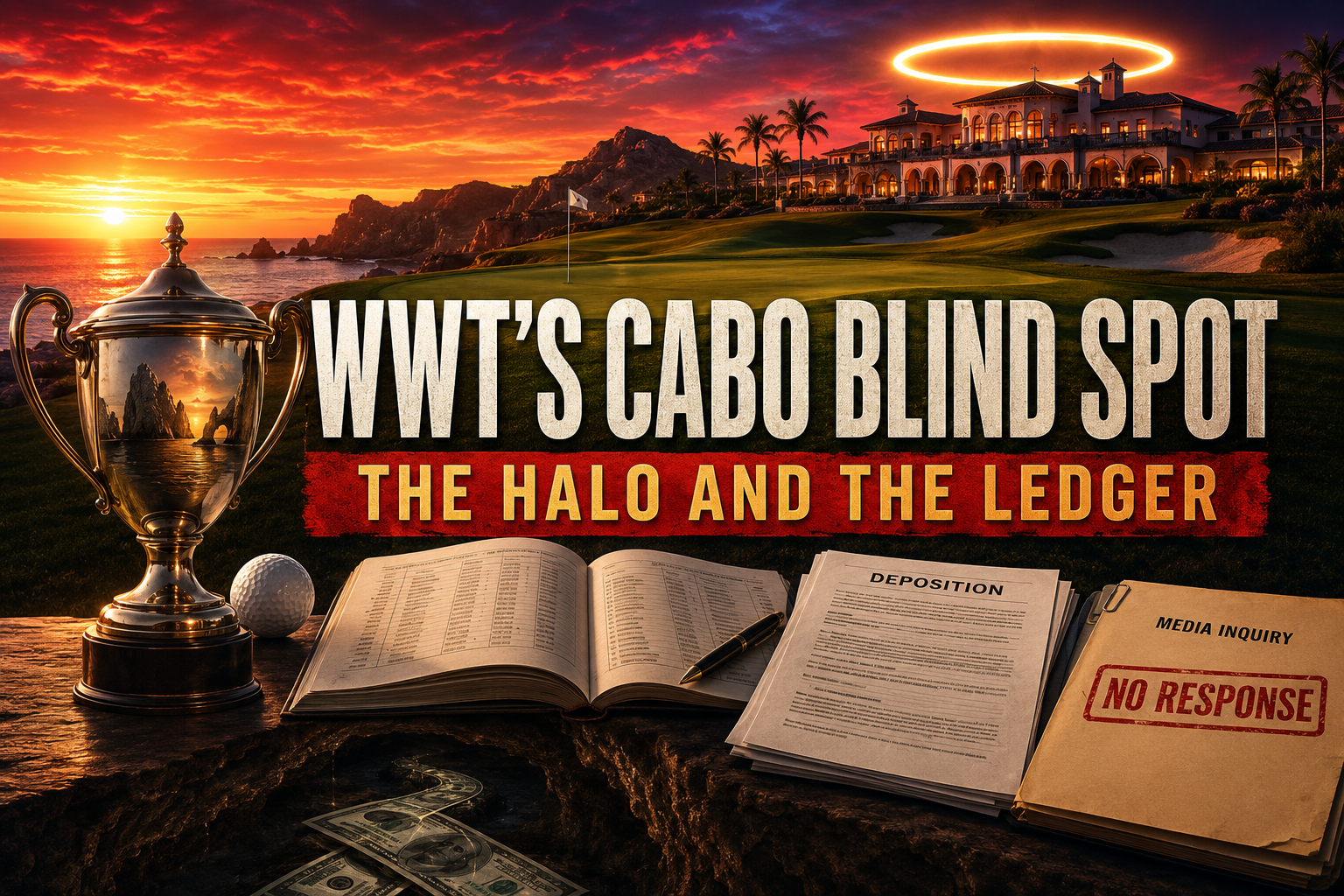
LUTHMANN NOTE: I don’t begrudge anyone a beautiful golf course, a tournament trophy, or a Pacific sunset. I object when corporate prestige becomes a laundering machine for reputation. WWT chose to praise Ken Jowdy’s financing record. That choice carries responsibility. The company cannot claim his control when selling the Diamante success story, then develop sudden amnesia when reporters ask about lawsuits, disputed loans, investor testimony, and project money entering his personal account. WWT had a month to defend its diligence. It stayed silent. In my view, that silence is an abdication of the honesty and accountability the company sells to everyone else. This piece is “WWT’s Cabo Blind Spot.”
By Richard Luthmann and Rick LaRivière
The Visionary, Courtesy of WWT
World Wide Technology has spent years telling the business world that honesty, integrity, trust, and disciplined risk management sit at the center of its corporate culture. Then golf entered the picture.
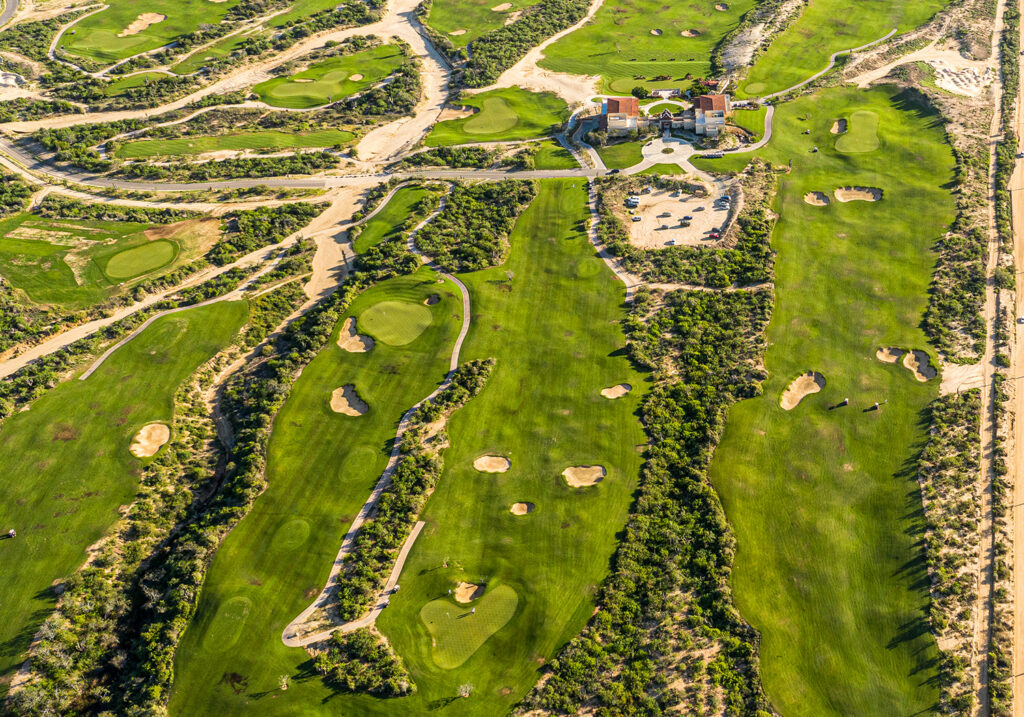
On the official Diamante page for WWT’s PGA Tour tournament in Cabo San Lucas, Ken Jowdy receives the full corporate benediction. He is not identified merely as the developer whose resort hosts the event. WWT’s tournament website calls him the “visionary” behind the Diamante master plan and credits him with personally leading the permitting, construction, financing, sales, and operation of the resort.
That word, financing, opens the trap.
WWT cannot celebrate Jowdy as the financial architect of a luxury golf kingdom while treating the documented financing history beneath that kingdom as somebody else’s problem. Once a global corporation uses its name, tournament platform, and PGA Tour prestige to burnish a businessman’s record, it owns the diligence behind the endorsement. Jowdy’s record was not buried in a sealed vault. It stretched across public lawsuits, a near-million-dollar judgment, failed or distressed golf developments, bank records, investor testimony and years of reporting about professional hockey players trying to recover money that flowed into Mexican projects.
The contradiction will be on international display when the 2026 World Wide Technology Championship brings 120 PGA Tour professionals to Tiger Woods’ El Cardonal course at Diamante. Tournament week runs November 2 through November 8, with competition scheduled for November 5 through November 8. The Pacific will sparkle. Corporate hospitality will hum. Television cameras will sell the dream. Behind the brochure sits a financial history that WWT’s own enterprise-risk machinery should have found before its website crowned Jowdy.
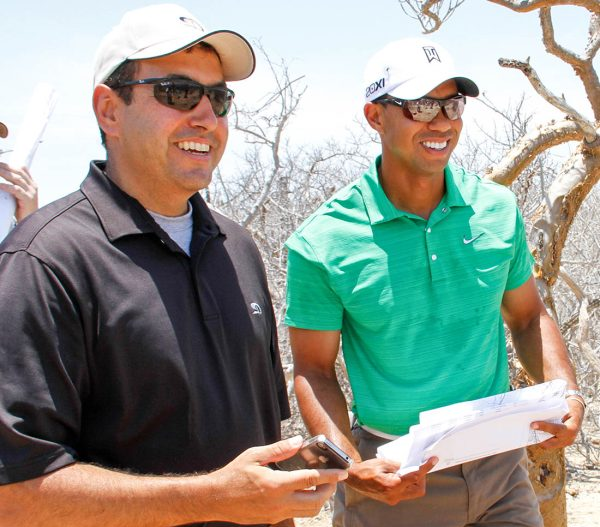
In 2009, Golf Digest reported that nearly two dozen NHL players had sued Jowdy, seeking the return of roughly $25 million invested in Mexican resort developments and another $15 million in damages. Jowdy called the case meritless and rejected its accusations. The dispute was still a screaming reputational-risk event, one involving professional athletes, eight figures, and the same developer WWT now praises for his financing.
WWT gave him the halo anyway.
WWT’s Cabo Blind Spot: Risk Management Vanished at the First Tee
WWT’s own compliance language turns this from a golf story into a corporate-hypocrisy story.
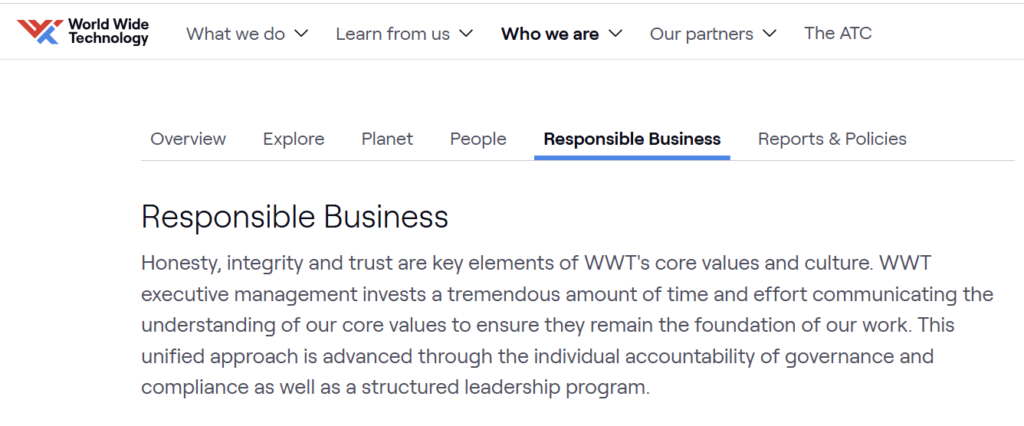
On its Responsible Business page, the company says honesty, integrity, and trust are core values. Its Enterprise Risk Management program, aligned with ISO 31000 standards, is supposed to “anticipate, identify, assess, prioritize and mitigate” threats that could materially affect WWT’s objectives. The company says key risk information is communicated to senior leadership, its Corporate Compliance Council and its board.
This is a sophisticated global technology company boasting formal governance, compliance oversight and enterprise-wide risk controls. It is not a foursome choosing a charity-scramble venue over drinks.
Run Jowdy through the standards WWT advertises.
A Nevada court entered a $975,356.99 judgment against him in former NHL star Glen Murray’s contract case, including principal, contractual interest and prejudgment interest. The judgment calculation was not gossip, opposition research, or a social-media accusation. It was a court’s ruling.
Jowdy’s development history offered more warning lights. Golf Digest reported in October 2009 that Boot Ranch, the Texas luxury golf development associated with Jowdy’s Legacy Properties and PGA Tour winner Hal Sutton, faced foreclosure after Lehman Brothers put $73 million into the project. Another Golf Digest report described Laurel Cove, a planned Tennessee golf community backed by Jowdy, as stalled with only nine holes completed while its Lehman loan moved through separate proceedings.
Those events did not establish that every Jowdy venture involved wrongdoing. They established something WWT claims to understand: risk. Litigation risk. Counterparty risk. Reputational risk. Governance risk. The precise species of trouble an enterprise-risk program exists to identify before a corporate platform converts a developer’s preferred biography into public fact.
Instead, WWT’s website tells visitors about the visionary, the master plan and the financing. It says nothing about the judgment, the investor litigation or the wreckage attached to earlier golf developments.
The company’s celebrated risk culture appears to have stopped at the clubhouse door.
WWT’s Cabo Blind Spot: The Witnesses Called It a Loan
The deepest problem with WWT’s endorsement is not one old lawsuit. It is the paper trail showing that money later treated as part of Phillip Kenner’s fraud prosecution was described, years before trial, as financing that went to Jowdy and was expected to come back.
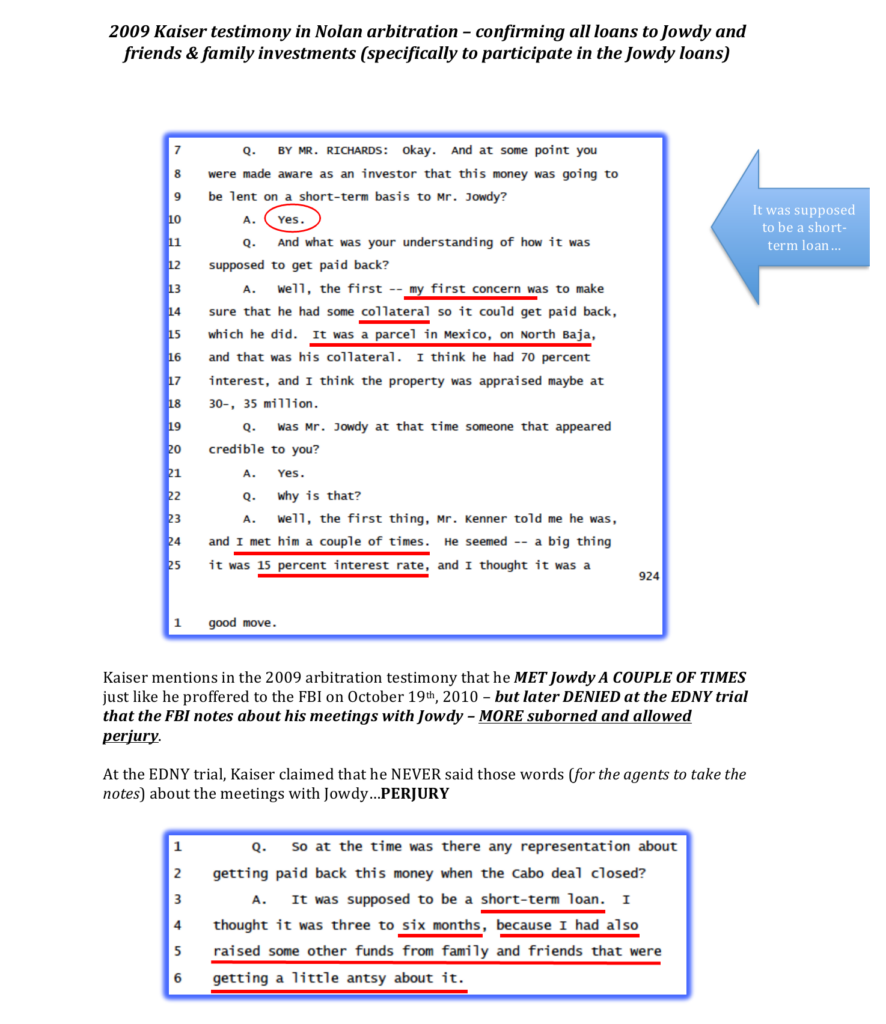
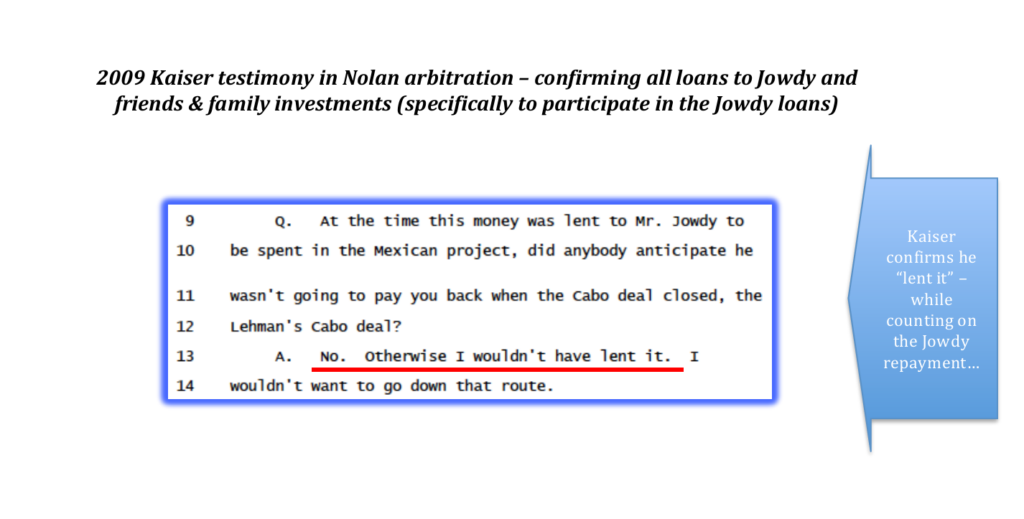
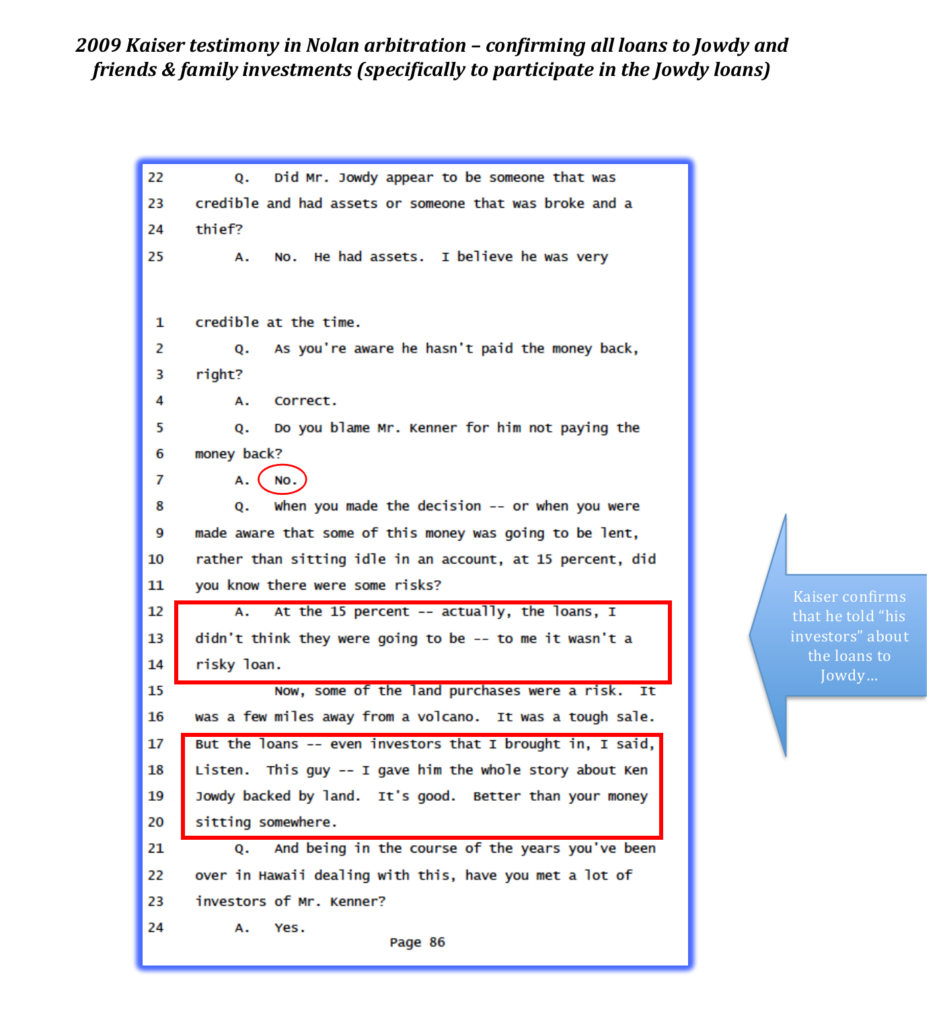
John Kaiser testified in a 2009 arbitration that investors were told money would be lent to Jowdy on a short-term basis. Kaiser said the arrangement carried a 15 percent return, was backed by Baja land, and was supposed to last three to six months. Asked whether anyone expected Jowdy would fail to repay when permanent Cabo financing closed, Kaiser answered no: “Otherwise I wouldn’t have lent it.” He later confirmed Jowdy had not repaid the money and said he did not blame Kenner for Jowdy’s failure to pay.
Bryan Berard’s 2009 arbitration testimony landed in the same place. Berard acknowledged that he knew Kenner was lending money to Jowdy for the Cabo project and that the loan was supposed to produce interest for investors. Asked what he understood Jowdy would do with the money, Berard answered: “Basically just loan him the money for the property.” He also testified that an independent family attorney reviewed the documents before he signed them.
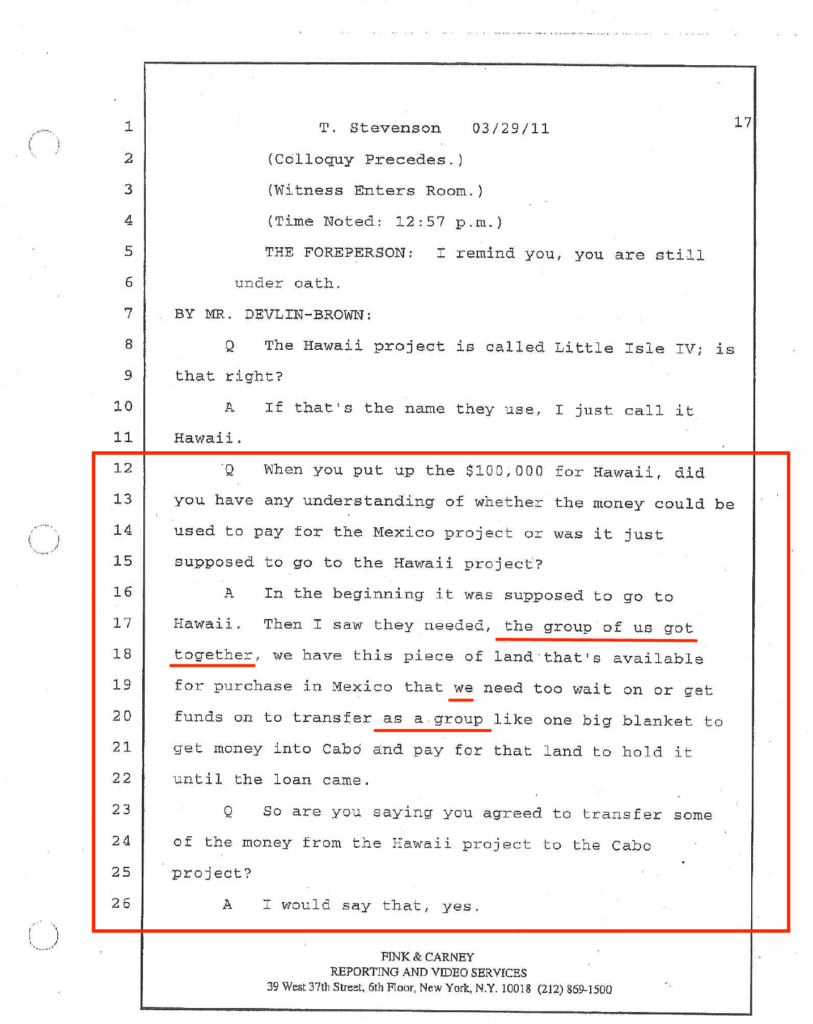
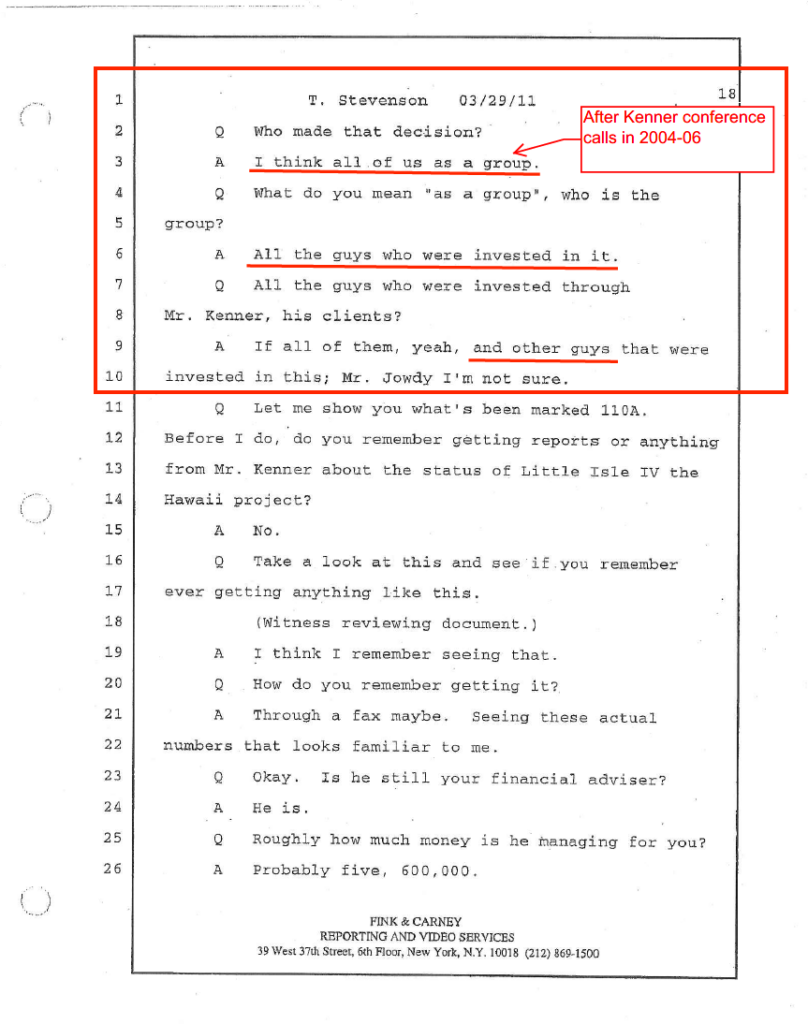
Turner Stevenson went further before a federal grand jury. In sworn testimony on March 29, 2011, Stevenson said money initially intended for the Hawaii project was moved toward Cabo after “the group of us got together.” Asked directly whether he agreed to transfer some of the Hawaii money to the Cabo project, Stevenson answered yes. Asked who made that decision, he replied: “I think all of us as a group.”
Those statements do not erase Kenner’s federal conviction. A jury convicted him, and he received a 17-year sentence. They expose a narrower but explosive disparity in the conventional story. Before the criminal case reached a jury, investors and witnesses had described money going to Jowdy as short-term financing, supported by collateral, carrying interest, and expected to be repaid. Jowdy received the benefit of that financing. The repayment fight then sprawled across civil litigation. Kenner got the cage. Jowdy got the resort, the celebrity associations, and a WWT page presenting his financial leadership as an unqualified success.
That is not a footnote. It is the collision at the center of the entire money story.
WWT’s Cabo Blind Spot: Follow the Accounts, Not the Brochure
The early Baja records sharpen the picture.
An August 2002 statement for Baja Development Corporation began with a zero balance. During that statement cycle, the account recorded more than $3.3 million in additions and more than $3.17 million in subtractions, ending at $128,756.90. The account was not sitting dormant while a golf-development dream slowly took shape. Large sums were arriving and leaving almost immediately.
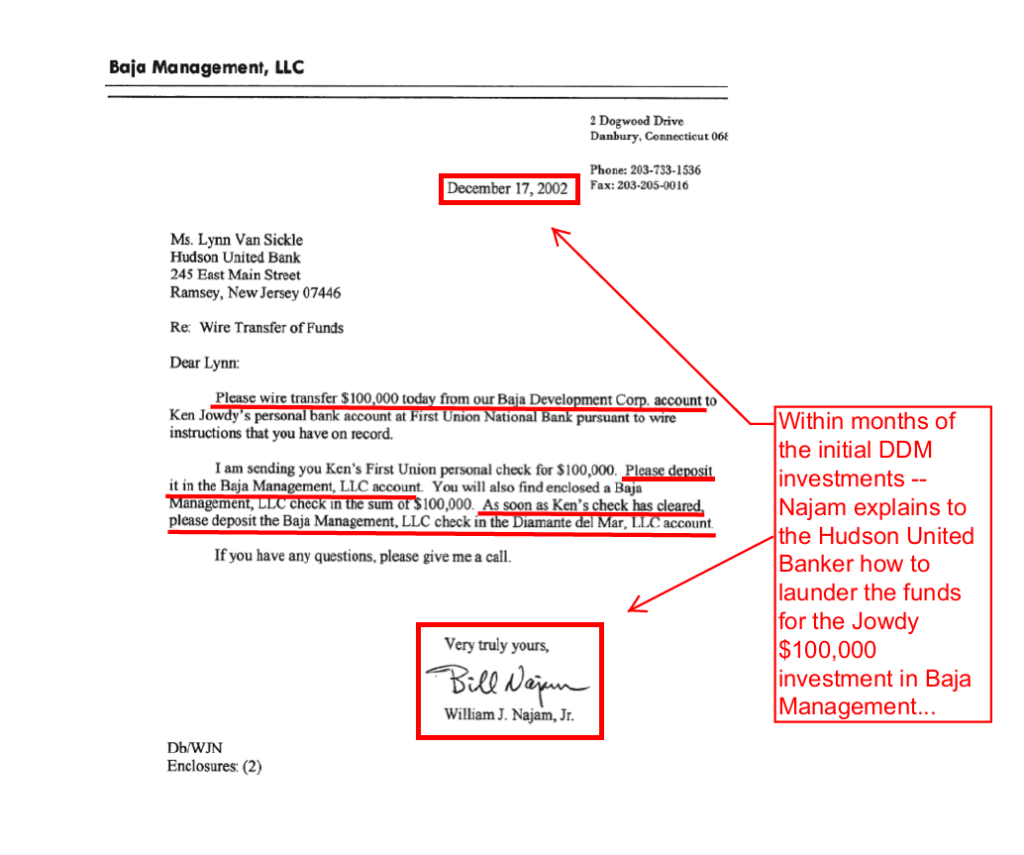
Then came a transaction that belongs in any serious diligence file. In a December 17, 2002 wire instruction, Baja Management chief operating officer William J. Najam directed Hudson United Bank to transfer $100,000 from Baja Development Corporation to Ken Jowdy’s personal bank account. The letter also instructed the bank to deposit Jowdy’s $100,000 personal check into Baja Management, deposit a Baja Management check for the same amount into that account, and deposit another Baja Management check into the Diamante del Mar account.
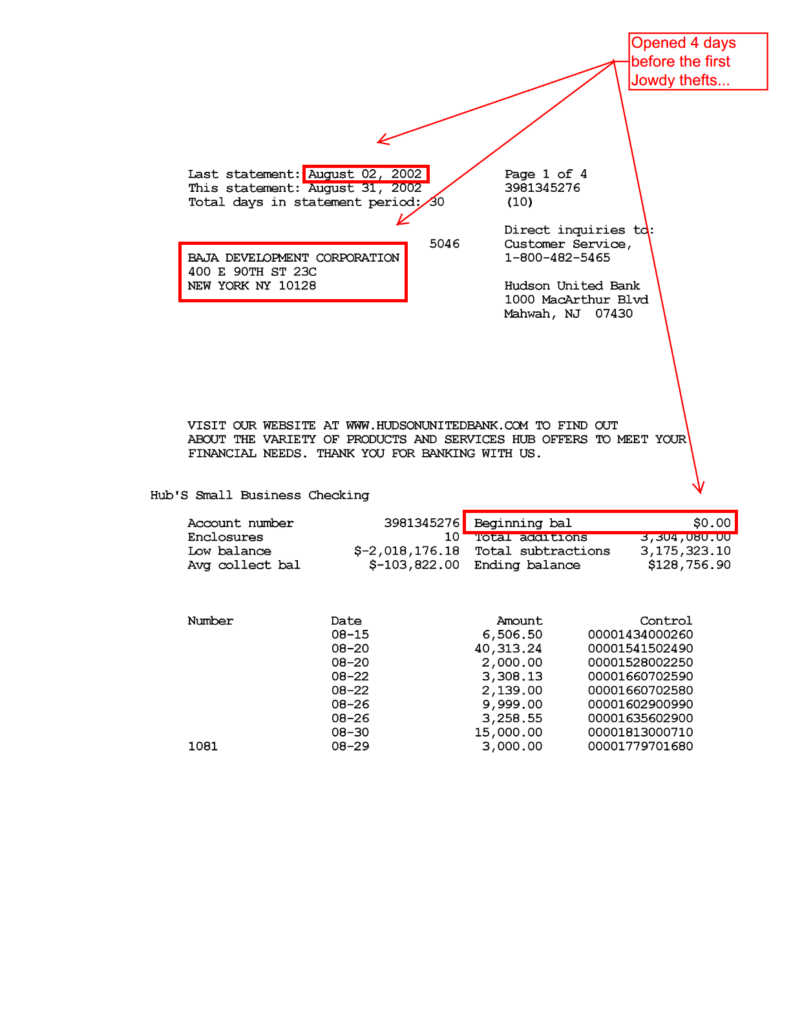
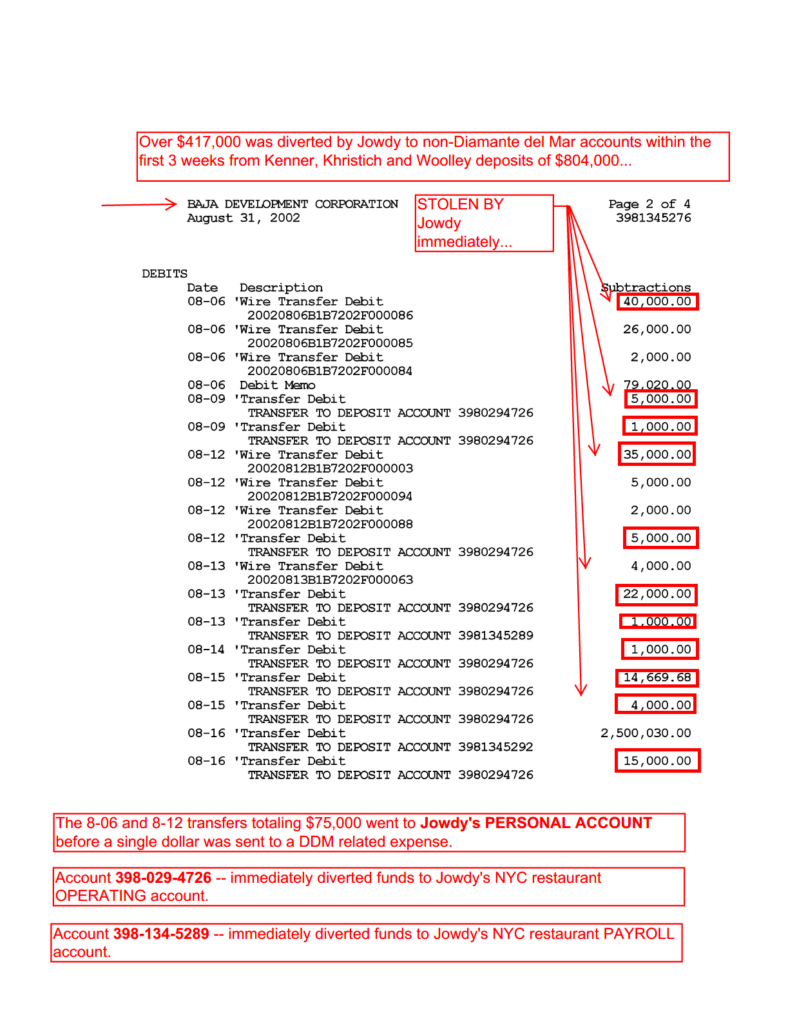
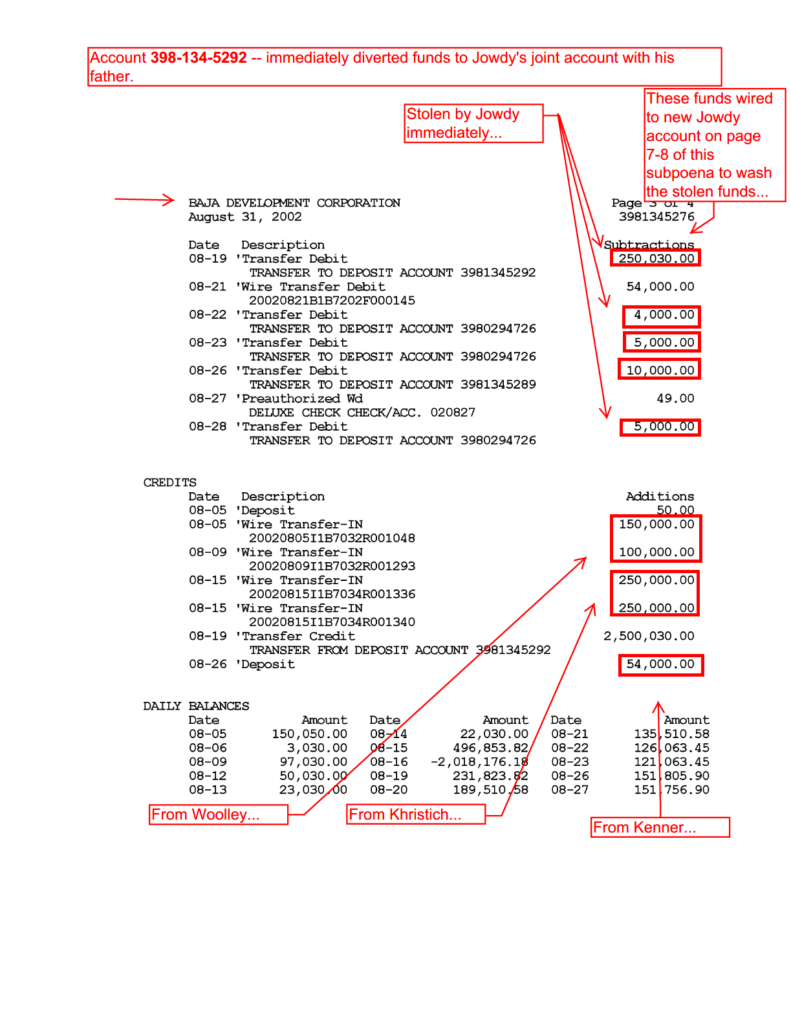
The document establishes the transaction chain. It does not, standing alone, establish why the parties structured the transfers that way or whether every leg was legitimate. But it destroys any pretense that Jowdy’s personal account stood outside the early project-money circuitry. Project funds, affiliated companies, and his personal banking were connected on the face of the instruction.
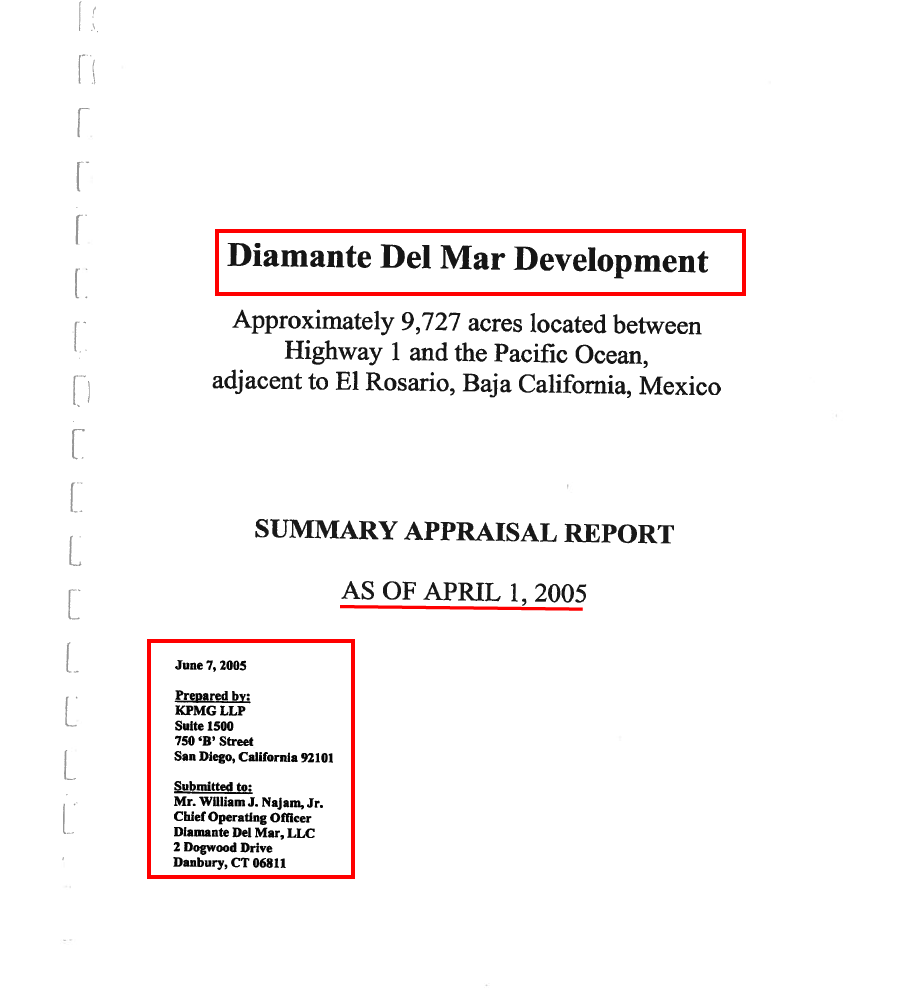
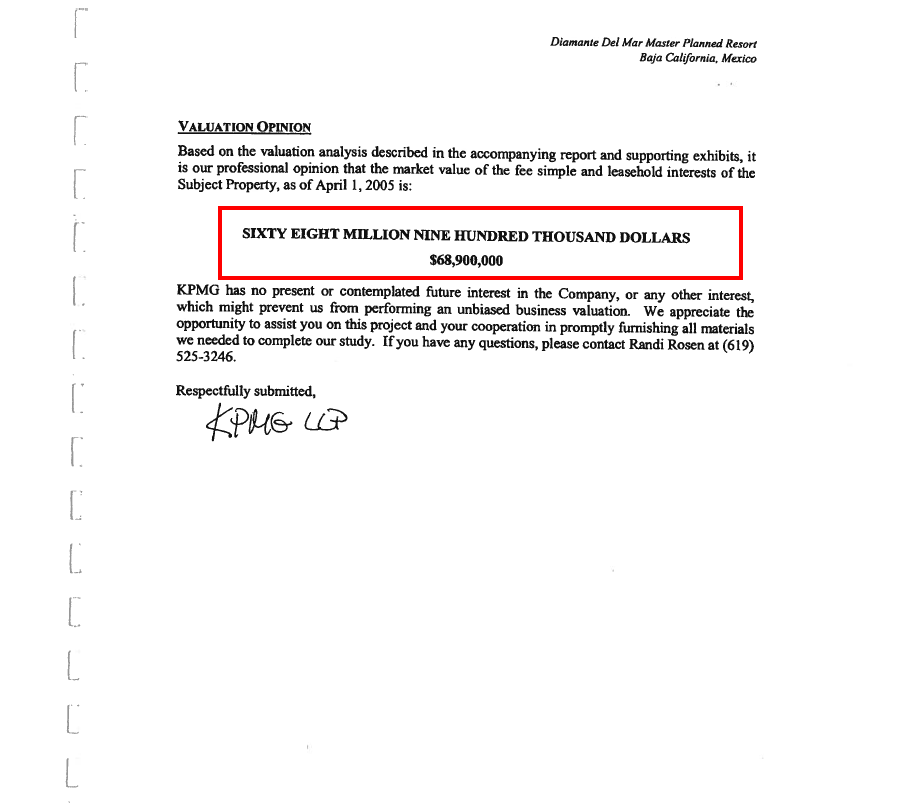
The collateral story was equally substantial. Attorney Thomas Harvey wrote former NHL star Owen Nolan that promissory notes would be secured by liens against roughly 10,000 acres near El Rosario and that shares in the Mexican landholding company would be transferred into Baja Development Corporation. A KPMG summary appraisal, effective April 1, 2005, valued the fee-simple and leasehold interests in the approximately 9,727-acre Diamante del Mar property at $68.9 million.
That valuation explains why lenders could view the short-term financing as protected. It also magnifies the unresolved question: what became of the promised collateral, the repayment, and the investor value when the development later descended into debt and litigation?
The civil complaints add the operating picture. Investors claimed that money was consumed by compensation, travel, entertainment, aircraft-related expenses, new borrowing, and projects that failed to deliver the promised returns. Those are litigants’ claims, not adjudicated facts, and Jowdy disputed accusations against him. But WWT’s website does not acknowledge even the existence of the controversy. It takes the most flattering side of a decades-long financial war and posts it as corporate biography.
WWT’s Cabo Blind Spot: Twelve Questions. One Month. No Answer.
Any claim that WWT simply had no reason to examine Jowdy’s history ended with our investigative media inquiry titled “Did the WWT Championship Vet Ken Jowdy and Diamante’s Financial Record?” It was sent to five World Wide Technology Championship executives, including Tournament Director Joe Mazzeo. WWT was asked what financial and reputational diligence it performed before selecting or continuing to use El Cardonal.
As of press time, WWT did not answer. We gave them a month. Here is what we asked:
From: Rick LaRivière <RickLaRiviere@proton.me>
Date: On Friday, July 24, 2026 at 2:27 PM
Subject: MEDIA INQUIRY: Did the WWT Championship Vet Ken Jowdy and Diamante’s Financial Record?
To:jmazzeo@wwtchampionship.com, jjones@wwtchampionship.com, cramos@wwtchampionship.com, mdiaz@wwtchampionship.com, rmolina@wwtchampionship.com
CC: RALafontaine@protonmail.com, ralafontaine@protonmail.com, richard.luthmann@protonmail.com, mthomasnast@protonmail.com, msully0916@gmail.com, mvolpe998@gmail.com, frankiepressman@protonmail.com, frankparlato@gmail.com
Dear World Wide Technology Championship Officials:
We are preparing an investigative report concerning the World Wide Technology Championship’s relationship with Diamante Cabo San Lucas, resort founder and CEO Kenneth A. Jowdy, and the Tiger Woods-designed El Cardonal course.
Your website does more than identify Diamante as the tournament venue. It publishes an unqualified tribute to Jowdy, calling him the “visionary” behind the master plan and crediting him with personally leading the resort’s financing, construction, permitting, sales, and operations:
https://wwtchampionship.com/diamante/
That polished endorsement collides with an extensive court record.
Filed complaints, authenticated bank records, sworn investor testimony and FBI interview notes raise serious questions about Jowdy’s handling of investor money, his receipt of millions characterized as short-term loans, alleged failures to repay those loans, the movement of project funds among related and personal accounts, and accusations by numerous former NHL players that he mismanaged or diverted their capital.
These are not anonymous internet accusations. They appear in filed court documents and government-produced evidence. Jowdy has disputed many of the allegations, and no question below presumes criminal guilt. But the documentary record is substantial enough that the WWT Championship, its sponsors, the PGA Tour, and Tiger Woods’ business organization should be expected to explain what they knew and what they investigated.
Please provide written responses to the following questions:
1. What financial and reputational due diligence did the WWT Championship conduct on Jowdy and Diamante before selecting or continuing to use El Cardonal as its tournament venue?
Did that review include civil litigation, judgments, investor claims, loan disputes, bank records, or allegations involving misuse of project funds?
2. Was the tournament aware that groups of former NHL players sued Jowdy in Los Angeles Superior Court in 2009?
The complaints alleged fraud, breach of fiduciary duty, unjust enrichment, failures to account,t and misuse of millions invested in Mexican resort projects. Who reviewed those cases for the tournament?
3. Was the tournament aware of litigation alleging that Jowdy received millions in loans from entities associated with Phillip Kenner and professional-athlete investors?
One Arizona complaint alleged approximately $8 million was paid to Jowdy, his creditors, or companies under his control, with only partial repayment.
4. Did the tournament investigate the Nevada litigation involving former NHL player Glen Murray?
Published accounts report that a court entered a judgment approaching $1 million against Jowdy concerning short-term financing that allegedly was not repaid. What conclusions did WWT reach?
5. Has WWT reviewed the August 2002 Baja Development Corporation bank records?
Those records show millions entering a newly opened account followed by rapid transfers to additional accounts. A December 2002 bank instruction also directed $100,000 from Baja Development Corporation into Jowdy’s personal account while funds were moved among related entities. Did WWT seek an explanation?
6. Has Jowdy provided WWT with an audited accounting of the early investor capital used to develop Diamante Del Mar and Diamante Cabo San Lucas?
Who performed the audit, what years did it cover, and will WWT release it?
7. Did WWT examine sworn testimony from Michael Peca, Darryl Sydor, Turner Stevenson, Bryan Berard, and John Kaiser describing investor knowledge of short-term loans to Jowdy?
Several witnesses said repayment was expected after permanent Cabo financing arrived. Did WWT determine whether those funds were repaid?
8. Did WWT ask why litigation documents listed numerous simultaneous disputes involving Jowdy, athlete investors, project entities, aircraft financing, and allegedly unpaid loans?
At what point does a pattern of litigation become a material reputational issue for a PGA Tour event?
9. What did Tiger Woods, TGR Design, or their representatives know about Jowdy’s litigation and financial history before El Cardonal opened?
Did WWT disclose any of these matters to Woods or TGR Design before associating the tournament with their name and course?
Tiger Woods’ official site identifies El Cardonal as his first completed course design:
https://news.tigerwoods.com/tigers-first-golf-course-design-opens/
10. Has WWT asked Jowdy to respond formally to allegations that investor money funded salaries, private-aircraft expenses, lavish entertainment and projects that failed to deliver promised infrastructure?
Does the tournament accept his answers, and will it provide them for publication?
11. Does WWT receive money, accommodations, services, or other consideration from Diamante, Jowdy, Legacy Properties, or affiliated entities?
Please identify the financial relationship, including venue agreements, hospitality arrangements, expense reimbursements, and in-kind benefits.
12. Will WWT continue publishing its glowing biography of Jowdy without disclosing the litigation and disputed financial history surrounding him?
Does WWT stand behind its description of Jowdy as the hands-on leader responsible for Diamante’s financing and operations—and, if so, does it also accept that he bears responsibility for answering questions about those finances?
The public story is that Jowdy built a golf paradise with Davis Love III, Tiger Woods and PGA Tour prestige. The court record tells another story: missing money, unpaid loans, furious athlete-investors and years of litigation demanding an accounting.
The WWT Championship has placed its name, sponsors,s and reputation on Jowdy’s property. It cannot reasonably celebrate his control when selling the resort and then treat his control as irrelevant when questions arise about the money.
Please respond by close of business on Wednesday, July 29, 2026. Please also advise immediately whether the tournament, Diamante, Jowdy, the PGA Tour, or TGR Design would like to provide an interview or additional documents. Responses may be quoted in full or in part. Failure to respond will be reported. If we receive your responses after press time, we will incorporate them into a follow-up.
Thanks,
Rick LaRivière
Independent Journalist
(239) 766-5800
Follow Me On Substack
WWT’s silence does not resolve the underlying financial disputes. It resolves what WWT is willing to defend. The company continues to publish Jowdy’s flattering biography. It continues to sell tickets and premium hospitality at Diamante. It continues using PGA Tour prestige and Tiger Woods’ course design to deliver reputational value to the resort and its founder. What it will not do is explain whether anyone applied the risk standards WWT advertises to the man its own site credits with the money.
WWT had room to answer. It could have said it reviewed the litigation and accepted Jowdy’s explanation. It could have identified the categories of records examined. It could have drawn a boundary between promoting El Cardonal and endorsing Jowdy’s financial history. It could have revised the biography to separate Diamante’s present success from the contested record that preceded it.
It chose none of those paths.
The tournament kept the halo and ignored the ledger.
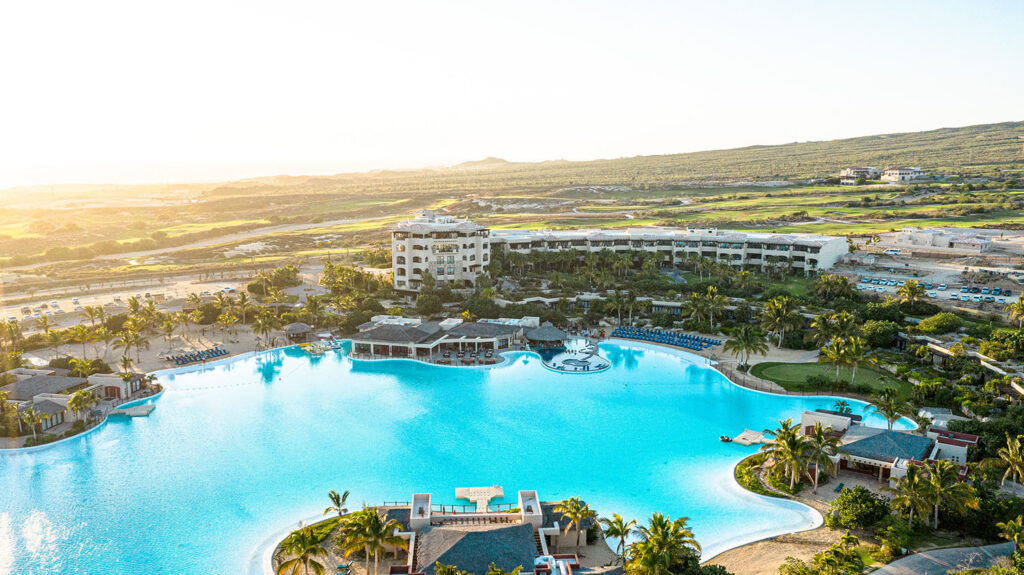
Tiger Woods did not create Jowdy’s financial history. His course should not be used as a shield against examining it. The PGA Tour did not move the early Baja money, promise the collateral, or litigate the loans. WWT, however, chose to cross the line from promoting golf to validating the developer. Its website credits Jowdy with the financing. Its corporate materials preach integrity and risk control. Its silence leaves those two positions colliding in public.
Golf keeps score because numbers end arguments.
Ken Jowdy’s numbers remain unreconciled. WWT has put its name beside them.
About The Author

Leave a Reply