


MAGA Makes the AI Revolution Work for Main Street
LUTHMANN NOTE: MAGA can bring immediate relief to Main Street America by requiring AI data centers to carry their full share of the local property-tax burden. Big Tech needs our land, electricity, water, roads, firefighters, and political approval. Fine. Let the companies come. Let them build, hire, innovate, and prosper. Jack and Diane America should not finance the next trillion-dollar technology empire while corporate shareholders pocket the upside. Done correctly, the AI boom can lower local tax rates, reinforce electrical grids, rebuild schools, improve hospitals, and protect residential ratepayers. Democratic Socialists and American Marxists would answer with another government program. America First uses leverage: Pay your share, fund what you consume, and leave the community stronger. Main Street finally has the hammer. Use it. This piece is “AI is Tax Relief.”


By Matt “Sully” Sullivan and Zoey Lynne Zvezda
America First means putting American families, American workers, and American communities first—and the coming AI revolution presents an extraordinary opportunity to do exactly that.
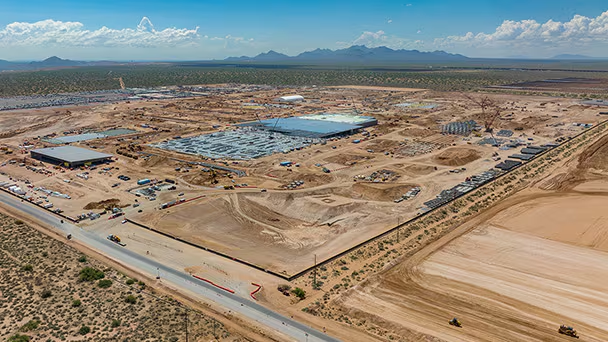
For years, working Americans watched Washington spend their money while the cost of housing, groceries, energy, health care, and virtually everything else climbed higher. Now the tables can be turned. Instead of asking taxpayers to finance another government solution, communities can demand that the world’s wealthiest technology companies become partners in rebuilding the American communities that make their enormous expansion possible.
The numbers are staggering. McKinsey projects $6.7 trillion in worldwide data-center capital spending through 2030, including $5.2 trillion for facilities equipped to handle AI workloads. More than 40% of that investment could occur in the United States. These corporations need something they cannot manufacture in Silicon Valley: American land, American electricity, American water, American roads, and American communities.
That gives local leaders leverage—and they should use every ounce of it.
Don’t beg Big Tech to come. Make Big Tech compete to come.
Community leaders need to treat the tech giants as the pot of gold at the end of the rainbow.

If a corporation wants to build a $10 billion, $20 billion, or larger facility in your community, don’t start the conversation by asking how much of the tax bill you can forgive. Start by asking, “What are you going to build for the American people?”
Demand new roads. Demand expanded electrical infrastructure. Demand water investments. Demand contributions to schools, hospitals, police, fire departments, and emergency services. Demand workforce-training programs that put local Americans into skilled, high-paying jobs. Above all, demand that existing residents—not corporate shareholders—receive the lasting economic benefit.
This is pro-American business.
The proof already exists. Loudoun County, Virginia, reports that data centers generated $1.2 billion in real and personal property-tax revenue in fiscal year 2026, representing 39% of the county budget. The county says the revenue has helped officials keep real-property and vehicle-tax rates comparatively low, although individual homeowners’ bills can still rise when property assessments increase.
Oracle reported in July that Project Jupiter in New Mexico had generated nearly $80 million in state and county tax revenue and funded 80% of its $50 million commitment to local water infrastructure. Those numbers come from Oracle, and its long-term economic projections depend on regulatory approvals and other assumptions.
Microsoft now says communities should receive full and fair property-tax contributions and that data centers should strengthen hospitals, schools, parks, and libraries. In Quincy, Washington, Microsoft says county property-tax revenue more than tripled over two decades as data-center investment expanded and that the community opened a new 54,000-square-foot medical center.

That is the model.
MAGA needs to embrace this opportunity and sell the sizzle of trillions of dollars in growth. America has one chance to outgrow the debt that has saddled future generations of the great American Republic.
America First does not mean turning our backs on American innovation. It means making American innovation pay dividends for Americans.
The message from every mayor, county commissioner, and economic-development leader should be unmistakable:
Bring your capital. Bring your technology. Bring your jobs. Bring your investment.
But if you want an American community to host your next AI empire, you must invest in the Americans who live there.
This may be the greatest economic-development bargaining opportunity many communities will ever see. Leaders with the courage and economic intelligence to negotiate aggressively can transform AI from another corporate success story into a Main Street success story—one where American taxpayers become the AI revolution’s greatest beneficiaries instead of its victims.
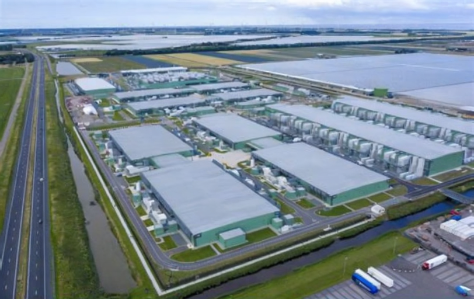
The arrival of a major AI data center is more than an economic-development victory. It is a negotiation opportunity. These facilities can involve billions of dollars in private investment while simultaneously creating extraordinary demands for electricity, water, roads, emergency services, and other public infrastructure. The National Conference of State Legislatures counts more than 4,000 data centers nationwide and 38 states with dedicated data-center incentives. Municipalities should use their leverage before granting zoning approvals, tax abatements, or development agreements.
Community leaders need to see the construction of these multibillion-dollar facilities as an opportunity to right an economic ship that has listed for decades. They cannot fall into the trap of giving away benefits. Their job is to extract them for their constituents.
AI is Tax Relief: Ten Recommendations for Municipalities
1. Demand full property taxation
Assess the land, buildings, and taxable equipment at fair market value instead of automatically granting abatements. Recent experience in Virginia demonstrates the potential. Henrico County increased its tax rate on qualifying data-center equipment from 40 cents to $2.60 per $100 of assessed value—a 550% increase.
Prince William County raised its data-center equipment rate from $2.15 to $3.70 per $100 for tax year 2024, a 72.1% increase. It subsequently moved the rate to $4.15 and, effective in fiscal year 2027, $4.50 per $100.
2. Make every incentive performance-based
If a company receives a tax reduction, require measurable commitments for investment, jobs, wages, and tax revenue. Failure to meet those benchmarks should trigger repayment or termination.
3. Negotiate a substantial PILOT only when it produces more value
A payment in lieu of taxes, or PILOT, can provide predictable municipal revenue, but communities should calculate what full taxation would generate before accepting a discounted arrangement.
4. Require infrastructure payments
The developer should finance its proportionate share of new roads, bridges, substations, water systems, sewer capacity, and emergency-service infrastructure rather than leave existing taxpayers with the bill.
5. Establish a community infrastructure fund
A negotiated annual contribution could finance schools, hospitals, fire departments, police, broadband, and other community priorities.
6. Charge for extraordinary water and utility demands
Contracts should establish usage-based fees and require developers to finance infrastructure expansions necessitated by their consumption.
7. Protect existing utility customers
Developers should provide upfront financial guarantees so electricity-generation and grid-upgrade costs are not transferred to residential ratepayers. President Donald Trump’s Ratepayer Protection Pledge requires participating technology companies to pay for the new power supplies and delivery infrastructure their data centers require.
8. Capture construction-period revenues
Where state law permits, municipalities should collect appropriate sales-tax revenue, permitting fees, inspection fees, and other legitimate revenue generated during multibillion-dollar construction projects.
9. Require decommissioning plans and financial guarantees
Because AI technology can change rapidly, municipalities should require bonding or escrow sufficient to address abandoned facilities, environmental remediation, equipment removal, and infrastructure restoration.
10. Make the entire deal public
Every incentive, tax break, projected job count, wage commitment, infrastructure obligation, and annual payment should be publicly disclosed.
Washington’s 2026 legislative review of an urban data-center tax preference found an estimated $42.4 million in beneficiary savings and at least $111 million in additional assessed value. However, every qualifying facility predated the preference; no new urban data center was constructed under it, and auditors could not determine how much investment occurred because of the tax break. The legislative auditor recommended allowing the preference to expire.
The lesson is straightforward: Municipalities should compete for data centers without giving away the store. Fulton County, Georgia, recently moved in precisely this direction, opposing local tax abatements after development authorities had granted approximately $150 million in data-center tax breaks since 2020.
The strongest negotiating position is to tell a technology corporation, “We welcome your investment. Our residents will not subsidize your infrastructure.”
The company receives the location, workforce, and community resources it needs. The community receives lasting tax revenue, infrastructure investment, and measurable public benefits.
About The Author

Leave a Reply