

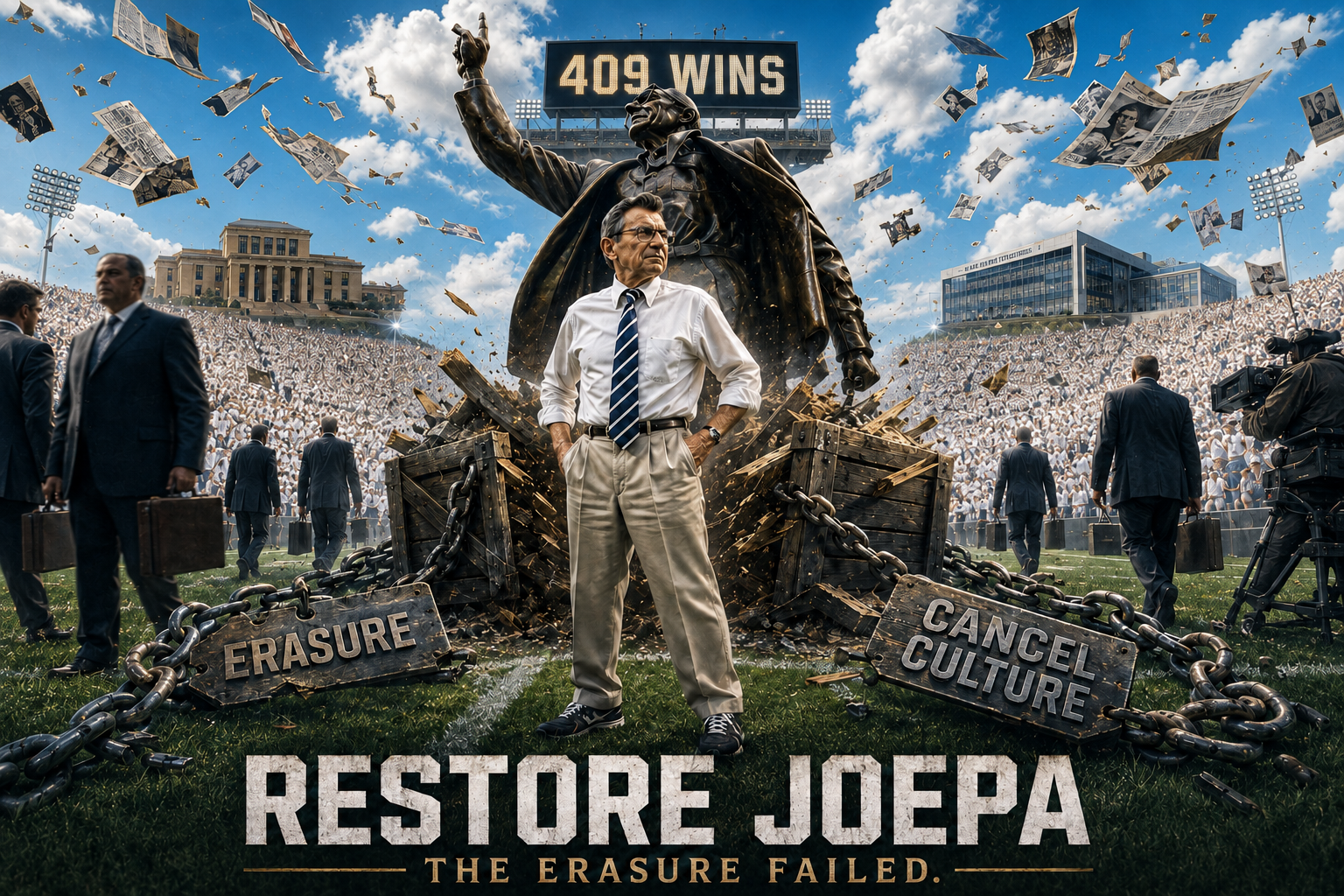
Fourteen years after removing Joe Paterno’s statue, the university finally acknowledges that history cannot be selectively edited.
LUTHMANN NOTE: Greg Maresca calls this a necessary correction. I call it the first payment on a moral debt. The destruction of Joe Paterno was proto-cancel culture in full battle dress. A frightened university, a ravenous media machine, expensive investigators, lawyers, consultants, and institutional cowards rushed to deliver a public verdict before history could catch its breath. Penn State records show that millions flowed to the legal, investigative, consulting, and communications apparatus surrounding the scandal. Paterno died with his name under siege. JoePa was a devout Roman Catholic, a traditionalist, an educator, and a patriot. He believed in God, family, discipline, loyalty, service, and the transformative power of education. He owed no apology for those values. Jerry Sandusky’s conviction belongs to Jerry Sandusky. It should not be used as a permanent historical solvent capable of dissolving Paterno’s 61 years of service, 409 victories, academic mission, philanthropy, and undeniable role in building Penn State. The Experience Room is welcome. It is not enough. Restore the statue. Restore the record. Give JoePa back his rightful place. To hell with the erasure. This piece is “Penn State’s Necessary Correction.”

By Greg Maresca
(State College, Pa.) – For years, Penn State wanted to forget Joe Paterno.
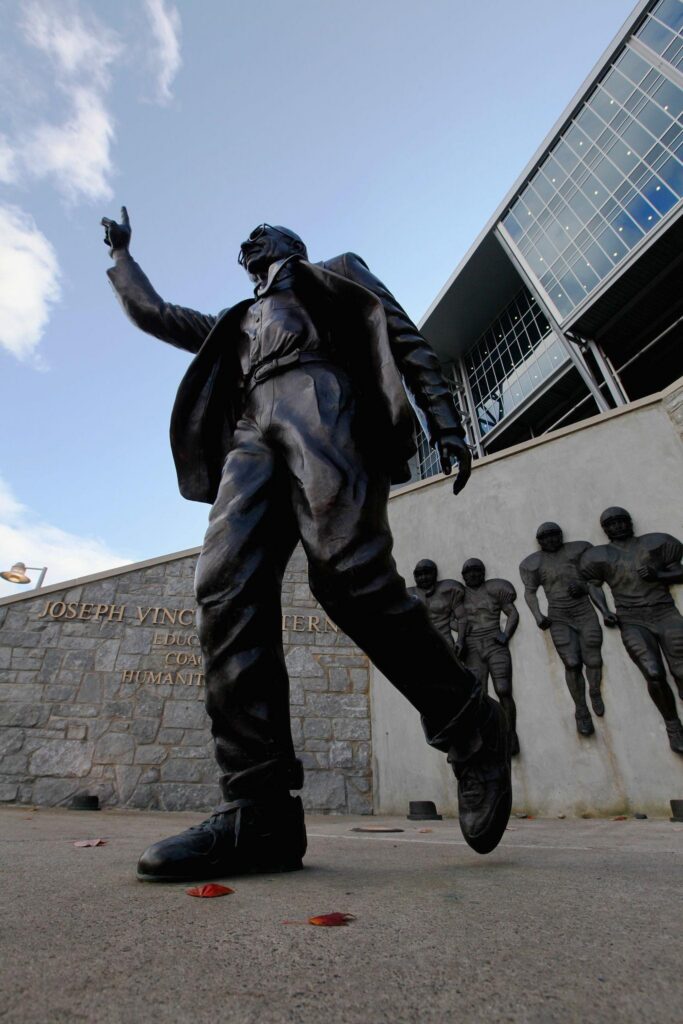
The statue outside Beaver Stadium was removed. His name disappeared from places where it once stood prominently. Public discussion of his legacy became so uncomfortable that many simply avoided the subject. In the aftermath of the Jerry Sandusky scandal, Penn State understandably sought distance from one of the darkest periods in its history. Yet, in the process, the university often appeared determined to erase not just a man, but an entire era.
That is why Thursday’s opening of the Paterno Family Football Experience Room inside Beaver Stadium’s Penn State All-Sports Museum feels less like a celebration and more like a long-overdue correction.
History should never be whitewashed.
Neither should it be erased.
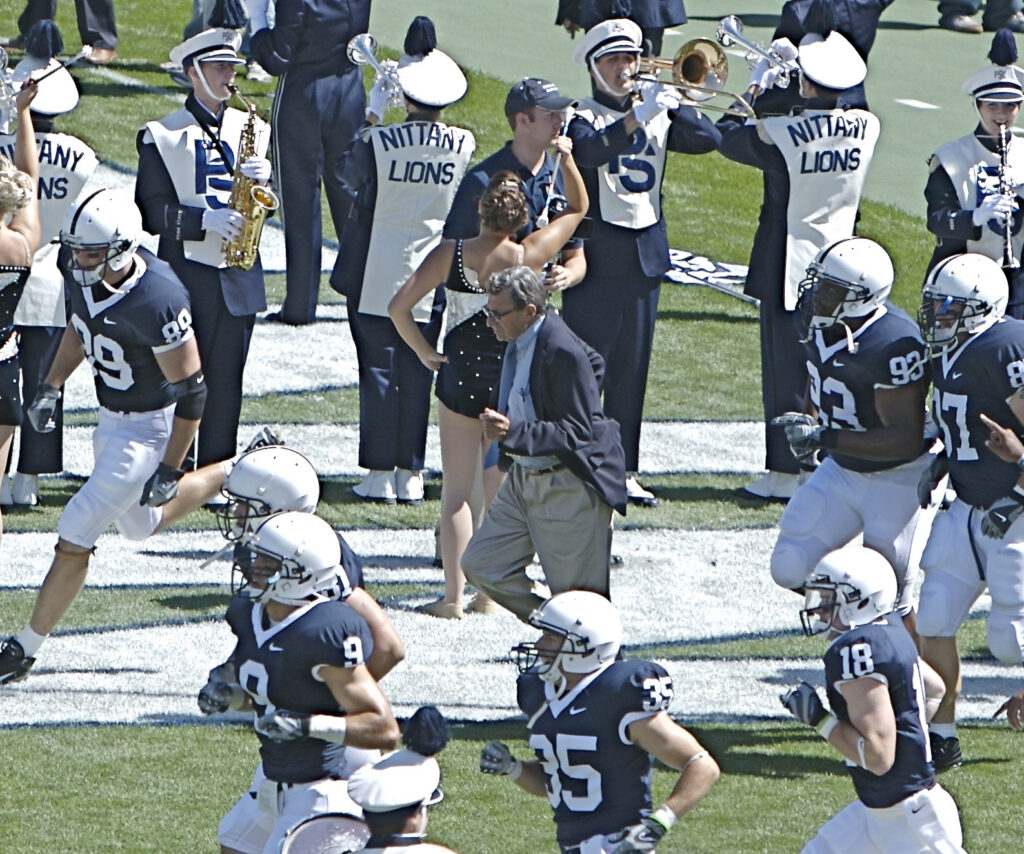
Joe Paterno was by no means a minor figure at Penn State. Rather, Paterno was Penn State for more than six decades. He arrived in Happy Valley from Brooklyn, New York, in 1950 as an assistant coach and spent the next 61 years helping to build one of the nation’s most respected football programs.
Generations of Penn Staters knew no other face of Penn State football. Entire traditions, rivalries, memories, and Saturdays in Beaver Stadium were shaped by his leadership.
The accomplishments alone are staggering: two national championships, 409 victories, five undefeated seasons, and 24 bowl wins in 37 appearances. He established a reputation for graduating players and stressing academics long before such ideas became fashionable in major college athletics, an approach that became known as the Grand Experiment.
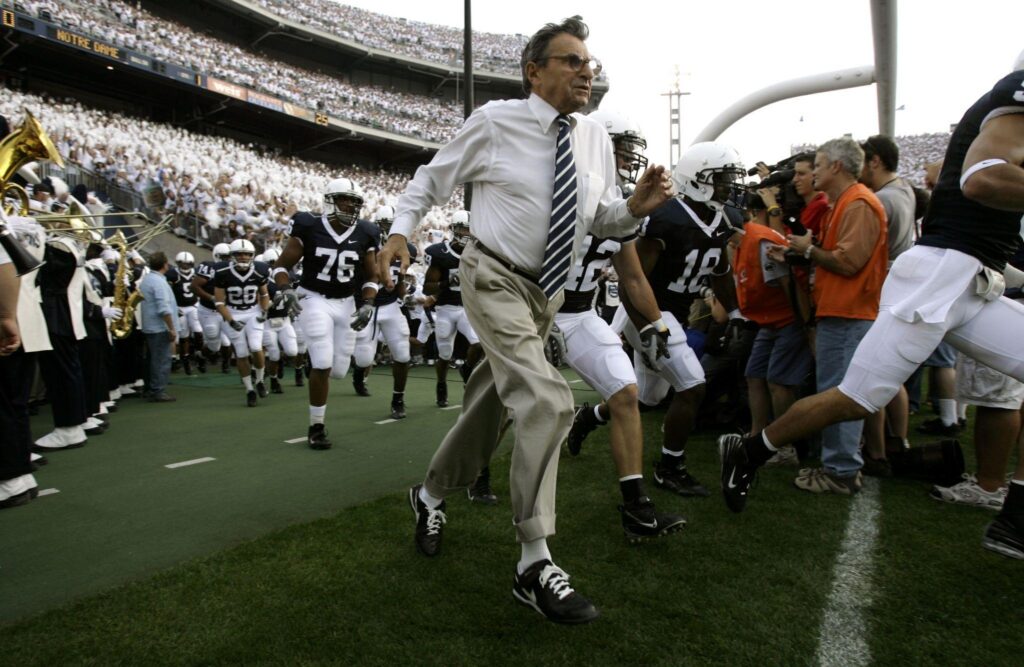
Paterno championed the Grand Experiment, believing that a football scholarship was an educational gold mine in which players were expected to attend class, graduate, and represent something greater than themselves. Today’s game is the antithesis of such an antiquated philosophy, with players cashing in on NIL deals, signing with agents, and loading up on transfer destinations rather than earning semester credits, all while pretending this is still amateur athletics.
Long before coaches signed multimillion-dollar contracts and jumped schools whenever a better offer was tendered, Paterno represented a different model. Loyalty mattered. Stability mattered. Service mattered. During his tenure, you could see change on the horizon as the game became increasingly commercialized. He remained connected to the university’s broader educational mission.
His philanthropy reflected those values.
The Paterno family donated millions of dollars to Penn State. The Paterno Library stands as one of the most recognizable academic landmarks on campus. Educational initiatives, scholarships, and cultural programs benefited from his generosity. He also supported the Pasquerilla Spiritual Center, home to Catholic ministry and other faith communities, helping strengthen the institution’s commitment to the whole student, not simply the athlete.

Those contributions were not publicity stunts. They were investments in the university he loved.
Critics will argue that Paterno’s legacy can never be separated from the Sandusky scandal. They are entitled to that opinion. The events surrounding that tragedy will always remain part of the historical record.
However, history demands honesty, even when it is uncomfortable.
But honesty also requires balance.
A university cannot credibly celebrate over a century of Penn State football while pretending the individual most responsible for building that tradition did not matter. You cannot tell the story of Beaver Stadium, Penn State football, and the rise of the Nittany Lions as a national brand without telling the story of Joe Paterno. Omitting his place in that narrative does not promote truth.
It distorts it.
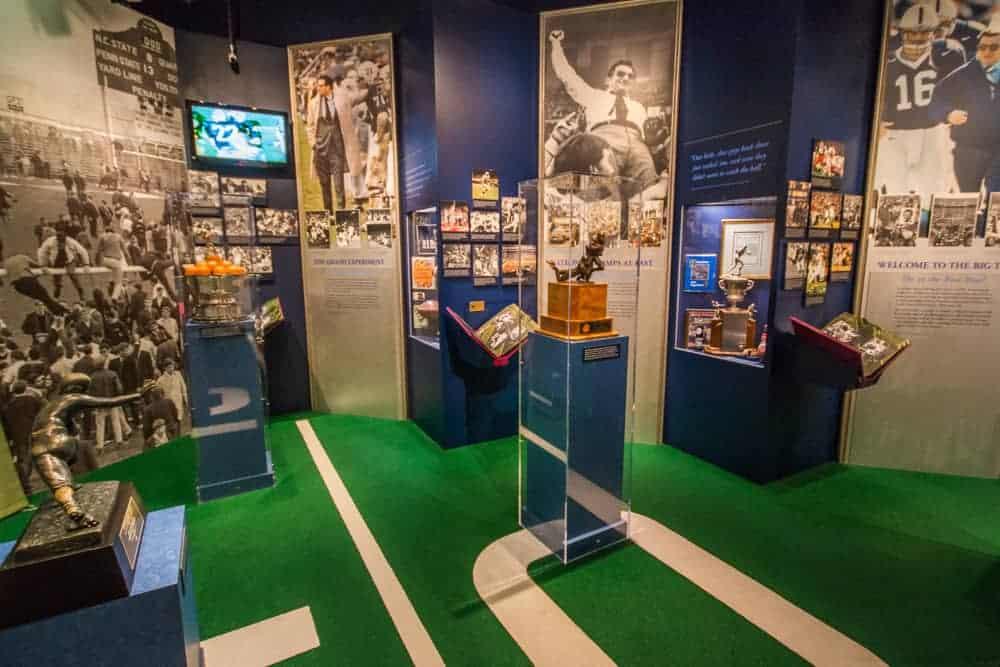
The new Experience Room recognizes that reality. According to Penn State Athletics, it includes Paterno’s desk, artifacts from his career, and exhibits documenting the history of the football program. It places him within the broader story rather than attempting to place him above it.
That distinction matters.
Universities exist to preserve history, not sanitize it. Their mission is to educate, not to selectively edit the past according to contemporary mores. A university should possess the confidence to acknowledge both extraordinary achievements and painful controversies without allowing either to completely overwhelm the other.
Joe Paterno was neither a saint nor a villain. He was a human being whose life left an enormous imprint on Penn State University. His successes were real. His contributions were substantial. His influence remains undeniable.
About The Author

Leave a Reply