

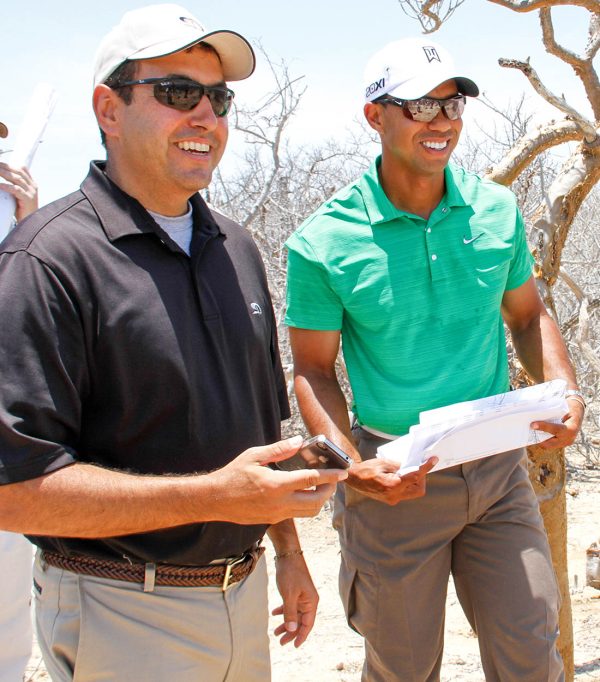
Ken Jowdy sells a golf paradise while bank records, investor lawsuits, and disputed transfers tell a far dirtier origin story.
LUTHMANN NOTE: Tiger Woods designed a golf course. Davis Love III designed another. Neither man audited Ken Jowdy’s bank statements, verified the promised investor liens, or explained why project money entered Jowdy’s personal account. Celebrity associations are not certificates of financial innocence. They are the architectural steel Jowdy used to reinforce a public identity that court records repeatedly challenge. The issue is not whether Diamante eventually became magnificent. It did. The issue is whether investors were honestly treated as Jowdy transformed himself from a financially pressured promoter into a world-class developer. Success can build a resort. It cannot launder the unanswered questions beneath its foundations. This piece is “The Man Behind The Brochure.”


By Richard Luthmann and Fernando Jiménez Burke
The Visionary in the Golf Shirt
Ken Jowdy’s official biography is polished until it shines like a new driver beneath the Cabo sun. Diamante Cabo San Lucas calls him the “visionary” behind its master plan, the founder and chief executive personally involved in major decisions involving financing, construction, permitting, sales and operations.
The resort’s public history credits Jowdy with assembling the team that transformed Pacific dunes into a global golf destination: the Davis Love III-designed Dunes Course, Tiger Woods’ El Cardonal and an expanding luxury community wrapped in championship names, ocean views and PGA Tour prestige. That is the Jowdy story sold to homeowners, golfers, investors and the sporting world.
It is the brochure version—clean, triumphant and expensive.
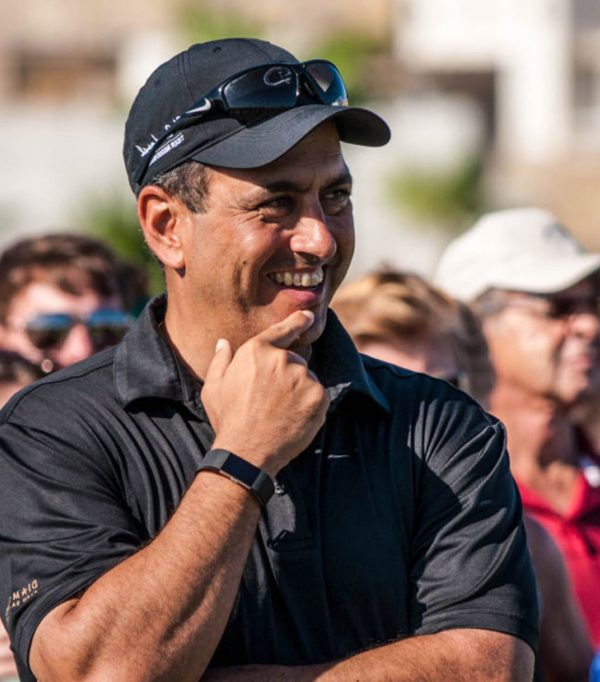
Tiger Woods’ own website confirms the scale of the halo. El Cardonal opened in December 2014 as the first completed course from Tiger Woods Design, joining Davis Love III’s course at Diamante. Woods later celebrated the opening beside Jowdy, who announced another Woods-designed course.
Jowdy was no longer merely a developer. He had become a man photographed beside greatness, using the most valuable names in golf as architectural steel around his reputation.
But reputations built on golf legends do not erase bank statements. Long before Diamante became a PGA Tour showcase, Jowdy was raising money for another Baja dream called Diamante Del Mar. The documents from that project reveal a second Jowdy—not the master developer standing beside Tiger Woods, but a financially pressured promoter moving investor money through an early maze of companies, accounts and promises.
The first crack in the brochure did not appear in a newspaper. It appeared on a bank statement.
The Man Behind The Brochure: The Account Opened at Zero
The August 2002 statement for Baja Development Corporation begins with the most honest number in the entire Jowdy saga: zero. The account opened with no money. Then investor funds arrived. The statement records deposits totaling more than $3.3 million during the month, including large incoming transfers identified in the attached annotations as funds associated with Jason Woolley, Dimitri Khristich and Phillip Kenner.
The underlying bank statement—not the annotations—is the evidence. It shows money entering a newly opened Baja Development Corporation account and then leaving through a rapid succession of transfers, wires and debits.
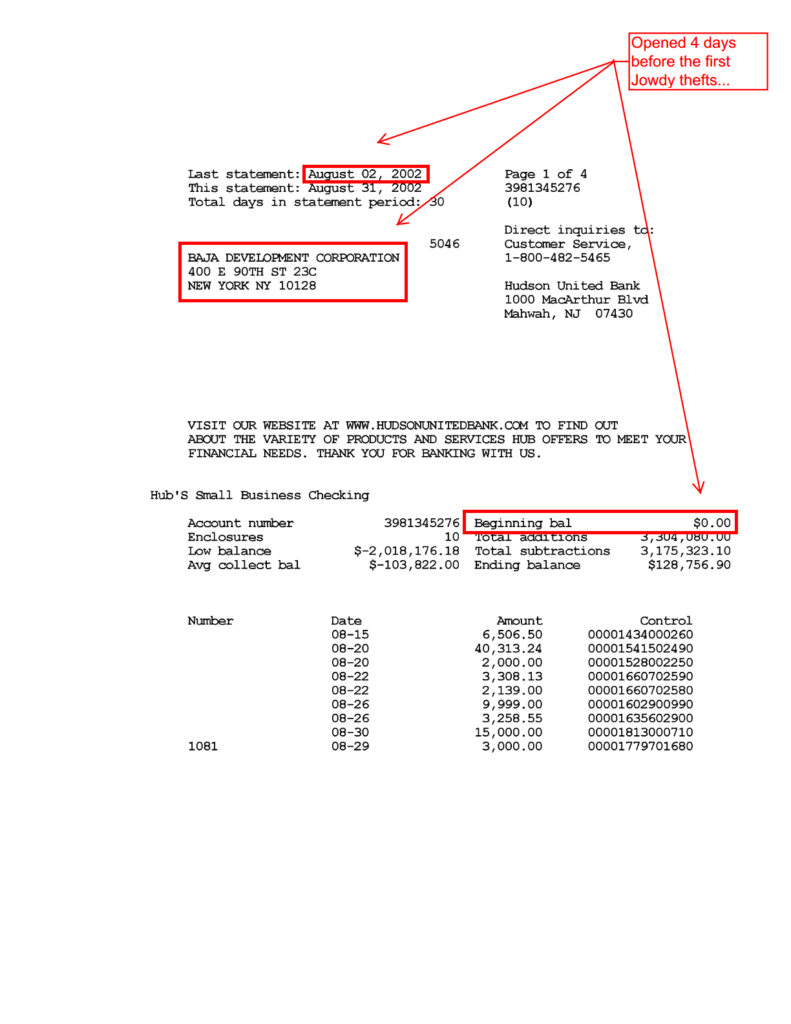
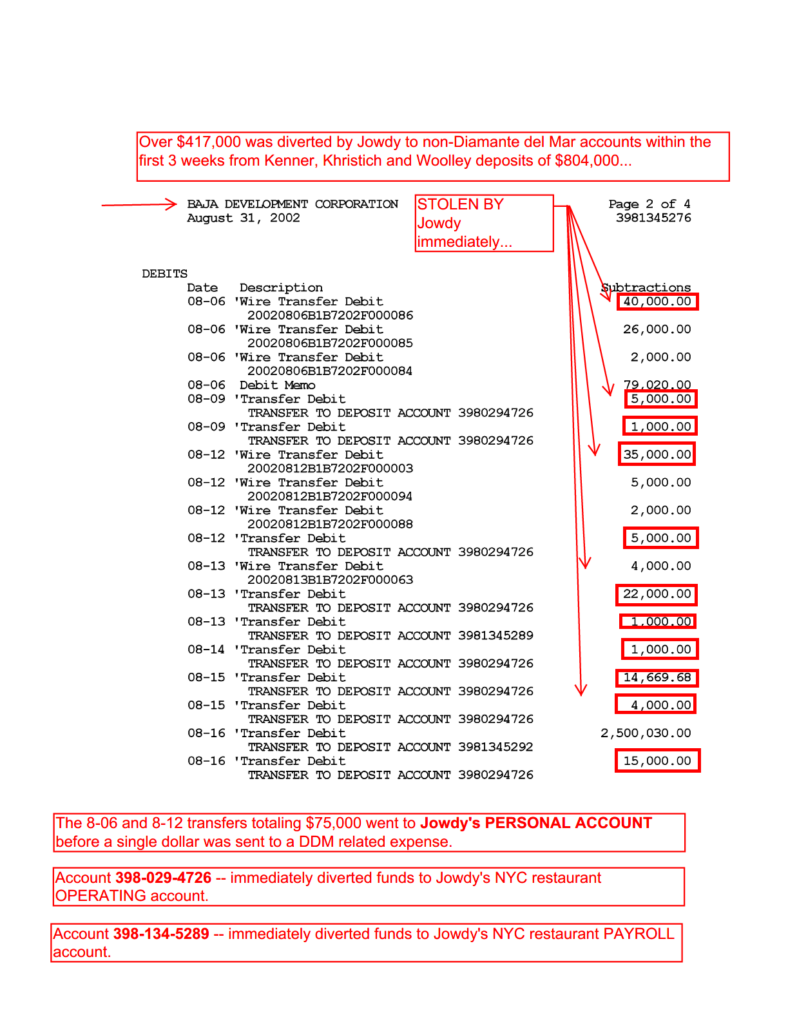
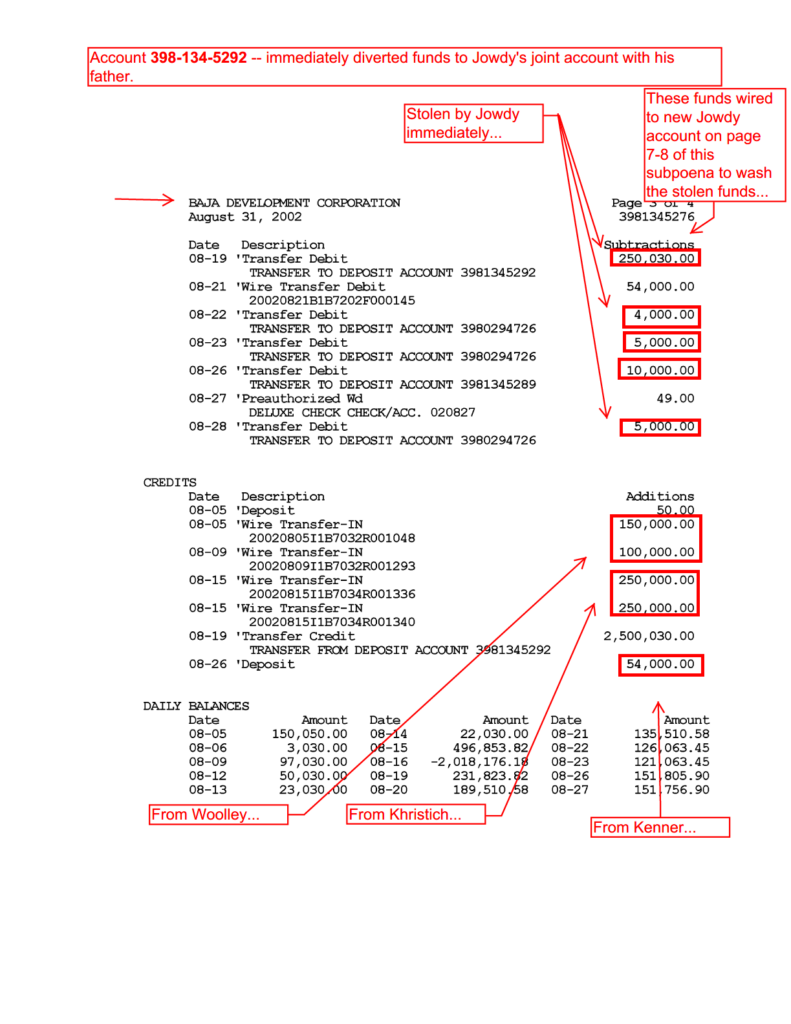
It does not independently establish criminal intent or identify the ultimate beneficial owner of every receiving account. It does establish that the early capital did not sit untouched waiting for bulldozers, engineers and golf-course architects.
The first statement is especially damaging to the sanitized mythology because it captures the project at birth. There was no accumulated operating history, no sprawling completed resort and no mature cash-management system. There was a fresh account, fresh investor money and immediate movement.
On August 6, two $40,000 transfers left the account. Additional transfers followed to other deposit accounts in amounts including $79,020, $35,000, $22,000, $15,000 and numerous smaller sums.
On August 16, $2.5 million was moved into an account held by LMJ Management LLC, followed by a $250,000 outgoing wire from that account. The documents require explanation, not decoration.
One attached December 2002 letter from Bill Najam to Hudson United Bank makes the problem more concrete. Najam instructed the bank to wire $100,000 from Baja Development Corporation to Jowdy’s personal account, while depositing Jowdy’s personal check into Baja Management and then moving money again into the Diamante Del Mar account.
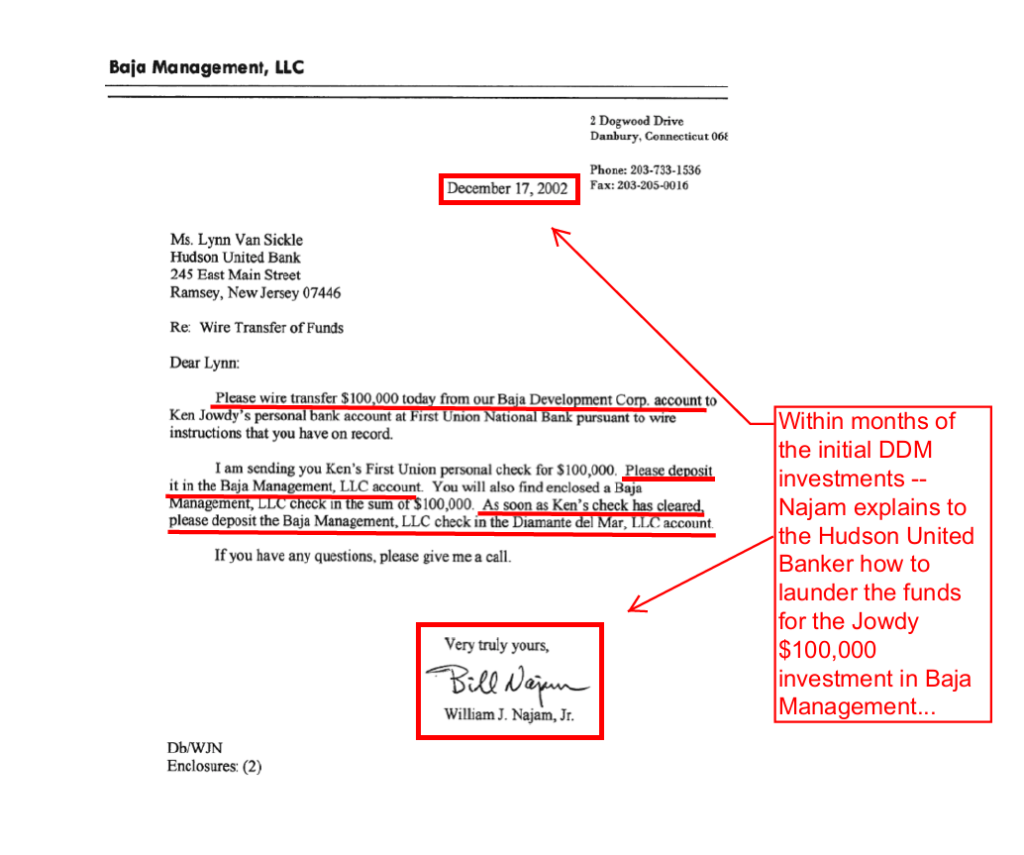
The letter does not prove laundering merely because an annotation uses that label. It does show circular movement among a project company, Jowdy’s personal account,unt and related entities.
That is not a brochure. That is a money trail. These Jowdy capital account funds belonged to other investors, not Jowdy. Najam moved them as Jowdy’s personal contributions.
No investor records reconcile these highly undocumented transfers that migrate to “Jowdy capital contributions,” as his 2010 FBI interview verified.
The Man Behind The Brochure: Promises Written on Other People’s Land
The early sales pitch was not merely that investors were buying into a speculative Mexican venture already under Jowdy’s purchased control. This was untrue. Written documents promised security.
On September 9, 2002, attorney Thomas Harvey told investor Owen Nolan that Baja Development Corporation would secure a $500,000 promissory note by filing a lien against approximately 10,000 acres near El Rosario.

Harvey wrote that shares of the Mexican landholding company would be transferred to Baja Development Corporation.
He also represented that two other $500,000 notes would be protected through liens and that Nolan would receive a golf-club membership and an ocean-view building lot. The note would be repaid after 100 members joined the proposed club.
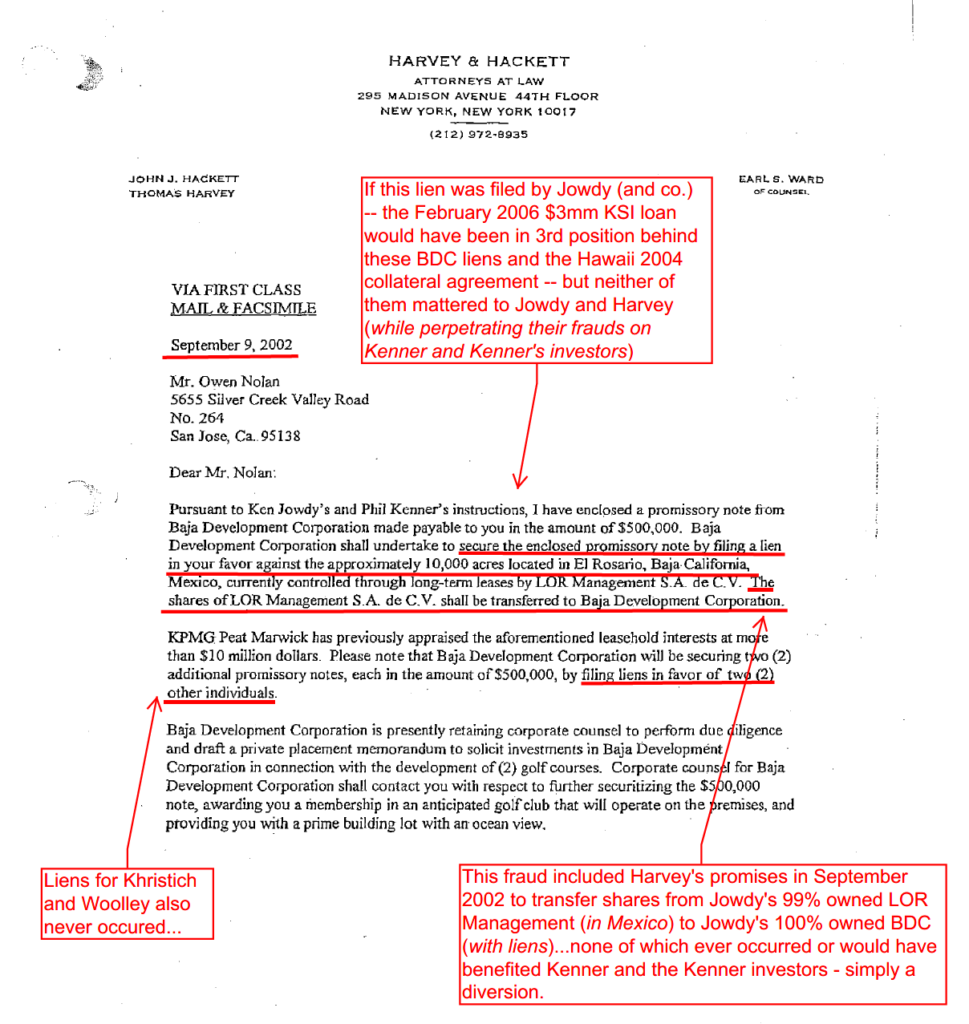
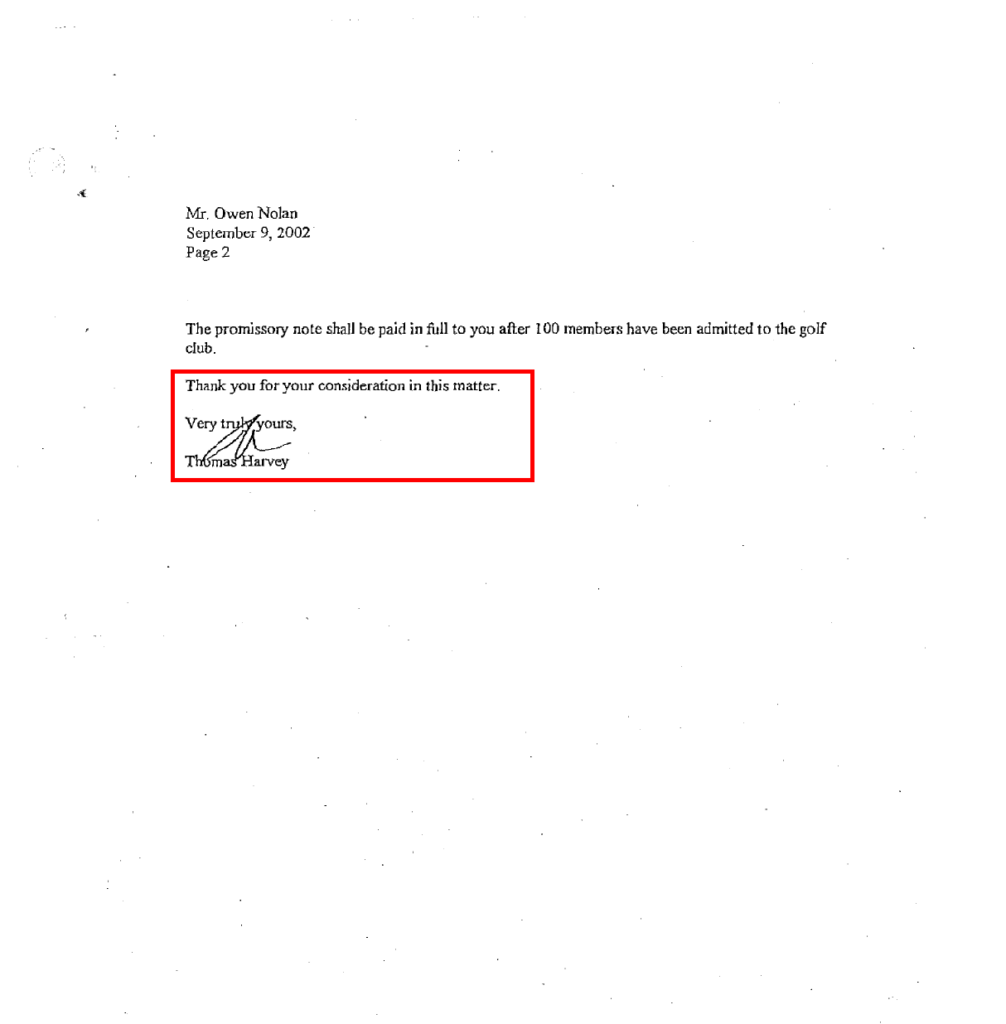
Those were not casual barroom assurances. They were representations from counsel involving identified collateral, corporate transfers, and promised liens. They also create obvious factual questions:
- Were the shares transferred?
- Were the liens filed?
- Did the investor-controlled entity ever obtain the property interest it was promised?
- Did the collateral remain available when later financing was placed against the land?
We reached out to Diamante and invited Jowdy and Harvey to answer these questions with recorded instruments, corporate books, and title documents. If they cannot, it stands to reason that investors may have been misled.
By April 2005, the underlying Diamante Del Mar property had real value. A KPMG appraisal valued the fee-simple and leasehold interests at approximately $68.9 million: cash owned.
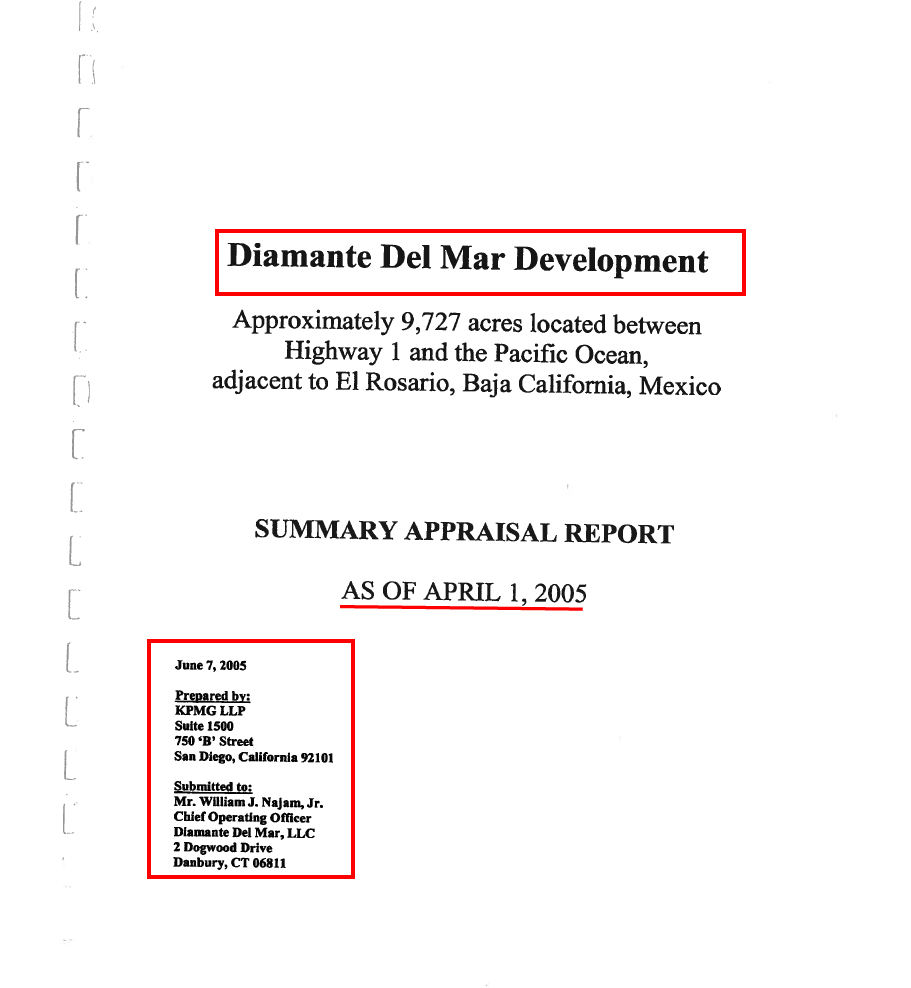
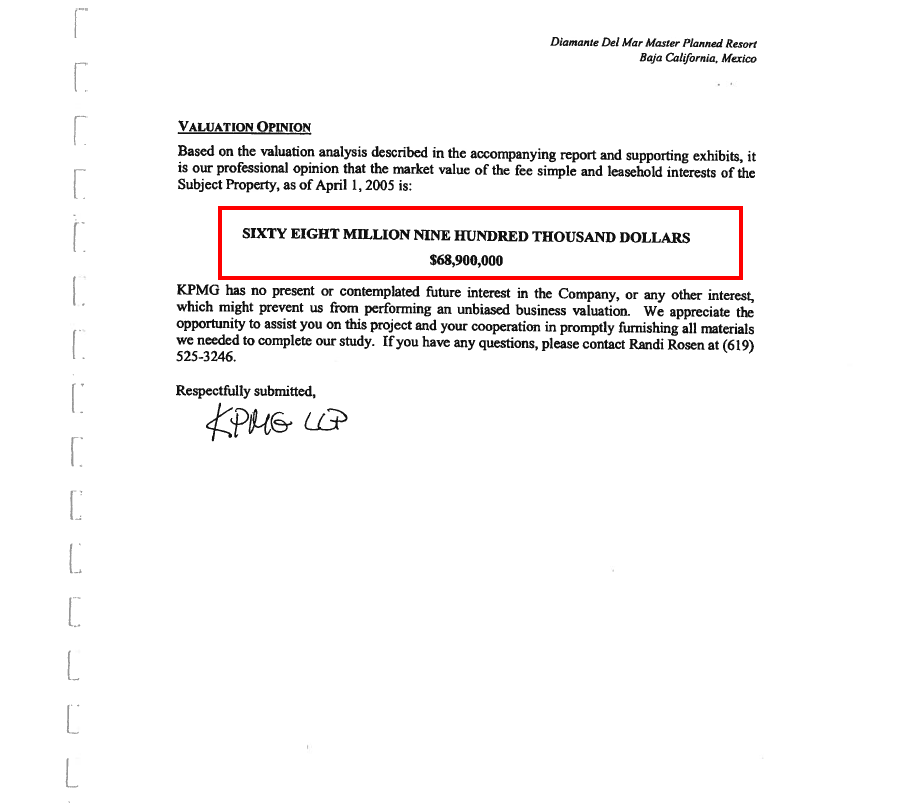
The report described approximately 9,727 acres and noted that legal counsel represented that Diamante Del Mar had acquired good, marketable, and insurable title to significant portions of the land.
The appraisal also identified ambitious development plans that would require hundreds of millions in future spending.
The question is therefore not whether the Baja property was worthless. It plainly was not. The question is how a project backed by millions in investor cash and land appraised at $68.9 million could become the subject of claims that investors never received promised title protection, liens or a transparent accounting.
This was potentially a valuable development. That makes the missing protections more serious, not less.
The Man Behind The Brochure: The First Development Becomes the First Warning
The 2009 California investor complaint concerning Diamante Del Mar presents the investor version of what happened next. It alleged that professional hockey players invested millions in the project, that Jowdy was paid a substantial salary and expenses to manage their capital, and that the promised golf courses, residences and supporting infrastructure did not materialize.
The plaintiffs alleged that approximately $10 million was spent over several years while the most visible completed improvement was an airstrip. They further alleged that Jowdy later obtained a $3 million hard-money loan against the property without investor knowledge or consent and that the use of those proceeds remained unexplained.
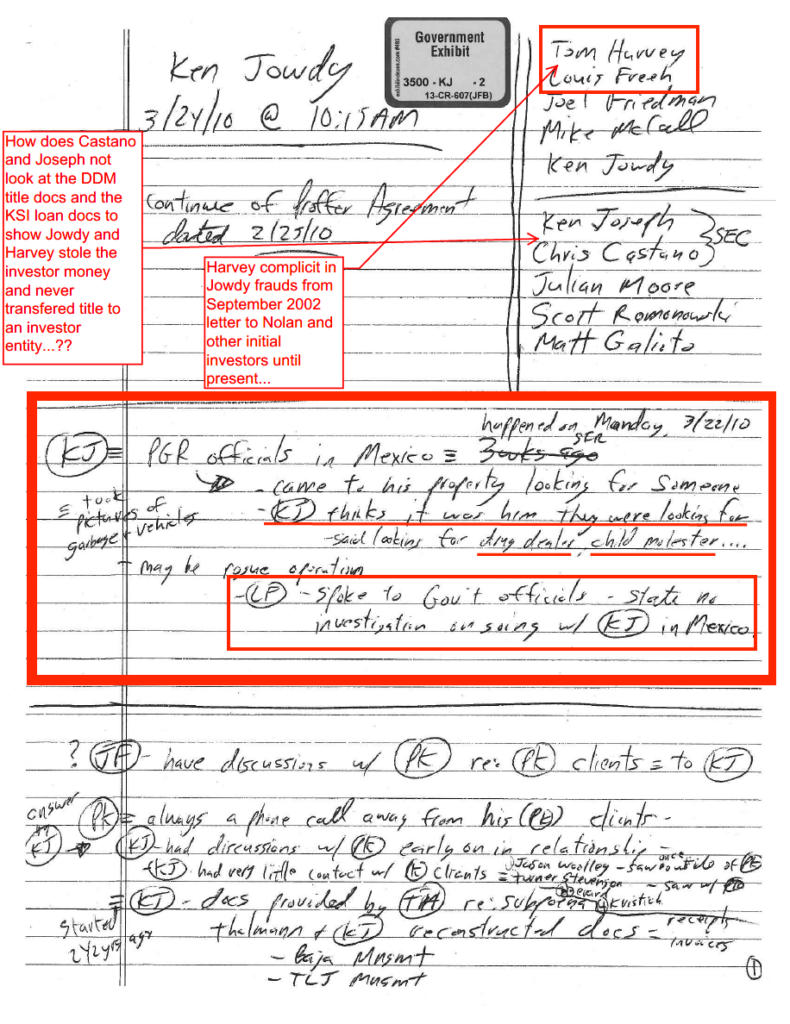
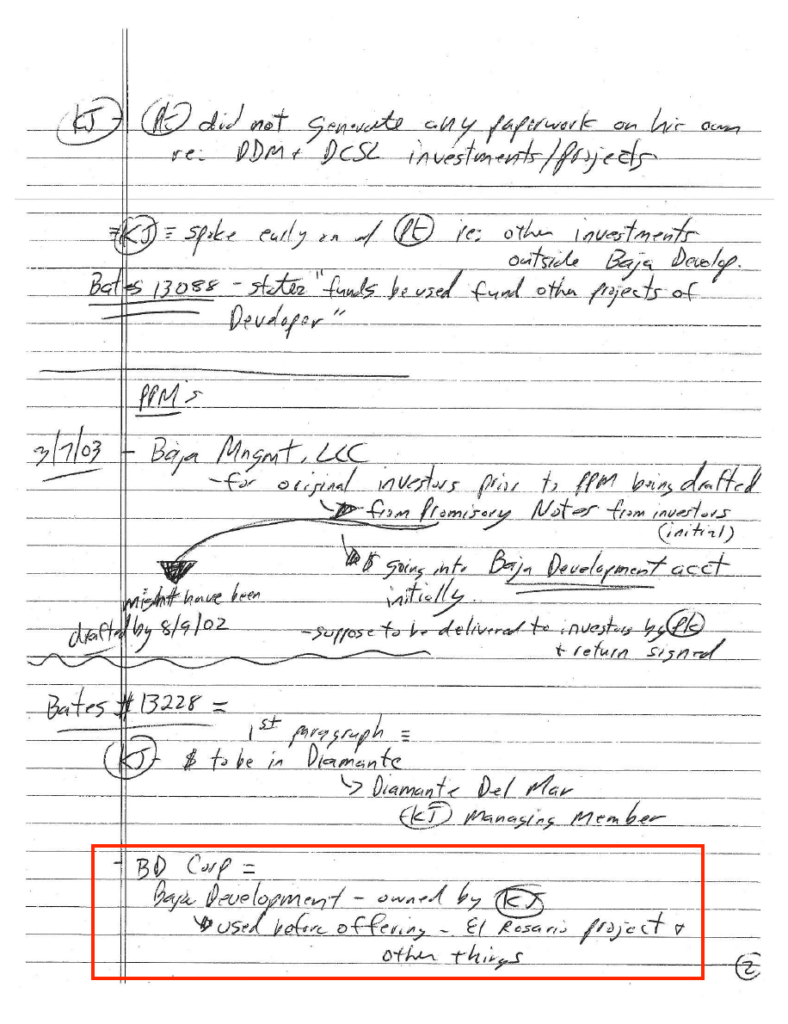
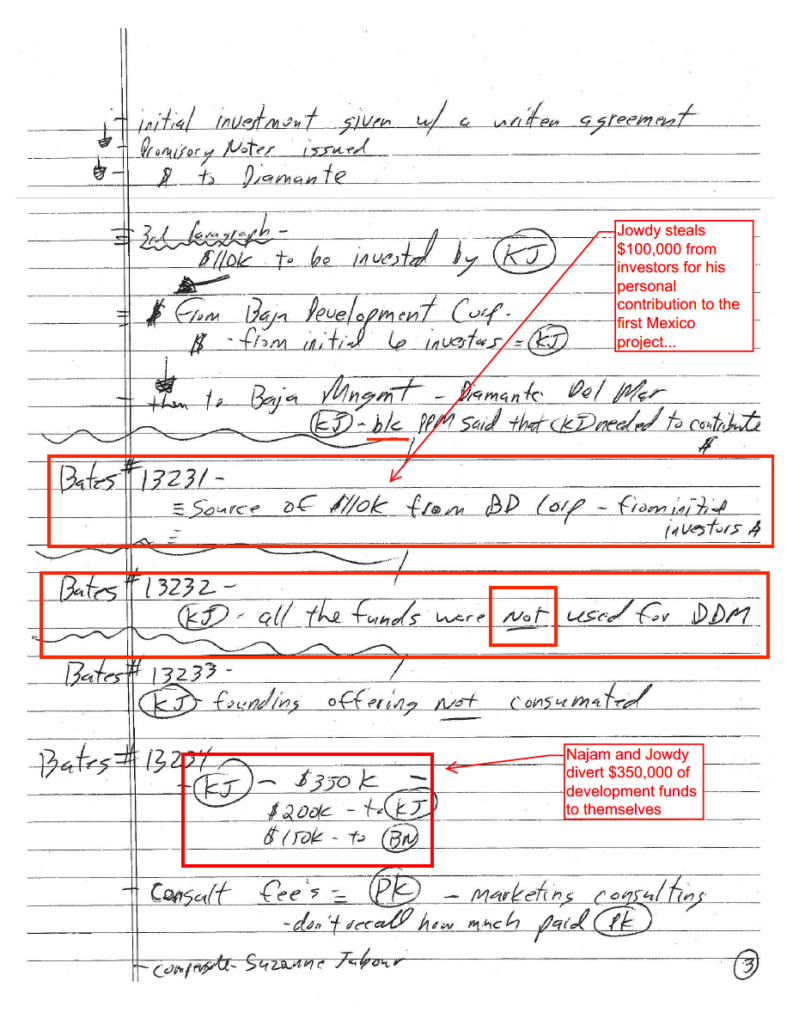
Bank records verify that Jowdy and Najam drained the loan funds for personal use, as corroborated by FBI records associated with Jowdy’s subpoenaed bank records. Jowdy received the funds unbeknownst to the Del Mar investors. Jowdy and Najam dispersed them into personal accounts and purposes. Investors lost a $10 million cash investment and $68.9 million appraised land in default.
Jowdy moved on: protected.
Yet allegations become harder to dismiss when they align with contemporaneous records. The bank statements show immediate transfers from the first investor-funded account. Harvey’s letter promised liens and a transfer of landholding shares. The KPMG appraisal documented substantial property value. The complaint later alleged that the land was encumbered while investors remained without the development and protections they believed they purchased.
That is a coherent factual sequence requiring answers.
The point here is not to pronounce Jowdy guilty of fraud from the editorial desk. It is to strip away the immunity created by celebrity golf associations.
Tiger Woods designed a golf course. Davis Love III designed another. Neither fact audits Jowdy’s early bank accounts, verifies that promised liens were filed, nor explains how investor-funded property moved through later financing.

The conventional Jowdy story begins in 2009 when the Dunes Course opened, and paradise emerged from the sand.
The other story begins seven years earlier with an empty bank account, incoming investor millions, and money moving almost immediately toward personal and related-company accounts.
That is the origin story the brochure leaves out.
Related posts:
Mr. McGibney’s NXIVM Docu-Disaster
Hochul's Political Hack in a Robe? Litigants Move to Bounce Manhattan Judge from NY‑11 Case
LUTHMANN NAME GOES LEGENDARY
STATEN ISLAND ELECTION DISGRACE: KAMILLAH HANKS AND DA MIKE MCMAHON
Who's His Lawyer? Erie Assigned Counsel Program Goes Silent
Substack CEO Chris Best Joins the Censorship Club
About The Author

Leave a Reply