


Erie County defense system chief Kevin Stadelmaier can’t answer basic questions.
LUTHMANN NOTE: This isn’t complicated. The law says 45 days. That’s the rule. If the system can’t follow it, it’s not a system—it’s a liability. What’s worse is the silence. I asked basic questions—policy questions—and copied the very people responsible for oversight. Nothing. That tells you everything. When an agency refuses to explain itself at the exact moment it’s under political attack, it’s not defending its independence—it’s surrendering it. If Poloncarz wants to tear this down and replace it with something he controls, ACP just handed him the blueprint. This isn’t about one case anymore. It’s about whether the system works at all. This piece is “Who’s His Lawyer?”

By Rick LaRivière with Richard Luthmann
A Jailhouse Call Blows the Lid Off a Missing File and a Revolving Door Defense
The call came in from the Erie County Holding Center, and what followed sounded less like routine court administration and more like a system coming apart at the seams. Reporter Richard Luthmann picked up the line on April 1 and heard the same story Ryan Flynn has been telling for months—only now it was sharper, angrier, and more detailed.
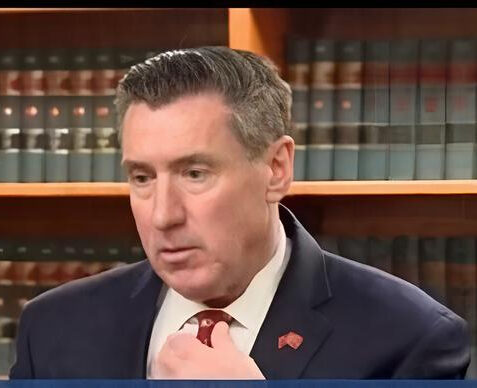
The roots of this case run straight through a deeply personal and explosive family feud involving Ryan Flynn and his cousin, former Erie County District Attorney John Flynn. Ryan has publicly accused the former DA of serious misconduct, including allegations of sexual abuse. Those claims remain contested and unproven in court, but they have set the stage for a high-stakes legal and political clash.
Ryan Flynn, once the accuser, now sits in custody facing criminal charges tied to alleged social media activity, a reversal that his supporters argue reeks of retaliation. The case now sits at the intersection of family conflict, prosecutorial power, and public accountability—raising unavoidable questions about influence, motive, and whether the machinery of justice is being used to resolve something far more personal than legal.
This day was supposed to be his vindication; he was to be released from court. Flynn said deputies dragged him down to intake for transport, only to pull the plug at the last second.
“Your court’s been canceled,” they told him, after he was already processed and waiting.
Flynn was headed to Kenmore to force the issue that has haunted this case from the start. He planned to stand up and say one thing: “My release is mandatory under CPL 190.80 because there is no indictment.”
He believes that moment is exactly what the Erie County machine is avoiding. And the optics are damning. The case appears to be drifting without an anchor. Judge J. Mark Gruber, a longtime associate of the former DA, recused, but the file never followed. Weeks passed with no transfer. The last real appearance, he said, was February 19.
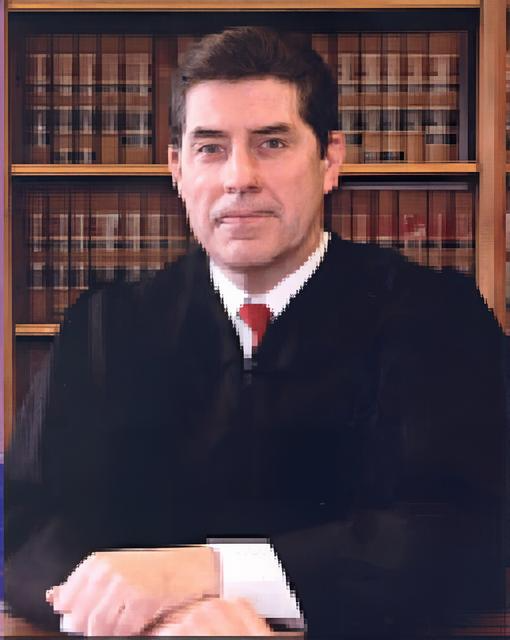
By April 1, the case was still floating in procedural limbo, with no file, no continuity, and no resolution. In a digital age, “misplaced paperwork” is stealing months of this young man’s life.
Meanwhile, the defense side looks like a revolving door spinning off its hinges. Flynn rattled off names like a man reading a roster that changes by the week—Daniel Brady, Mark Fiorello, Cindy Cooper, Nick Texido, and now a new mystery lawyer he calls “Bob Colletta.”
He said he has never met the latest attorney. He said the excuse was simple: the lawyer “could not make court.” That explanation conveniently lined up with the second excuse—the missing file.
Then came the detail that cuts straight to the heart of the story. Flynn said he tried to call the Assigned Counsel Program from jail five times.
The result?
Five refusals. No answers, no callbacks. Nothing. He handed over the email—clients@assigned.org—and told Luthmann to try his luck.
We are well past the point where this stops looking like mere bureaucratic sloppiness and starts looking like a system that cannot, or will not, answer for itself.
Who’s His Lawyer? The Law Says 45 Days—Not “Whenever Erie County Gets Around to It”
New York’s CPL 190.80 is not some obscure legal footnote buried in a dusty codebook. It is a hard deadline with teeth. Forty-five days. That is the clock. If a defendant sits in jail waiting for a grand jury and the clock runs out, the law does not suggest release. It commands it. The court “must” release the defendant on recognizance unless prosecutors show real cause or the defense caused the delay.
That is the entire point of the statute: to stop exactly what appears to be happening here—a county warehousing a defendant while the paperwork drifts and the process stalls.
This is not about whether someone is popular or guilty. The law does not bend based on sentiment. It applies evenly, or equal justice under law means nothing.

And here is where Erie County’s problem gets uncomfortable. The Assigned Counsel Program does not treat CPL 190.80 as rare or exotic. It treats it as routine. The ACP website openly hosts motion templates for it. Not one. Multiple. “Held After Hearing.” “Held After Waiver.” That is an office that knows this statute cold and expects its lawyers to use it.
The internal handbook drives the point home even harder. Mentors are told to guide attorneys through grand jury practice—not casually or optionally. It specifically calls out monitoring CPL 190.50 and 190.80 motions as a core quality expectation.
That is the standard ACP set for itself.
Which makes the current situation impossible to ignore—because if this rule is basic, and the templates exist, and the training exists, then the failure is not confusion. It is execution.
Other reporting has already thrown gasoline on the fire. Frank Parlato reported that Flynn sat in custody for 151 days without an indictment—more than triple the statutory limit. Frank Report bluntly argued the law required his release long ago.
Maybe that claim holds up. Maybe it doesn’t. Court records will ultimately decide that. But before anyone gets there, a simpler question demands an answer.
If the law is clear, and the tools are in place, and the clock has been ticking for months—who, exactly, was supposed to file the motion?
Who’s His Lawyer? Simple Questions, Stone Wall
Richard Luthmann did not ambush anyone. He did not demand privileged strategy or confidential communications. He asked some basic, public, courtroom-level questions—the kind any clerk, docket, or courtroom observer should be able to answer in seconds after Ryan Flynn said he was not transported to court for the scheduled March 31 date.
The simplest: Who is Ryan Flynn’s lawyer?
On April 1, Luthmann put it in writing. A formal “PRESS INQUIRY”—clean, direct, and professional—asking for the attorney of record. He also asked about basic office procedures, framing everything at the policy level, not case strategy. This was not a trap, but a test of whether the system could answer for itself.
Luthmann even did their homework for them. Tracking down the name “Colletta,” Luthmann identified Michael Colletta of Rupp Pfalzgraf LLC, complete with firm address and public email. If that was the lawyer, say so. If not, correct it. Simple.
That is where the story stops being bureaucratic and starts becoming something else entirely.
ACP chief Kevin Stadelmaier did not answer the simple question: Who’s His Lawyer? He swatted it away.
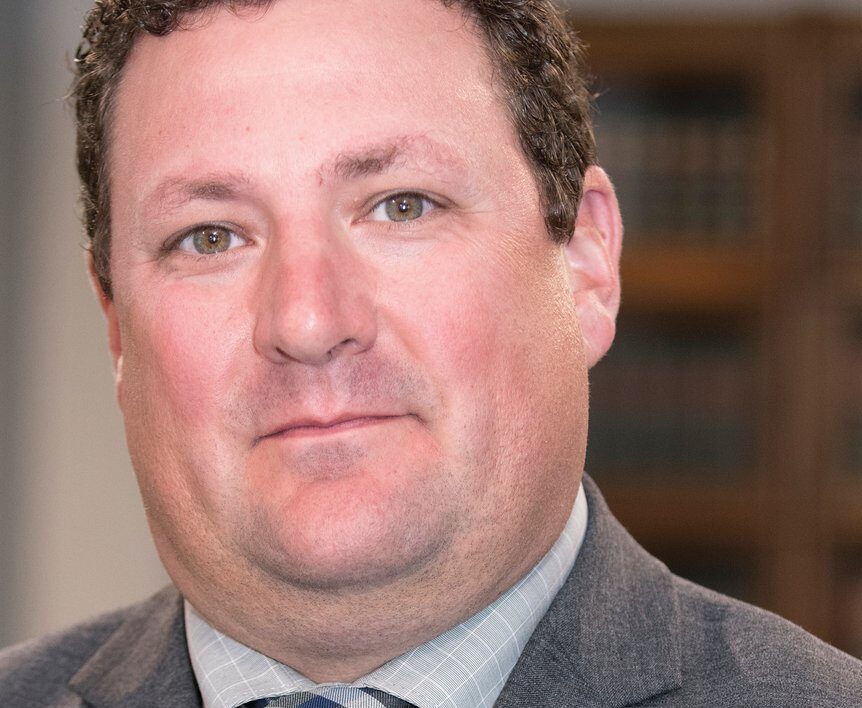
“Mr. Colletta is not Mr. Flynn’s attorney,” he wrote. Then came the line that turned heads: “I have provided you the information I will provide. Please do not contact me on this matter again.”
Read that again—not a clarification, a referral, or even a refusal grounded in law. Just a shutdown of the free press.
And here is why that matters. The identity of counsel is not privileged, protected, or sensitive. It is a basic, public fact that appears in open court every single day. Yet the head of Erie County’s Assigned Counsel Program refused to provide it—and told a reporter to stop asking.
At the same time, Stadelmaier advanced a second position that collapses under its own weight. He said ACP cannot comment on “open and active files.” He said inquiries would be forwarded to Flynn’s attorney. He said that the attorney would respond only if it served the client’s interest.
That is not transparency. That is a closed loop straight out of Franz Kafka.

ACP will not name the lawyer. ACP will not speak because the case is open. The unnamed lawyer may or may not speak, depending on internal judgment. The result is exactly what it looks like—a system sealed off from scrutiny, where the public cannot even identify the person responsible for protecting a defendant’s rights.
It is a black box. And right now, Erie County is holding the lid shut.
Who’s His Lawyer? The Questions That Could Save ACP—And the Silence That May Kill It
Luthmann did not ask Kevin Stadelmaier to spill privileged communications, trial tactics, or sealed-file material. He asked the questions any serious indigent-defense program should be ready to answer on demand if it wants the public to keep trusting it.
He asked about reassignment rules in felony cases, whether repeated turnover triggers management review, whether ACP treats that churn as a quality warning sign, and what internal systems exist to track CPL 190.80 deadlines for jailed defendants.
He asked whether ACP uses deadline “ticklers,” who gets alerted as day 45 approaches, and what happens if no motion has been filed.



He asked whether ACP audits compliance with grand jury-phase obligations, whether it has policies against political pressure on panel attorneys, whether outside contacts get logged, and whether conflict protocols exist for relationships involving Mark Poloncarz, John Flynn, John Crangle, or Kathy Hochul.
He even asked whether ACP tracks bail outcomes by charge category to identify outliers and whether it trains attorneys for vigorous bail advocacy in Criminal Contempt 1st cases.
Those are not case-specific privilege calls. Those are governance and quality-control questions. They are existential. Yet the email record shows Stadelmaier gave no response to those policy inquiries at all.


Luthmann got no answers, so he went upstairs. He gave Stadelmaier an opportunity to reconsider his responses and copied the New York State Office of Indigent Legal Services board and officials at the top of the state’s indigent-defense oversight structure. They include New York State Chief Judge Rowan D. Wilson, former New York Court of Appeals Judge Carmen Beauchamp Ciparick, and Presiding Justice Dianne T. Renwick from the Appellate Division, First Department, along with other oversight figures. The public deserves an answer to the simple question: Who’s His Lawyer? Here is what Luthmann said:
From: Richard Luthmann <richard.luthmann@protonmail.com>
Date: On Wednesday, April 1st, 2026 at 4:15 PM
Subject: RE: PRESS INQUIRY – ARE YOU PROTECTING KATHY HOCHUL AND JOHN FLYNN? – Erie County Assigned Counsel Program (ACP) says it delivers “quality representation”—so who tracks CPL 190.80’s 45‑day clock, and who is Ryan Flynn’s lawyer today?
To: Kevin Stadelmaier <kstadelmaier@assigned.org>, Michelle.Weinhold@ils.ny.gov <Michelle.Weinhold@ils.ny.gov>, Kingston.Farady@ils.ny.gov <Kingston.Farady@ils.ny.gov>, proposals@ils.ny.gov <proposals@ils.ny.gov>, kira.schettino@ils.ny.gov <kira.schettino@ils.ny.gov>, ClaimsForPayment@ils.ny.gov <ClaimsForPayment@ils.ny.gov>, Marian.Bush@ils.ny.gov <Marian.Bush@ils.ny.gov>, fcdata@ils.ny.gov <fcdata@ils.ny.gov>, data@ils.ny.gov <data@ils.ny.gov>, foil@ils.ny.gov <foil@ils.ny.gov>, info@ils.ny.gov <info@ils.ny.gov>, burton.phillips@ils.ny.gov <burton.phillips@ils.ny.gov>, SASC@ils.ny.gov <SASC@ils.ny.gov>, elizabeth.isaacs@ils.ny.gov <elizabeth.isaacs@ils.ny.gov>, SJBatcheller@nysda.org <SJBatcheller@nysda.org>, wilsonchambers@nycourts.gov <wilsonchambers@nycourts.gov>, daa1@westchestercountyny.gov <daa1@westchestercountyny.gov>, communications@westchestercountyny.gov <communications@westchestercountyny.gov>, ce@westchestercountyny.gov <ce@westchestercountyny.gov>, carmen.ciparick@gtlaw.com <carmen.ciparick@gtlaw.com>, postmaster@gtlaw.com <postmaster@gtlaw.com>, DAinfo@ontariocountyny.gov <DAinfo@ontariocountyny.gov>, Stephen.DeChick@ontariocountyny.gov <Stephen.DeChick@ontariocountyny.gov>, HRCompliance@ontariocountyny.gov <HRCompliance@ontariocountyny.gov>, JailVisits@ontariocountyny.gov <JailVisits@ontariocountyny.gov>, cdecastro@cdecastrolaw.com <cdecastro@cdecastrolaw.com>, ved@connorsllp.com <ved@connorsllp.com>, jpaperno@empirejustice.org <jpaperno@empirejustice.org>, AD1ADAliaison@nycourts.gov <AD1ADAliaison@nycourts.gov>, AD1-AGC@nycourts.gov <AD1-AGC@nycourts.gov>, AD1copy-family@nycourts.gov <AD1copy-family@nycourts.gov>, AD1-AGC-newcomplaints@nycourts.gov <AD1-AGC-newcomplaints@nycourts.gov>, ad4-in-house-counsel@nycourts.gov <ad4-in-house-counsel@nycourts.gov>, ad1-in-house-counsel@nycourts.gov <ad1-in-house-counsel@nycourts.gov>
CC: colletta@rupppfalzgraf.com <colletta@rupppfalzgraf.com>, Frank Parlato <frankparlato@gmail.com>, Frankie Pressman <frankiepressman@protonmail.com>, Dick LaFontaine <RALafontaine@protonmail.com>, Rick LaRivière <RickLaRiviere@proton.me>, Michael Volpe <mvolpe998@gmail.com>, Troy@slingshot.news <Troy@slingshot.news>, bblakeman@nassaucountyny.gov <bblakeman@nassaucountyny.gov>, csolages@nassaucountyny.gov <csolages@nassaucountyny.gov>, dderiggiwhitton@nassaucountyny.gov <dderiggiwhitton@nassaucountyny.gov>, dmule@nassaucountyny.gov <dmule@nassaucountyny.gov>, hkopel@nassaucountyny.gov <hkopel@nassaucountyny.gov>, jgiuffre@nassaucountyny.gov <jgiuffre@nassaucountyny.gov>, mgiangregorio@nassaucountyny.gov <mgiangregorio@nassaucountyny.gov>, pmullaney@nassaucountyny.gov <pmullaney@nassaucountyny.gov>, mpilip@nassaucountyny.gov <mpilip@nassaucountyny.gov>, sdavis@nassaucountyny.gov <sdavis@nassaucountyny.gov>, nassauleaks <nassauleaks@protonmail.com>, sandscomments@nassaucountyny.gov <sandscomments@nassaucountyny.gov>, skoslow@nassaucountyny.gov <skoslow@nassaucountyny.gov>, sstrauss@nassaucountyny.gov <sstrauss@nassaucountyny.gov>
Mr. Stadelmaier:
For clarity, I have copied the New York State Office of Indigent Legal Services and its board members:
Current nine-member ILS Board (as listed on the ILS website):
- Hon. Rowan D. Wilson, Chair — Chief Judge of the New York State Court of Appeals
- Diane Atkins — Special Assistant to the County Executive, Westchester County
- Hon. Carmen Beauchamp Ciparick — Greenberg Traurig LLP; former Senior Associate Judge, NY Court of Appeals
- Christopher P. DeBolt — Ontario County Administrator
- César de Castro — The Law Firm of César de Castro, P.C.
- Vincent E. Doyle III — Partner, Connors LLP
- Jill Paperno — Chief Strategy Officer, Empire Justice Center; former Acting/First Assistant Public Defender, Monroe County
- Hon. Dianne T. Renwick — Presiding Justice, Appellate Division, First Department
https://www.ils.ny.gov/about_ils/ils_board/index.php
I asked you TEN questions, and only ONE was specifically about public information in the Ryan Flynn / John Flynn / John Crangle / Kathy Hochul matter.
https://nynewspress.com/kathy-hochuls-secret-affair/
https://luthmann.substack.com/p/kathy-hochuls-secret-affair
1. Without discussing strategy or confidential communications: who is the current attorney of record assigned to Ryan Flynn today? If you contend even the lawyer’s name is “case comment,” please explain the policy basis—because counsel-of-record is ordinarily a public courtroom fact.
You responded:
Mr. Colletta is not Mr. Flynn’s attorney. I have provided you the information I will provide. Please do not contact me on this matter again.
I then asked you NINE questions of General Application about the Erie County ACP:
2. What are ACP’s written rules for reassignment in felony cases (e.g., workload, conflicts, client relationship, performance issues)? How many reassignments in a single custody case does ACP consider “normal” before management review is triggered? NO RESPONSE
3. Does ACP treat repeated turnover itself as a quality warning sign—especially when statutory time limits like CPL 190.80 are potentially implicated? NO RESPONSE
4. What systems and procedures does ACP have to track CPL 190.80 deadlines for incarcerated clients held for grand jury action? Does ACP use automatic “ticklers” in its case-management system for day 30/day 40/day 45? Who gets alerted—assigned counsel only, or supervisors/QA/leadership as well? What happens if day 45 approaches and no CPL 190.80 application has been filed? NO RESPONSE
5. Does ACP audit compliance with “grand jury phase” steps—such as whether CPL 190.50 notices are timely evaluated when applicable—given that the panel handbook explicitly frames 190.50/190.80 monitoring as a quality expectation? NO RESPONSE
6. Does ACP have a written policy that prohibits staff from pressuring panel attorneys to avoid appearing, avoid filing motions, or avoid certain clients for political or reputational reasons? NO RESPONSE
7. What is ACP’s rule if an outside public official, political party operative, or affiliated lawyer contacts ACP about a pending criminal case? Must the contact be logged? Must it be disclosed to defense counsel or supervisors? Is there a firewall protocol? (Answering this at a policy level does not require commenting on any “open file.”) NO RESPONSE
8. Are there any relationships—professional, financial, or operational—between ACP leadership and the following individuals or offices that ACP considers a potential conflict requiring disclosure or recusal protocols:
Mark Poloncarz, John Flynn, John Crangle, or Kathy Hochul? I am not asserting conflicts exist—I am asking whether ACP has policies designed to prevent a reasonable appearance of conflict in high-profile matters. NO RESPONSE
9. Does ACP train or guide panel attorneys on bail advocacy for Criminal Contempt‑1st cases generally? What quality controls exist to ensure similarly situated defendants receive similarly vigorous bail arguments—recognizing every case differs? NO RESPONSE
10. Does ACP track outcomes (e.g., bail set, remand, release) by charge category to identify outliers and ensure quality representation aligns with your public mission statement? NO RESPONSE
Again, all were questions of General Application. I will afford you one final opportunity to respond before we go to press. You can see some of the prior coverage here:
https://artvoice.com/2026/03/26/erie-countys-poor-may-lose-their-lawyers/
https://frankreport.com/2026/03/26/erie-countys-poor-may-lose-their-lawyers/
https://nynewspress.com/erie-county-40m-lie/
https://frankreport.com/?s=flynn
https://nynewspress.com/?s=Flynn
https://duckduckgo.com/?q=flynn+Site%3Aluthmann.substack.com&t=chromentp&ia=web
Thank you for your attention to this matter!
Regards,
Richard Luthmann
Writer, Journalist, and Commentator
Tips or Story Ideas:
(239) 631-5957
richard.luthmann@protonmail.com
LINKTREE
Muck Rack Profile
Substack: This is For Real.
Editor-In-Chief: FLGulf.news
Editor-In-Chief: NYNewsPress.com
Editor-In-Chief: TheFamilyCourtCircus.com
Contributor: Frank Report
Contributor: Sun Bay Paper
Follow Me on Facebook X Instagram LinkedIn TRUTH Rumble Newsbreak SPOTIFY YouTube
Stadelmaier has not responded as of press time.
This was not a private spat between a reporter and a defensive administrator. It was a documented accountability demand sent up the food chain, with some of the highest judicial and indigent-defense authorities in New York effectively put on notice.
Even under that glare, Stadelmaier answered only the narrow Colletta point, then told Luthmann, “I have provided you the information I will provide. Please do not contact me on this matter again.” The broader policy questions remained untouched.
That refusal lands at the worst possible moment for ACP. Frank Report’s March 26 article says Erie County Executive Mark Poloncarz wants to replace or drastically reduce the Assigned Counsel Program and move toward a government-run defender model or expanded Legal Aid, while using billing irregularities involving a small number of attorneys to justify blowing up a 60-year system.

Parlato’s reporting shows that Poloncarz has published no studies proving savings, that his Monroe County comparisons were misleading, and that his own task force acknowledged Erie County would still need ACP even while praising its lawyers. The reporting also warns that replacing independent assigned counsel with a county-controlled bureaucracy could create a less adversarial, more politically manageable defense culture.
Whether one agrees with every word of that critique or not, the political stakes are obvious: ACP is under attack, and its public defense of its own value should begin with transparency, competence, and proof that it has real safeguards.
Instead, Stadelmaier’s non-response gives Poloncarz and every ACP critic fresh ammunition. Because if ACP cannot answer basic, non-privileged questions about how it tracks statutory release deadlines, how it supervises reassignments, how it polices outside influence, and how it measures quality, then what exactly is the public being asked to defend?
Luthmann’s questions were not a gotcha. They were an opportunity. They were the blueprint for justifying ACP’s continued independence at the very moment Poloncarz is pushing to cut it down and replace it with something he can more directly shape, staff, and control. If ACP wants to avoid being swallowed by a county-run patronage machine, this was the time to show the spine and structure that make independent assigned counsel worth saving.
Silence did the opposite, making the program look either hollow, compromised, or too scared to defend itself on the merits.
That is why these unanswered questions matter so much. A defendant’s statutory rights are not protected by slogans. They are protected by systems, deadlines, audits, supervision, and lawyers who know someone is watching the clock. ACP publicly advertises “quality legal representation,” but when pressed to explain the mechanics behind that promise, its top criminal official would not engage.
Luthmann asked whether the office can count to 45, whether it can identify dangerous turnover, whether it can resist political contamination, and whether it can prove consistent advocacy. Those are the very questions that justify an institution’s existence— in addition to: Who’s His Lawyer?
If ACP cannot or will not answer them when its future is on the chopping block, then it is helping make the case against itself.
Who’s His Lawyer? The “Quality” Promise That Falls Apart
The Erie County Assigned Counsel Program makes a clean, confident pitch to the public. It promises “quality legal representation” in criminal and family courts. That is the brand, the mission, and the selling point. But promises are cheap, and systems are tested under pressure. Right now, that promise is cracking on contact.
A “quality” defense system does not lose track of who represents a jailed man. It doesn’t fumble a statutory clock that every felony lawyer learns on day one. A “quality” system can explain how it protects defendants without hiding behind vague claims about “open files.” Yet when asked the most basic question—who is the lawyer—ACP leadership refused to answer.
That is not a gray area. That is a red flag.
Flynn’s jailhouse call explains why this matters. The system around him looks like chaos: court dates canceled, files missing, and weeks passing without transfer. A man sitting in custody while paperwork drifts from desk to desk.
“Assigned counsel refused to submit the 190.80 motion,” Flynn said after he tried to call the ACP office from jail and got shut out completely.
That is not a glitch. That is a breakdown.
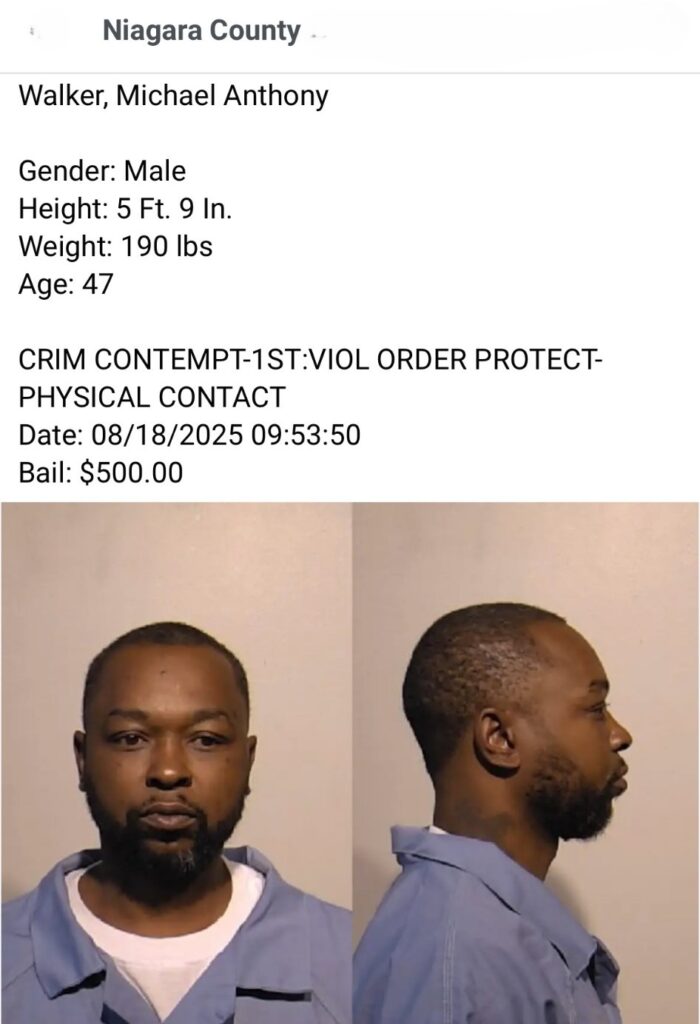
Then comes the comparison that hits like a hammer. Flynn pointed to a Niagara County case involving Michael Anthony Walker. Same charge category—criminal contempt in the first degree. The record shows bail set at $500 for a physical-contact violation—real-world comparator, sitting right there in black and white.
Flynn, by contrast, is held on a $250,000 bond tied to a social media allegation he claims is not even forensically linked to him. The same special prosecutor’s office is involved. No bureaucratic answer can dodge the question: How does one man walk on $500 while another sits for months without clarity on who even represents him?
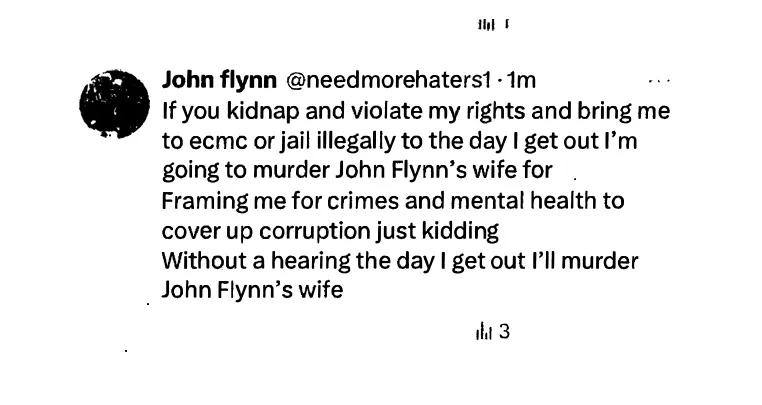
Around this case, the politics churn like a storm system. Erie County Executive Mark Poloncarz is looking to dismantle or overhaul the Assigned Counsel model, citing costs and performance concerns. Meanwhile, Flynn’s situation is tied to alleged political pressure connected to John Flynn and Governor Kathy Hochul. Those claims are serious. They are also contested and unproven.
But here is the part that does not require speculation, conspiracy, or political theory. This story stands on a single, stubborn fact: A man is in custody, and the agency responsible for his defense will not say who his lawyer is.
That is not a scandal built on rumor. That is a failure you can measure in one line. And if ACP cannot answer that line, its promise of “quality representation” is not just weakened. It is meaningless.
Who’s His Lawyer? Failure at the Worst Possible Time
Luthmann didn’t lob softballs, and he didn’t play games. He went straight to the foundation of the Erie County Assigned Counsel Program and asked the questions that determine whether it deserves to exist as an independent institution at all: Policy. Structure. Oversight.
He asked how ACP tracks the CPL 190.80 clock for jailed defendants. He asked what happens when lawyers keep getting swapped in and out of a single felony case. He asked whether the office audits compliance with grand jury deadlines, whether it logs political contacts, whether it has firewalls against outside pressure, and whether it can even identify who is responsible for filing a motion that could mean the difference between freedom and continued detention.
These are not technical questions. They are the bones of the system. And he didn’t ask them quietly. He put it all in writing and copied the people who sit above ACP in the food chain—the oversight class, the institutional referees, the names that carry weight in New York’s legal hierarchy.
The email wasn’t just a request; it was a notice. The people responsible for making sure this system works were looking on.
And still—nothing. Not a partial answer or policy explanation. Not even a generic defense of the system. Just silence on the questions that matter most—silence is not harmless. Silence that lands at the exact moment Erie County Executive Mark Poloncarz is pushing to dismantle or absorb the Assigned Counsel Program into a structure he can more directly control.
Critics already warn that such a move risks turning indigent defense into a managed, top-down operation—less independent, more political, and easier to steer. In that fight, ACP should be showing strength—systems, safeguards, accountability.
Instead, it is giving its critics a gift. Because when an agency claims “quality representation” but cannot explain how it tracks statutory deadlines, cannot account for repeated attorney turnover, and cannot demonstrate independence from political pressure, the argument against it writes itself. Luthmann handed ACP a blueprint to defend its existence. All it had to do was answer. Instead, it blinked.
And in this kind of fight, hesitation is not neutral. It is fatal.
About The Author
