


Roger Clemens appeared in Ken Jowdy’s early development plans. NHL investors later challenged what Jowdy spent entertaining baseball stars on a different project.
LUTHMANN NOTE: If you’re new to this series, start with the two men and the people whose money brought them together. Phil Kenner advised professional athletes, including NHL players. Ken Jowdy developed golf and real estate projects in Mexico. Money tied to Kenner and his clients went into deals involving Jowdy. When those deals came under scrutiny, the adviser and the developer faced very different questions about the same money.
In 2009, hockey players sued Jowdy, alleging that he spent investor money entertaining baseball stars while development lagged. Jowdy denied wrongdoing. Federal prosecutors separately accused Kenner of diverting client funds without authorization, including money transferred to Jowdy. A jury convicted Kenner, and the Second Circuit affirmed the judgment in July 2023. We covered the prosecution in “Kenner Got the Cage,” the disputed loans in “Loans Ken Jowdy Couldn’t Erase,” and the investors’ own case in “The Hockey Players Revolt.”
That’s where “The Rocket and the Resort” fits. Roger Clemens was a friend whose name appeared in an early development letter. Tiger Woods came later to design a golf course. Bryan Berard and Michael Peca had money on the line. I’m interested in what the people with money on the line were told they were buying, and what they actually paid for. Kenner’s conviction stands. It still can’t tell those investors who approved a particular expense or whose account covered it. They deserve to see the receipts.

By Rick LaRivière and Richard Luthmann
The Rocket and the Resort: He Was Already in the Plans
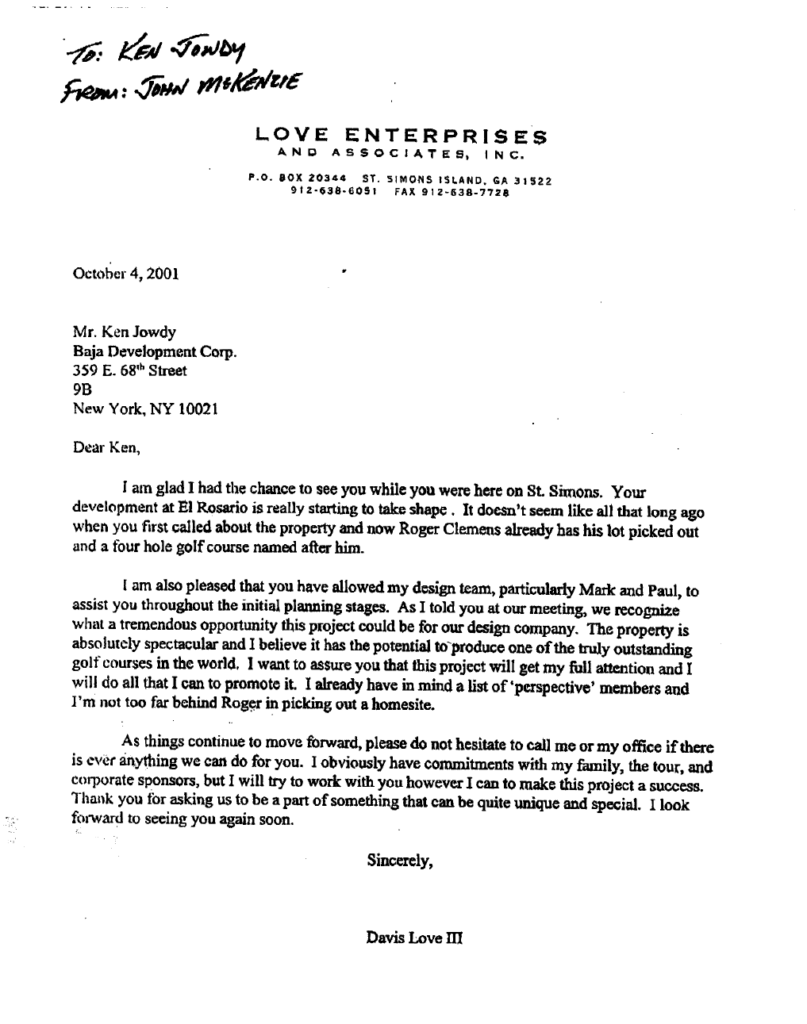
Roger Clemens had already picked out his lot, according to an October 4, 2001 letter bearing Davis Love III’s name. The letter told developer Ken Jowdy that the baseball star also had a four-hole golf course named after him at the planned El Rosario development in Mexico. Years before Tiger Woods entered the Diamante story, Jowdy’s project already had something valuable to offer alongside the land: proximity to people whose names could make a speculative investment feel like an invitation into an exclusive club.
The letter on Love Enterprises stationery describes design assistance, promotional support, and prospective members. “Roger Clemens already has his lot picked out and a four-hole golf course named after him,” it states. The document places the pitcher inside the project’s early planning, although it does not establish that he completed a purchase.
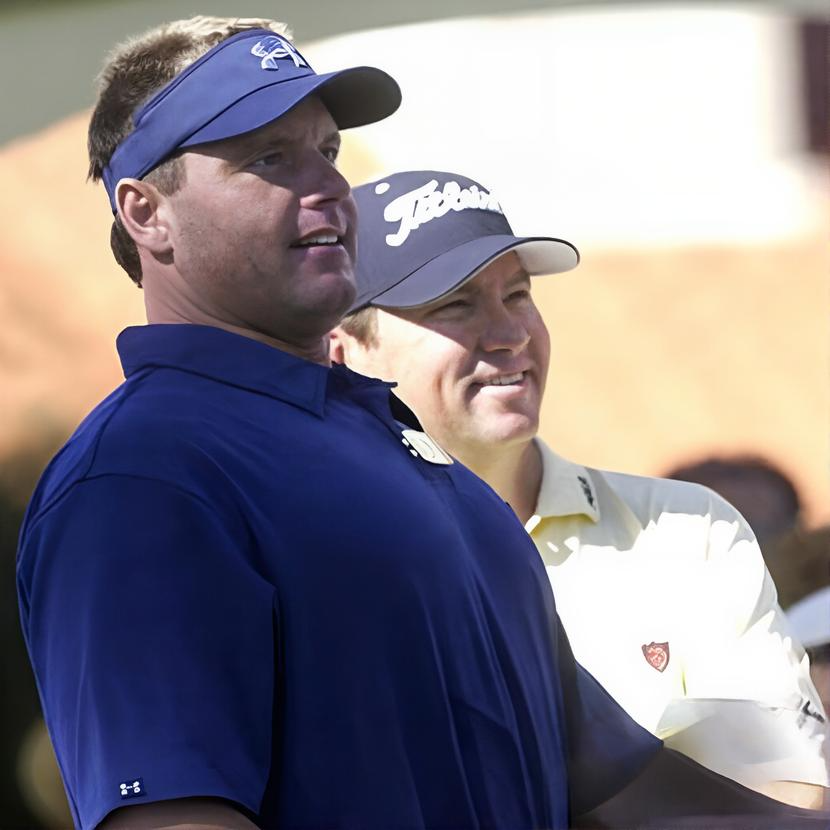
Jowdy later supplied his own account of their friendship. In a 2023 Golfweek interview, he traced their introduction to 1987, described perhaps a thousand rounds of golf together, and recalled taking Clemens around the Cabo property before its fairways took shape. By then, he was preparing to host the wedding of Clemens’s son. This was a relationship measured in decades.
For the hockey players who invested in Jowdy’s developments, that celebrity circle eventually became a financial grievance. Their 2009 lawsuit accused him of spending investment capital entertaining baseball stars while the promised development lagged. Jowdy denied wrongdoing. The conflict was concrete: whether the expenses served the investors’ business or the developer’s friendships.
The Hockey Players Pick Up the Tab
The Diamante Cabo San Lucas complaint filed June 18, 2009, named Bryan Berard, Michael Peca, Sergei Gonchar, Jere Lehtinen, Jozef Stumpel, and other professional hockey players. Its investment schedule attributed $200,000 apiece to Berard and Peca through the identified investment structure. These were investors with their own money committed to the project, demanding an explanation for what Jowdy had done with it.
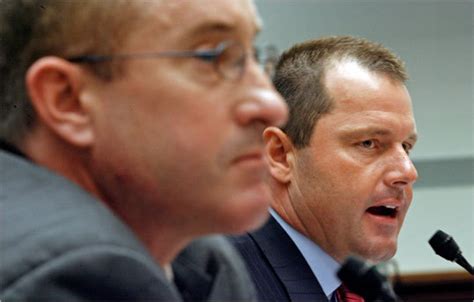
Their complaint attacked both spending and performance. Paragraph 8 accused Jowdy of collecting a $480,000 annual salary, plus travel and entertainment expenses, while the project failed to produce basic planning and infrastructure. Paragraphs 12 and 13 accused him of using company resources and investor capital to entertain baseball celebrities with private flights, expensive accommodations, golf, and parties. The pleading named Clemens, Reggie Jackson, Joe Morgan, and Pete Rose among the friends receiving hospitality.
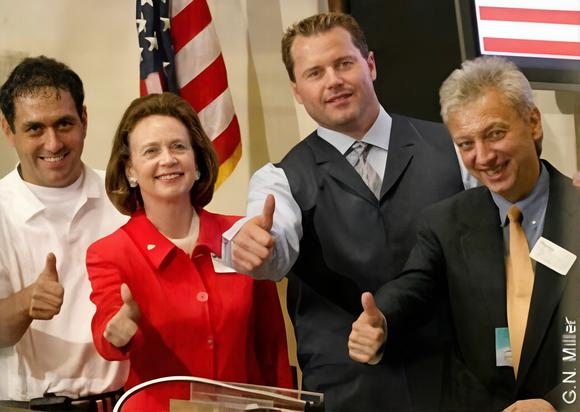
The supposed business justification was that the guests might eventually purchase real estate. The players challenged that premise directly, claiming Clemens and his wife had said they would never buy property in the development. Jowdy rejected the accusations. Golf Digest reported his response: “There’s not one statement of fact” in the lawsuit.
The earlier El Rosario letter and the later Cabo complaint concern different properties and different moments. They do not establish a broken purchase commitment by Clemens. They reveal the question behind the investors’ revolt: How long could the prospect of a celebrity sale justify the cost of entertaining the celebrity? As our reporting in “The Hockey Players Revolt” documented, the players carried that question into court. Their accusations remained contested, but their demand for an accounting was unmistakable.
The Rocket and the Resort: The Trainer, the Singer, and the Payment Record
Brian McNamee’s employment brought the dispute closer to Clemens’s inner circle. Paragraph 11 of the players’ complaint accused Jowdy of hiring the pitcher’s trainer as a favor to Clemens and making him fitness-center manager before the property even had a dirt access road. The allegation challenged the purpose and timing of the job. In the investors’ telling, another celebrity connection had become a company expense.
The March 24, 2010 interview notes marked Government Exhibit 3500-KJ-2 record Jowdy’s explanation. Page 14 says he met McNamee through Clemens in 1999, worked out with him, and brought him to Cabo several times through 2007. The handwriting describes a fitness program and $5,000 monthly payments, including training and work involving Jowdy’s relative, identified as Ed Essa. That account describes services behind the payments, while leaving the investors’ challenge to the hiring unresolved.
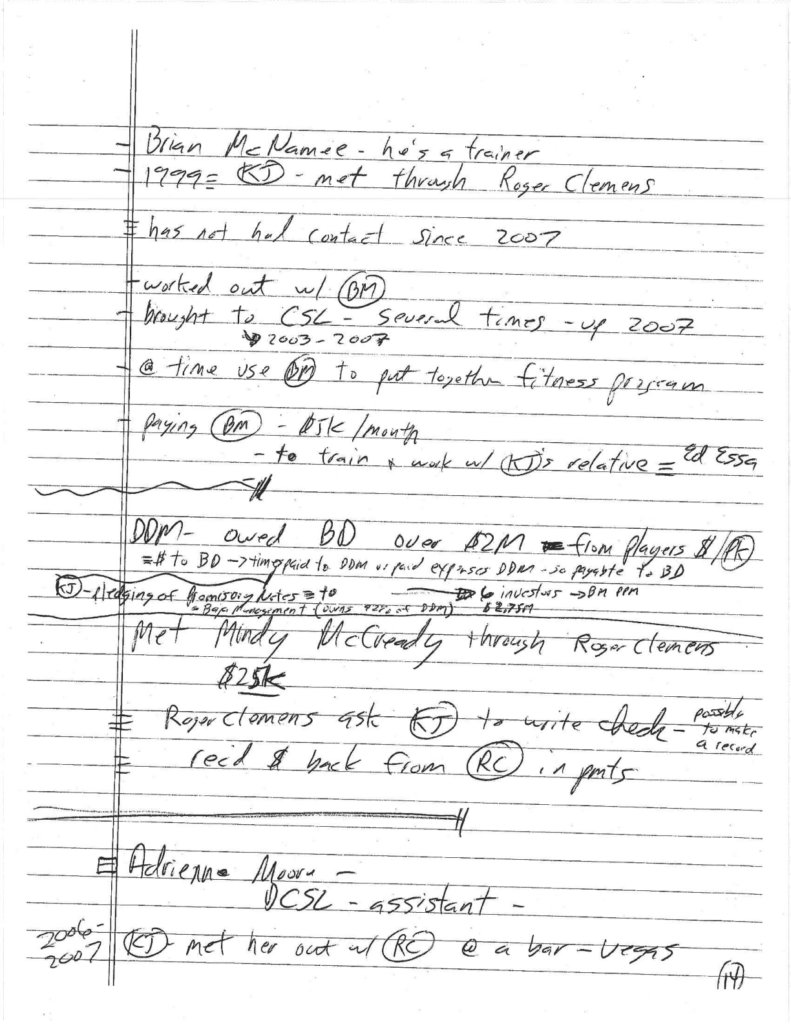
THE PAYMENT ACCOUNT: Page 14 records $5,000 monthly payments associated with McNamee and a $25,000 check involving McCready, along with Jowdy’s reimbursement explanation. The underlying scan was extracted from the supplied PDF and rotated upright; later colored annotations are not shown. Source: 3500-KJ-2, page 14.
Farther down the page, country singer Mindy McCready’s name appears beside $25,000. The notes record that Clemens asked Jowdy to write a check, followed by the tentative explanation “possibly to make a record.” They also record that Jowdy received money back from Clemens in payments. Reimbursement is therefore part of his account, with direct consequences for any calculation of what the transaction ultimately cost him or a business account.
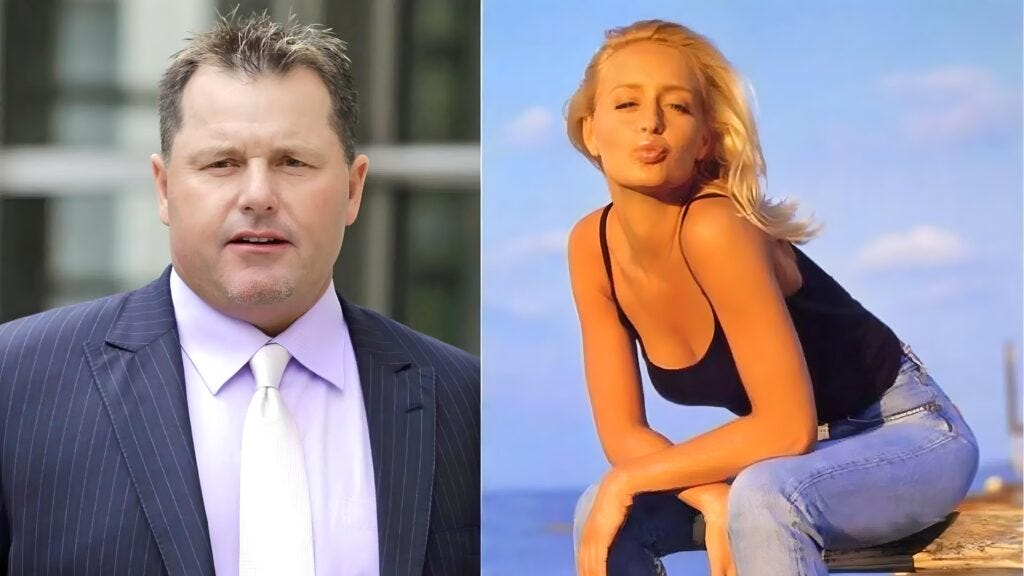
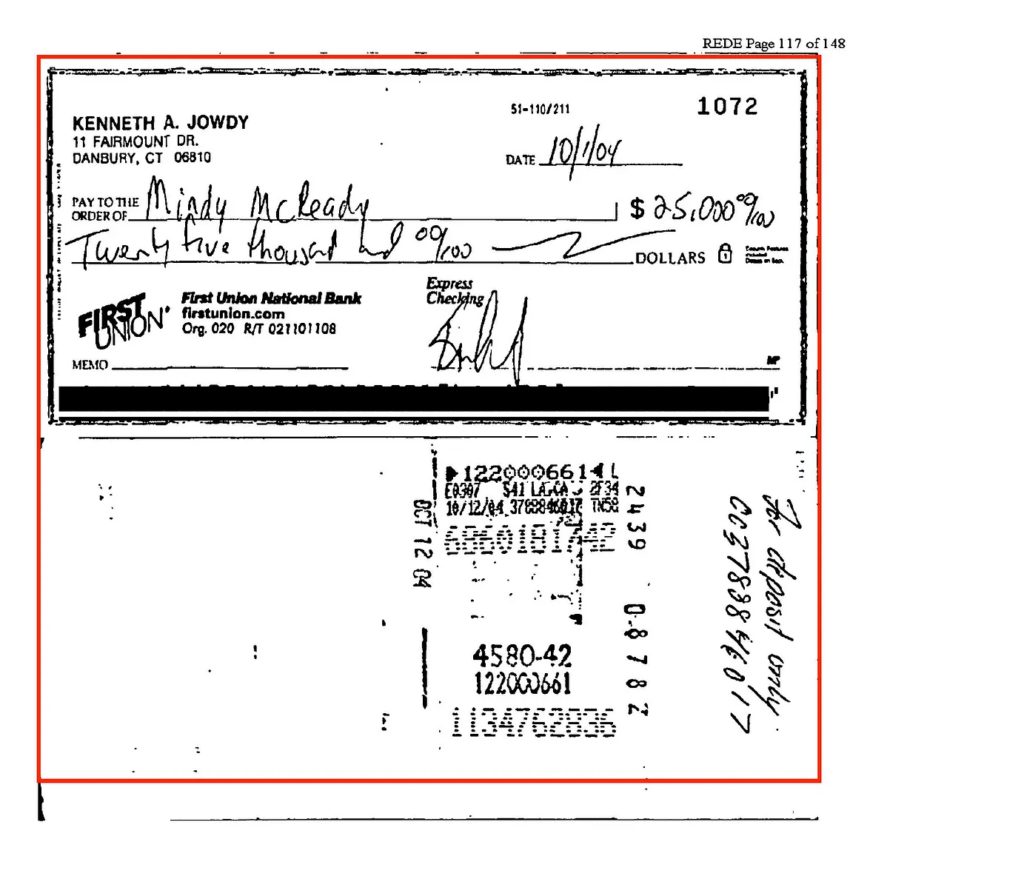
Our earlier coverage carried the Kenner side’s accusations that payments were intended to keep people quiet. While Kenner argues “hush money,” the underlying handwriting records “training and reimbursement” explanations. Those annotations cannot establish a payment’s purpose. Nor should this inquiry blur Clemens’s separate criminal outcome: a jury acquitted him on all six counts in June 2012.
Here, the unresolved accounting concerns who funded particular expenses, who authorized them, and what was repaid.
The Rocket and the Resort: Tiger’s Name Doesn’t Balance Jowdy’s Books
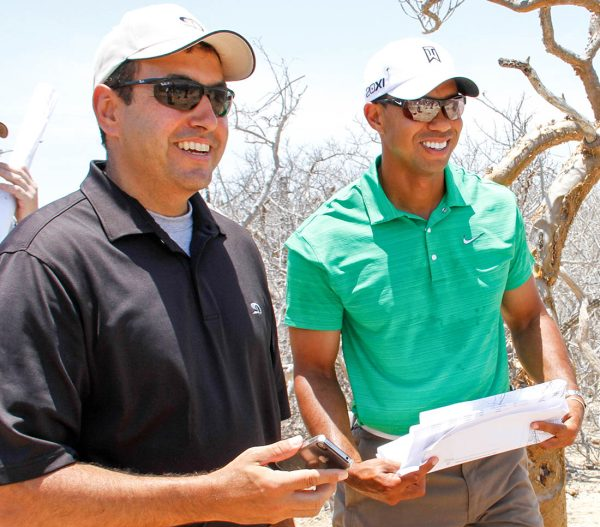
Tiger Woods gave Diamante something money alone couldn’t buy: the prestige of golf’s biggest name. The October 22, 2012 announcement introduced his El Cardonal design and identified Ken Jowdy as the resort’s chief executive. Alongside the Davis Love III Dunes Course, Woods’s project gave Jowdy another powerful selling point.
But the hockey players had already sued. Jowdy had already sat for the government interview that recorded questions about Brian McNamee, Mindy McCready, and payments involving Roger Clemens. Those financial questions preceded the Woods announcement. A celebrated golf course could enhance the property’s reputation. It could not establish who authorized earlier expenditures, which accounts financed them, or whether investors received what they were promised.
Woods’s documented role was course design. The accounting responsibility belongs with the people who controlled the money and approved the spending. For Jowdy, that means answering the allegations transaction by transaction. Putting another famous name on the property supplies none of those answers.
Phillip Kenner’s conviction also remains part of this record. The Second Circuit affirmed the judgment in July 2023. That ruling stands. Scrutiny of Jowdy requires the same discipline: identify the payment, establish its purpose, examine the authorization, and test his explanation against the records.
Start with McNamee’s reported $5,000 monthly payments. Identify the paying accounts and the services delivered. Produce the $25,000 McCready check and match it to the reimbursement recorded in Jowdy’s interview notes. Then account for the celebrity hospitality the players accused him of financing with their capital.
These are concrete demands for an accounting. Jowdy’s explanations deserve examination, and the investors deserve the documents needed to test them.
The resort brochure has photographs. An accounting needs receipts.





About The Author

Leave a Reply