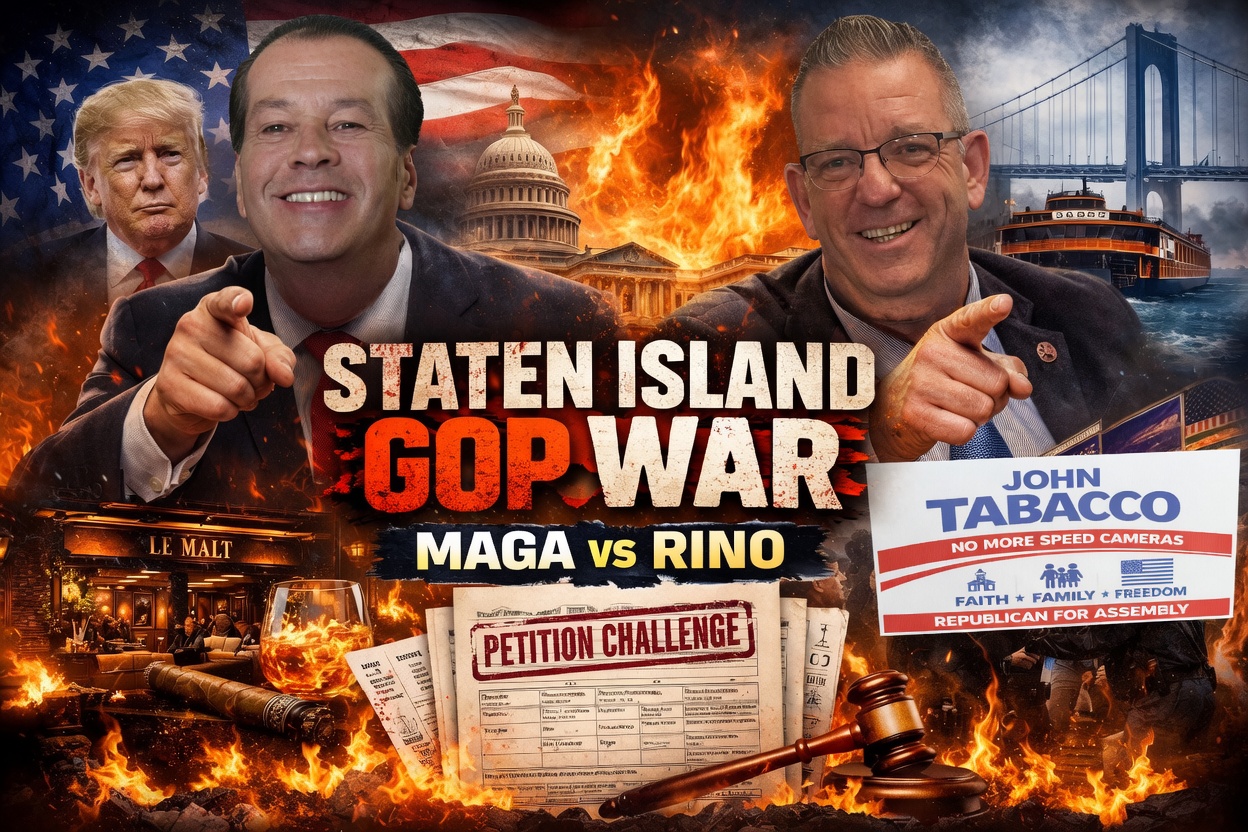
MAGA insurgency targets Mike Reilly’s Assembly seat and the “RINO” Staten Island GOP Leadership

By Frankie Pressman and M. Thomas Nast, with Richard Luthmann
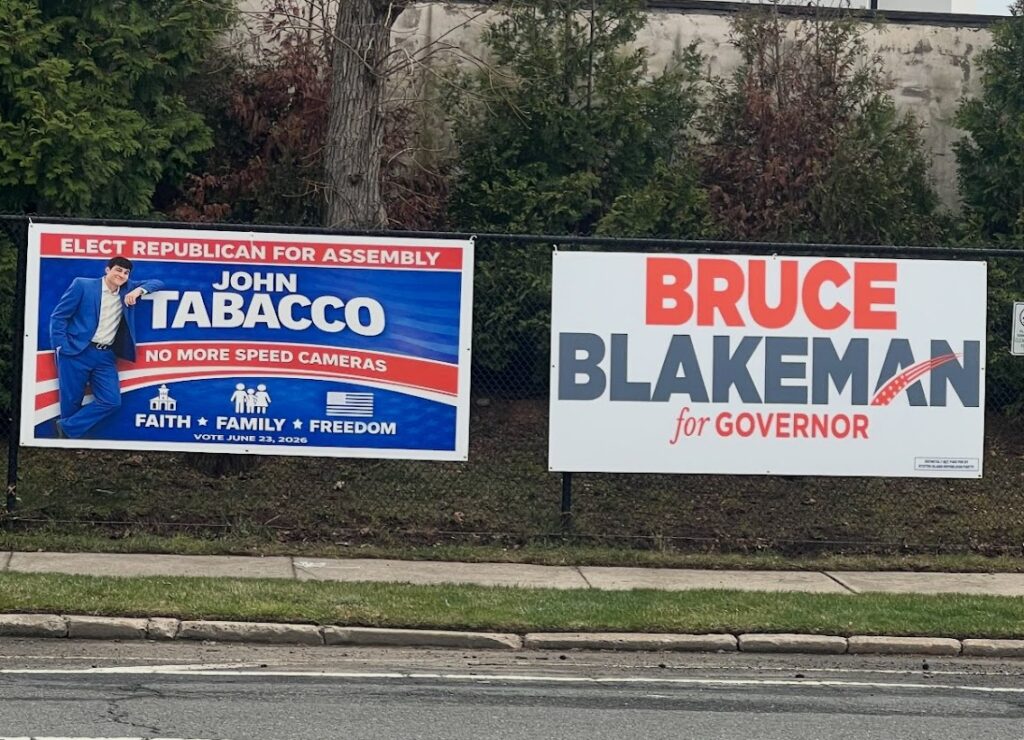
(STATEN ISLAND, NEW YORK) – A real Republican knife fight is breaking loose on Staten Island, and nobody involved is pretending otherwise. The immediate target is the 62nd Assembly District, where incumbent Assemblyman Michael Reilly is staring down a public insurgency. Led by cable news host John Tabacco, his son, John A. Tabacco, is serving as the ballot-line spear point as Reilly’s would-be primary election contender.
The younger Tabacco filed 657 signatures for a place in the June Republican primary, and what might have been a standard intraparty contest is already mutating into something far larger, meaner, and more dangerous: the opening trench fight in a full-scale Staten Island county war.
Reilly has held the seat since his 2018 election, following Ronald “Crooked Ron” Castorina‘s departure for the bench. Reilly’s official Assembly biography says he represents the South Shore and parts of the Mid-Island, served in the Army Reserve, and retired from the NYPD as a lieutenant.
Tabacco, meanwhile, is not some guy yelling into the void. He’s a savvy political insider who has built a public profile as a television personality and Wall Street financial-technology entrepreneur.
That is why this matters. This is not fringe theater. It is an incumbent law-and-order Republican being challenged by a connected media operator and political macher who knows how to turn a local grudge into a movement.
And the larger frame has not been invented. It is national. The MAGA wing of the Republican Party has spent years making one thing clear: the next fight is not only against Democrats, but against Republicans they see as too soft, too transactional, too cozy with compromise, and too embedded in the old club. In that world, “RINO” is not a casual insult. It is a political death sentence.
Tabacco and his allies are now trying to bring that same purge energy to Staten Island. They are not casting this as a normal primary between two Republicans with different styles. It’s local housecleaning, plain and simple, a borough-level rebellion meant to reclaim the party from what they describe as fake conservatives, backroom operators, and machine loyalists who wear the jersey but do not believe the creed.
Whether that effort succeeds or detonates in its organizers’ hands will decide whether Staten Island becomes a MAGA beachhead or a cautionary tale about what happens when insurgents come in swinging and hit steel.
Staten Island Amateur Hour: The Opening Salvo
The opening pitch from Tabacco was not subtle.

Why? Because in Tabacco’s telling, the “RINO establishment decided to protect one of its own.” Tabacco added that “Leadership failures have consequences” and charged that party resources were used “to knock a 20-year-old MAGA REPUBLICAN candidate … OFF THE BALLOT.”
That is not criticism. That is war paint.
Reilly’s camp is not taking the bait quietly, and that is where the “amateur” accusation cuts both ways.
Mike Reilly is not some accidental officeholder waiting to be rolled. He has a real electoral base, a law-and-order résumé, and the natural advantages of incumbency. People close to him reject the “RINO” branding as nonsense and treat Tabacco’s barrage as a made-for-media tantrum dressed up as ideology.
But Tabacco is not backing down, because he knows the value of a public narrative. He wants this race to be read as MAGA versus machine, populist fire versus clubhouse preservation. He wants voters to see Reilly not as a decorated Republican incumbent, but as the protected face of an establishment that is terrified of real competition from the right.
And he is trying to tie that narrative to bigger borough names. Donald Trump endorsed Vito Fossella in the 2021 Staten Island borough president race, a race Fossella went on to win, and Trump’s blessing was widely treated as a meaningful boost in Fossella’s political comeback. It was an unheralded foray into a local race by Trump, showing just how much clout the Fossella name has.

Now in his second of two terms as Borough President, Fossella remains one of the major poles of power in Staten Island Republican politics. But what is his next act? Some say MAGA Kingmaker. That plays here because the Tabacco camp is openly trying to frame this Assembly fight as an extension of that same pro-Trump, America First energy. The Fossella orbit may be leaning toward the younger generation. Griffin Fossella, Vito’s son, appears on John A. Tabacco’s petition on the committee to fill vacancies.
The political alignments tell you what this fight really is. On one side stands Reilly, the incumbent with the office, the title, the resume, and the structure. On the other stands Tabacco, the flamethrower with a microphone, a grievance list, and a plan to turn one Assembly primary into a referendum on who actually owns the Republican Party on Staten Island.
Both sides are accusing the other of running “amateur hour,” but nobody serious should miss what is happening. This is about who gets to define Republican identity in the borough going forward. Tabacco says the old guard has become a fake conservative shell, hostile to Trump-style politics and determined to snuff out young MAGA challengers before they can breathe. Reilly’s defenders say Tabacco is dressing up family ambition, a thin petition strategy, and personal vendettas as a revolution.
Both arguments are explosive. Both are now in circulation. And because Staten Island is a small enough place for everybody to know the players, but big enough for factional grudges to metastasize fast, the fight is already bigger than the ballot line that started it. This is how county wars begin: with a challenge, a label, a public accusation, and one side deciding the other cannot be tolerated anymore.
Staten Island Amateur Hour: The Petition War
The real war here is not over rhetoric. It is over ballot access, which in New York politics is often more brutal than the election itself. Many campaigns live or die before a single voter enters the booth. The 2026 political calendar laid out the rules with cold precision. Assembly candidates need 500 signatures. Certification of the primary ballot by the Board of Elections is due April 29 and April 30. The petition period is over, and the objections and specifications, the paperwork, are now the main event.
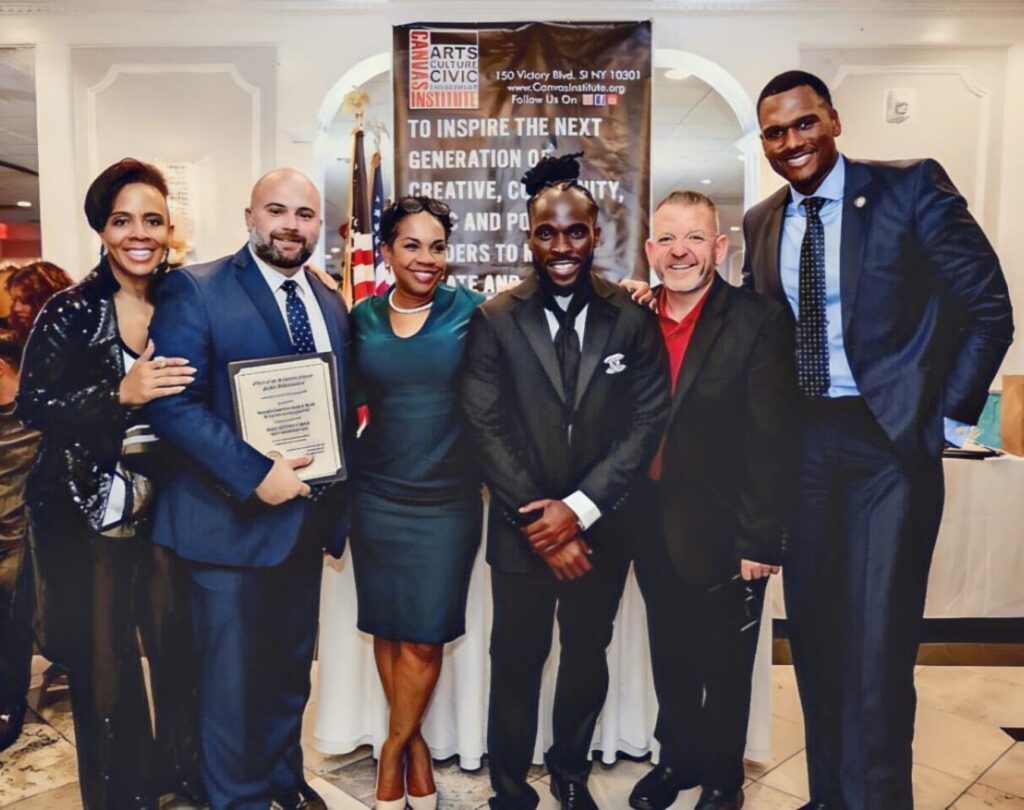
Tabacco the elder is treating this contest like a borough-wide ideological purge, not a routine challenge to an incumbent. The younger Tabacco’s petitions were objected to by retired NYPD officer Erik B. Pistek and Mary Reilly, the wife of the incumbent assemblyman. In Tabacco’s telling, that is not just a challenge. It is a confession that proves the local Republican apparatus would rather kneecap a “young MAGA Republican” than spend its energy taking out Democrats.
Tabacco says his son “got hit” while the party apparatus did not show the same urgency against the Democratic opponent to Andrew Lanza, the Republican dean of the New York State Senate.
“That is not incompetence. That is intent,” Tabacco said. “And it exposes a RINO establishment that talks conservative in public and cuts survival deals in private.”
In that version of events, the problem is not a lack of resources. The problem is who the Staten Island GOP leadership sees as the real enemy. In Tabacco’s framing, the answer is clear: not Democrats, but insurgents.
The counterattack from Reilly’s side is just as brutal and far less theatrical. An unnamed veteran New York political consultant familiar with the players, and in recent contact with Reilly, poured gasoline on the claim that Tabacco got outmaneuvered by his own swagger.
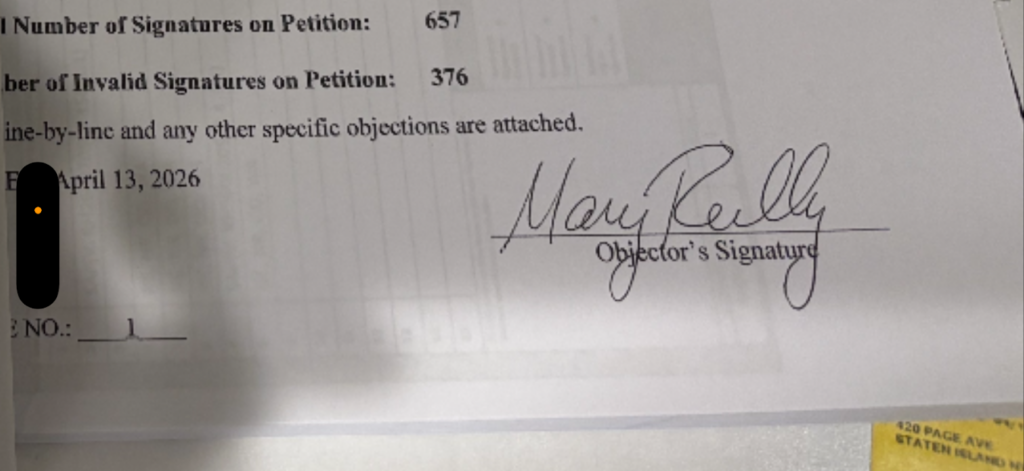
“When you need 500 good signatures, a 657-signature filing is ‘amateur hour.’ Any competent New York operative knows the rule of survival is file double, or better yet triple, the legal minimum if you want to live through objections,” the consultant said. “If he had come to me with 657 signatures, I would have told him not to waste his time and to go to the shredder.”
That is not just cheap talk. It reflects the long-standing reality of New York ballot access, where petition challenges are a blood sport, and campaigns routinely lose chunks of signatures to technical defects, bad enrollments, duplicate signers, wrong addresses, or bad witness statements. In that world, filing 657 when you need 500 is not bold. It is playing Russian roulette with a loaded chamber.
The consultant’s attack lands, giving Reilly’s camp a serious argument that the Tabacco operation did not get victimized by the system so much as tempt fate by filing with a thin cushion in a jurisdiction famous for petition warfare.
But even that does not end the argument. A thin filing is not the same thing as a bad filing. It proves risk. It does not prove a fatal defect. Tabacco can still argue that his signatures were cleaner, better screened, and less padded with garbage than the typical bulk operation. So the question remains open: was it reckless, or was it efficient confidence?
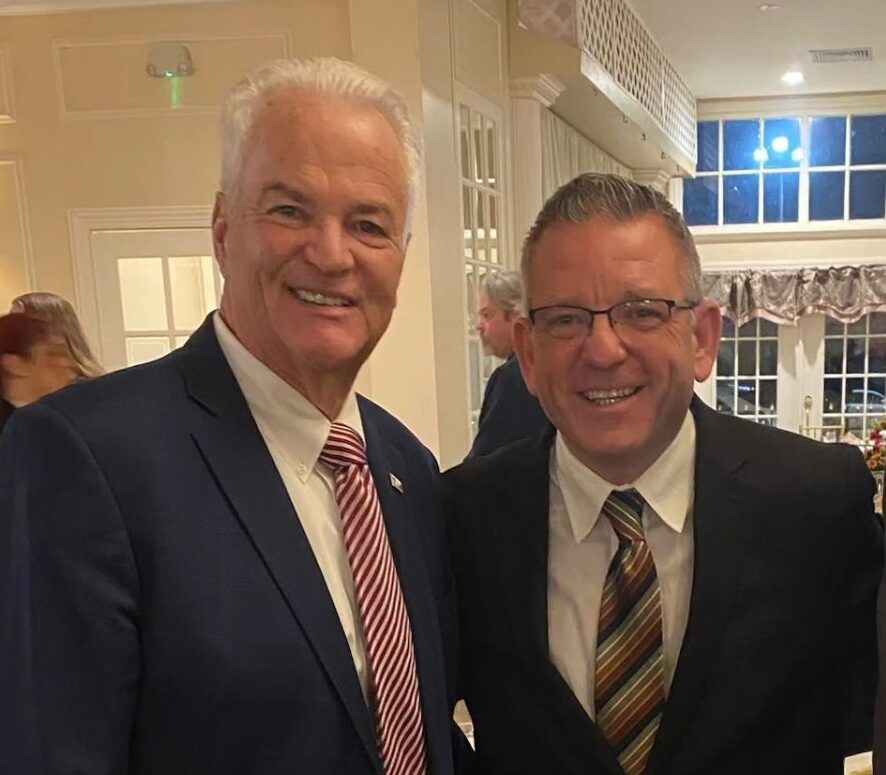
There is another layer here, and it cuts against any simple anti-Reilly narrative. Under New York election law, you must be an enrolled member of the political party to challenge the designating petition of a party candidate for public office, legally puncturing one of Tabacco’s main talking points. The narrative gets murky fast if the GOP can’t legally challenge Lanza’s Democrat opponent.
Tabacco’s answer to that is pure machine-politics realism.
“Everyone in New York politics knows how this really works. Party leaders can always ‘find’ someone in the correct party and district willing to put a name on papers against an opponent,” Tabacco said. “If they want a challenge, a challenge appears.”
The real questions, in his view, are who orchestrated the hit, who wanted the challenge filed, and who benefits if his son gets bounced. That is the subterranean accusation now driving the whole war.
“The objectors’ names are only the visible fingerprints. The invisible hand belongs to the same RINOs and fake conservatives, hostile to real MAGA challengers,” Tabacco said.
The consultant didn’t dispute the underlying tension. He said some recent Democratic Supreme Court Justices were cross-endorsed and pulled the bulk of their votes on the Republican line, largely because of a lack of GOP challengers.
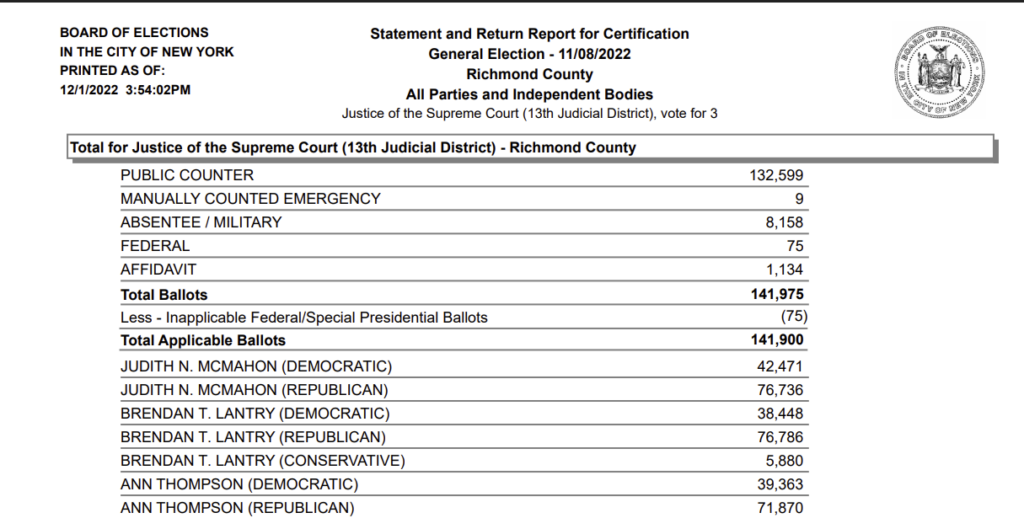
“Not everyone agreed with those deals,” he said. “There’s a real argument there, and Tabacco does have a point. Why were those seats given up when they all could have been won at the ballot box?”
But he added that the claim is being pushed too far.
“That’s politics in New York. It’s not some grand conspiracy—it’s just how the system works, whether you like it or not. And he’s not one to talk. A few years ago, Tabacco wasn’t even a registered Republican,” the consultant said.
Then, another bomb was thrown.
“Beyond that, the word is that Tabacco asked Charles Fall for the Wilson-Pakula for his son. What kind of MAGA cuts deals for the Democrat Party Line? Tabacco is transactional like everyone else in this game,” the consultant said.
Those are some barbed claims, the kind that turn a petition dispute into a county-wide political war.
Staten Island Amateur Hour: The Rally Blowup
Then came Midland Beach.
The Staten Island GOP blood feud spilled out from petition papers, Facebook posts, and back-channel whisper networks into the open air. What was billed as a rally against the city’s planned homeless shelter at 1111 Father Capodanno Boulevard became something more volatile: a live demonstration of how deep the borough’s Republican fracture has become.
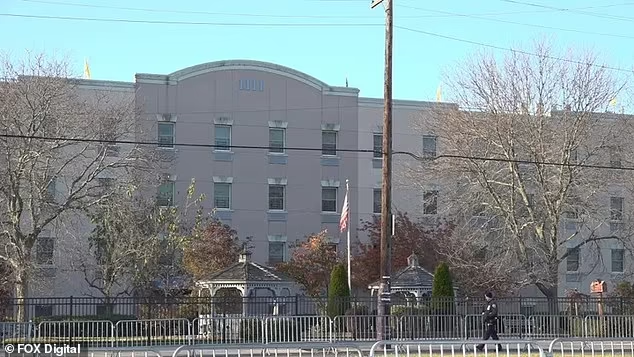
South Shore residents showed up angry over the shelter. Elected officials showed up to ride that anger. Political operatives showed up to watch the room. And somewhere inside that combustible mix, the Tabacco-Reilly war stopped being abstract. It became physical theater.
The official version is tidy. Andrew Lanza posted afterward, “Today we gathered again to strongly oppose the Mayor’s plan for a 160-bed men’s shelter and all forms of tyranny.” Mike Reilly also posted from the event. Local reporting captured the sanitized endnote: “The crowd mostly dispersed around 11:15 a.m. At about 11:20 a.m., police moved in after what was described as a heated verbal dispute between attendees. The individuals were separated. No one was detained.”
That is the public record. It is clean, bloodless, and bureaucratic. It also leaves out the real story.
According to multiple sources, the blowup was not some random shouting match between nameless rallygoers. It was the political main event, and confirmed by multiple attendees.
“I was standing, talking to Mike Trollo, Carla Murino, and others, and then [Mike Reilly] came over to me,” Tabacco said.
Reilly clamped down on his hand in what witnesses describe as an aggressive handshake, and confronted him over dragging Reilly’s wife into the petition war.
“He said, ‘Leave my wife out of it,” Tabacco said.
The exchange turned hot fast. Voices rose. Bodies tightened. The energy shifted to something closer to a street-corner test of manhood.
“It looked for a moment like the two men were on the verge of going from words to fists before police and others stepped in to break the temperature,” one source said.
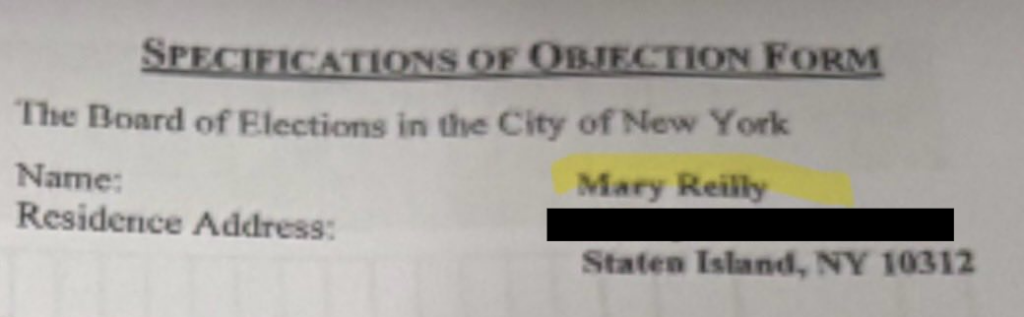
Tabacco’s answer was pure Tabacco. His position is that Reilly had no grounds to complain because Reilly’s side made his wife part of the story the moment her name surfaced on objection papers tied to the ballot challenge against Tabacco’s son, in Tabacco’s view, which opened the door.
In Reilly’s camp, that was bush league politics and proof that Tabacco had crossed a line.
And there, in one ugly South Shore scene, you got the entire feud in miniature: one side claiming it is exposing the machine, the other claiming it is dealing with a reckless bomb-thrower who mistakes chaos for strategy.
After that, both camps did what political camps do. They spun like slot machines. Tabacco’s side said the rally flare-up exposed Reilly as a protected incumbent hiding inside a “RINO protection program,” backed by the same Staten Island clubhouse operators who cut deals in private and freeze out real MAGA challengers.
Reilly’s defenders fired back that Tabacco had manufactured the whole crisis by running a thin, vulnerable petition, dragging the family into the fight, and trying to market a sloppy filing as some grand populist uprising. To them, this was not a revolution. It was amateur hour with a microphone.
Nobody who watched the scene seriously believes this was just a stray argument at a homeless shelter rally. It looked like what it was: a proxy war inside the Staten Island Republican Party, with the shelter protest serving as the stage, the petition challenge serving as the fuse, and two oversized personalities turning a local dispute into a borough-wide loyalty test.
One side is screaming purge. The other is screaming fraud. Both are claiming betrayal. And if Midland Beach was any indication, this county war is not cooling down. It is just getting warmed up.
The County War to Come
There is a reason this ugly little Assembly fight already feels bigger than one seat, one petition, or one loud weekend on the South Shore. Men who have been around Staten Island politics for years are already talking about it as an opening battle, not a closing act. That is because John Tabacco did not walk into this contest as a novice who had just discovered the Board of Elections. He came in with a long memory, an old grudge book, and a record of fighting ballot wars the hard way.
In 2009, an appellate court restored him to the ballot in a special City Council race after the Board of Elections had knocked him off. That case became its own small legend in New York’s brutal ballot-access culture, where campaigns do not merely run against opponents but try to erase them before voters ever get the chance to choose.

So when Tabacco says he has “spent years battling the Board as an outsider,” that is not just barroom mythology. He has done it before, knows how these games are played, and knows where the knives are hidden.
But history cuts both ways. A man can carry real scars from past petition wars and still misread the terrain in the present. Experience sharpens instincts—but it can also breed overconfidence, shortcuts, and blind spots. That is exactly the opening his enemies are exploiting now. They are not just challenging his signatures; they are challenging his judgment, his strategy, and his claim to be the smartest operator in the room.
“This isn’t a seasoned veteran running a disciplined play,” the consultant said. “It’s a man walking straight into a trap he should have seen coming if he’s had a year in this business, let alone decades.”
Tabacco is not limiting his fire to Mike Reilly. He is widening the blast radius on purpose, saying he has evidence of backroom deal-making involving current and former Republican power brokers on Staten Island. The public-facing events, the smiling handshakes, and the diner optics are for the audience, while the real business gets done elsewhere.
He points specifically to Le Malt Imperiale in Annadale, which he casts not as some innocent upscale club, but as the kind of place where the borough’s real political traffic moves when nobody wants sunlight on the windshield. Tabacco says that this is where the players gather when they want to cut deals, move pieces, and decide who lives or dies politically before the public even knows a fight has begun.
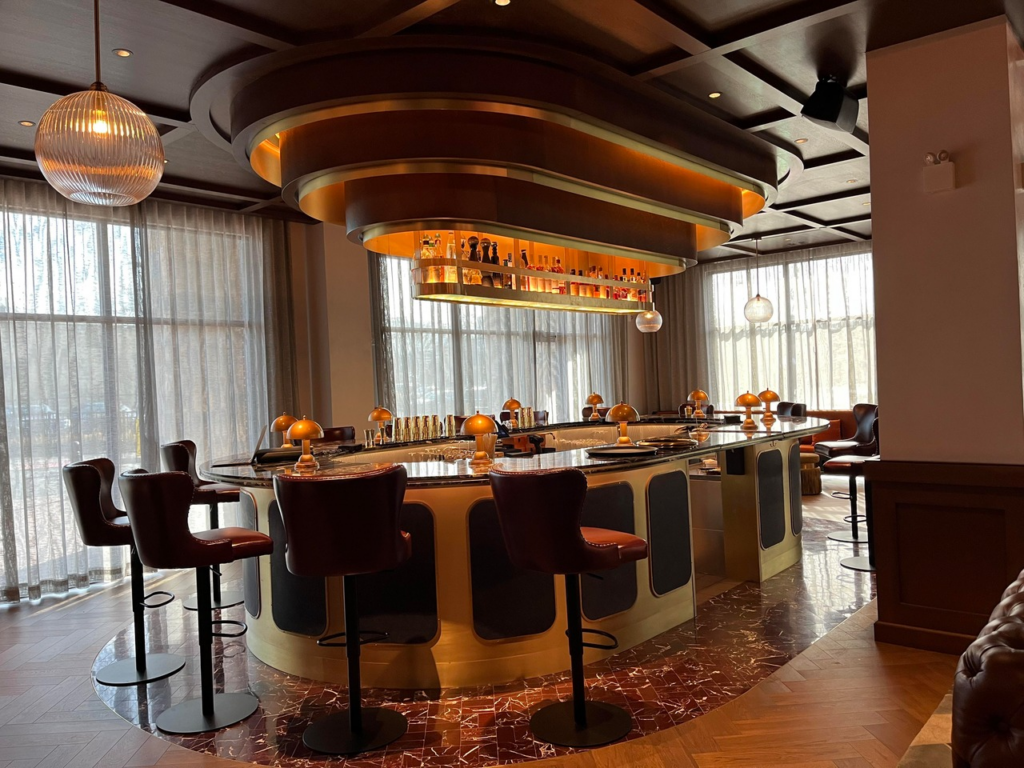
That is a huge allegation. It is also exactly the kind of allegation that electrifies a local political base already primed to believe that the county organization is less a party than a private guild.
Then there is the Fossella factor, which is where this whole thing starts to look less like a random family vanity project and more like a real factional stress test. In Staten Island politics, nothing involving the Fossella name is meaningless.
“The internal factions are already at war, whether they admit it publicly or not. The Reilly-Tabacco clash is not the main event. It is the trailer,” the consultant said. “The real ballgame comes next year, when the county committee races are up. All signs point to an open purge campaign.”
In that scenario, the Assembly seat is just the first trench. What follows would be a borough-wide loyalty test: MAGA versus machine, insurgents versus structure, men who think the party has been sold out versus men who think the loudest people in the room are reckless clowns playing with matches in a gas station.
Reilly, for his part, did not sit down for a full interview with Richard Luthmann, even as Luthmann spoke extensively with Tabacco, the unnamed veteran consultant, and numerous other sources. Reilly kept it brief. Very brief.
“I never had a problem with Luthmann, and I don’t want to get on his bad side,” he told a representative of this outlet.
In a political season full of chest-thumping, coded leaks, social media flamethrowers, and half-denied vendettas, that may have been the cleanest line anyone delivered. It was cautious and smart, a tacit acknowledgment that this story is no longer staying inside clubhouse walls. Once a Staten Island county feud becomes a public narrative, everybody starts measuring where they stand and how exposed they are.
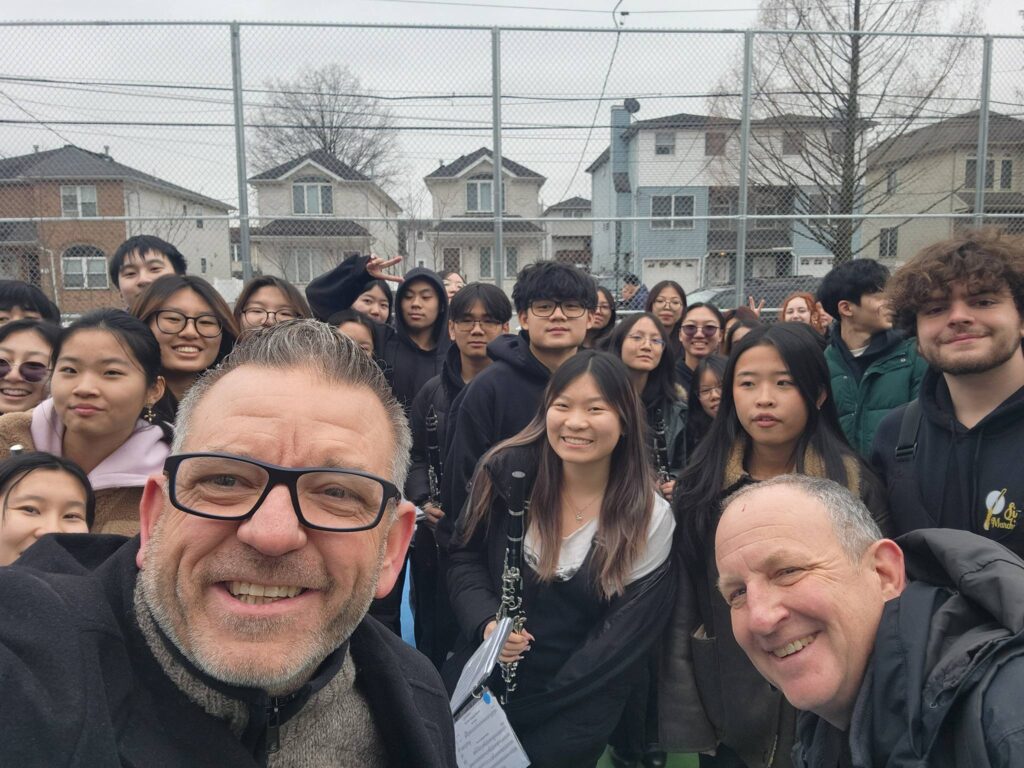
But Luthmann didn’t let Reilly slide either, answering the way he always does—direct, unapologetic, and bombastic.
“If you’re clean, you’ve got nothing to worry about,” Luthmann said. “But if you’re lying, retaliating, or gaming the system, that’s when my bad side becomes your problem. Believe me. I have no problem with Mike Reilly, and I wish he—and not his surrogates—would go on record.”
And that is where Staten Island now sits: not in a routine campaign season, but in a season of open warfare. The names are out, and accusations are public. The rally confrontation in Midland Beach already required police to step close enough to keep a political shouting match from becoming something uglier.
One side is screaming that a fake conservative machine is trying to crush a young MAGA insurgent before he can get traction. The other side is screaming that Tabacco is a showman dressing up sloppy tactics, personal grievances, and family ambition as a populist revolution.
Both sides are throwing around the phrase “amateur hour,” but this isn’t amateur hour anymore—it’s a full-blown purge. By the time it’s over, one faction is getting buried.
Related posts:

Regulatory Lawfare Robbed The Janitor

Democrat Lawfare Seeks NY-11 Frankenseat
YouTubers' FBI Investigation: A Visit From the FEDS … or Worse for Jeremy Hales and That Umbrella …

Catherine DiDomenico Went Bad: What Happened?

Op-Ed – Luthmann Responds to Brian Laline

Frankly Furious Councilman Morano – VIDEO
About The Author