

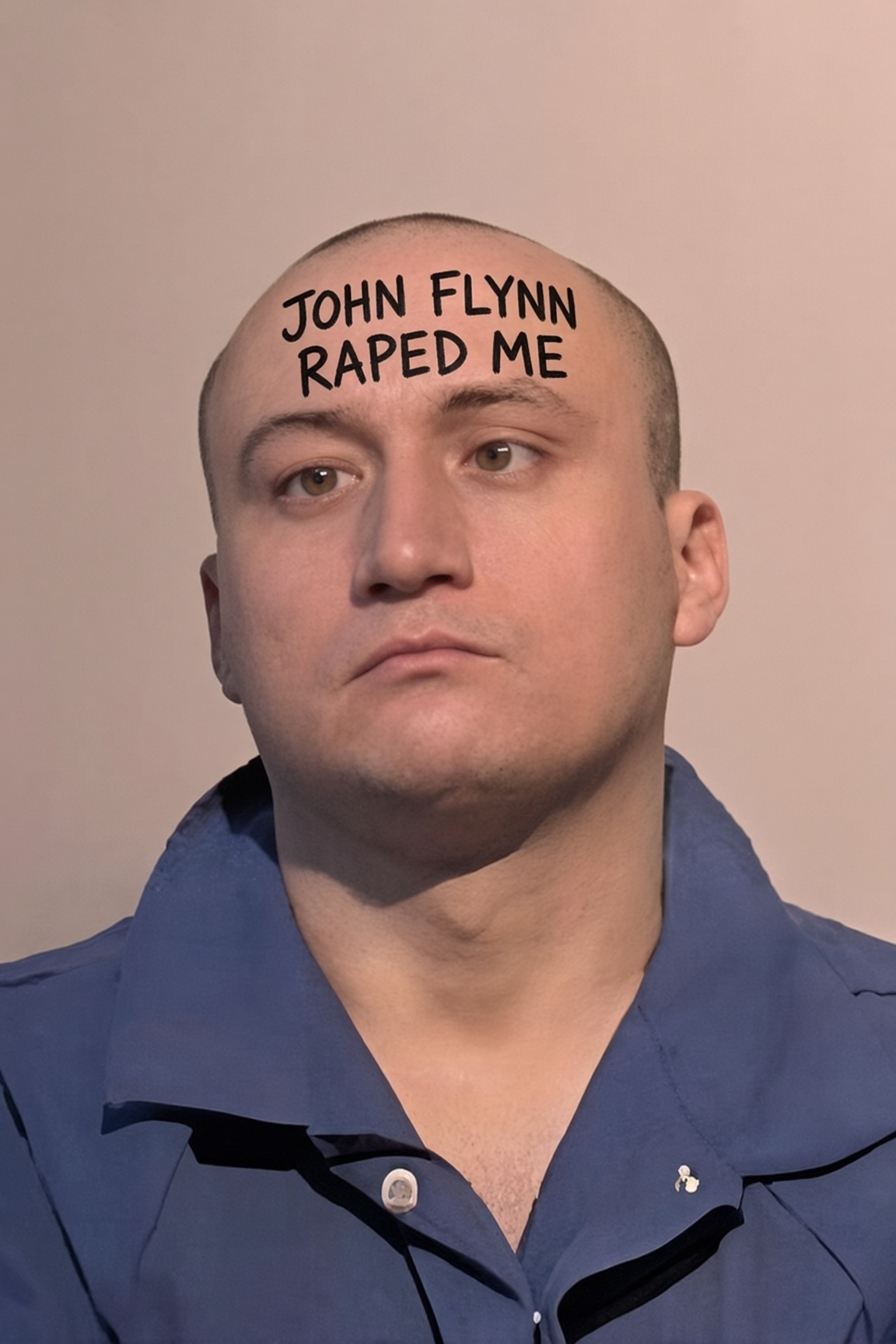
The felony case collapsed. Ryan Flynn got out. Now a misdemeanor, an anonymous message, and a reported $100,000 bond have put John Flynn’s Republican cousin and rape accuser back behind bars.
LUTHMANN NOTE: I keep coming back to the bargain Ryan describes: plead guilty and walk out; keep fighting and stay behind bars. How much punishment can a man absorb before “voluntary” becomes a courtroom fiction? His house is in foreclosure, he says. His working life has stopped. The people prosecuting him still collect their paychecks. I want his accusations tested in daylight, including the ones aimed at a former district attorney. Nobody’s professional connections should purchase immunity from scrutiny. And nobody should have to accept a conviction simply because defending himself has become more ruinous than surrender. A justice system owes us better. This piece is “Back in Hochul Gulag.”


By Richard Luthmann and Rick LaRivière
Eight Months Gone. Six Weeks More.
Ryan Flynn walked out of the Erie County Holding Center on June 19 after roughly eight months in custody and a felony prosecution that failed to produce a felony indictment. Less than eight weeks later, he was back behind bars. His written complaints identify the price Amherst Town Justice Ann Nichols put on his freedom: $50,000 cash or a $100,000 bond. The pending charge was second-degree criminal contempt, a misdemeanor.
By September 25, Ryan was calling from the Erie County Correctional Facility in Alden, counting another 44 days lost to the system. He hasn’t been able to work for a year, and his house is in foreclosure. No matter the outcome, Ryan Flynn has been punished for standing up to his cousin, former Erie County District Attorney and current Tonawanda town supervisor John Flynn. Ryan confronted his older, connected cousin both politically (Ryan is a Republican) and as a victim of alleged sexual abuse when he was a child.

The June release was supposed to end the confinement that accompanied the failed felony push. A false-report misdemeanor remained in that proceeding. An older Amherst case supplied the next door into jail.
Ryan says he appeared in court on August 12 and was taken into custody over a disputed anonymous message allegedly sent to a family member. He denies sending it. His account places the original contempt accusation in May 2025, involving a claimed telephone call to his sister. Different proceedings, different accusations, the same man watching his life disappear between court appearances.
Ryan says John sexually abused him as a child and that the criminal cases are retaliation for exposing him. He says his sister is “loyal” to John Flynn, her husband is “wrapped up with the Buffalo mob,” and he “gets protection from John Flynn.”
The institutional response deserves a harsher examination than another courthouse recital about procedure. A failed felony case, renewed misdemeanor detention, and the plea pressure Ryan describes form a pattern of attrition. Every additional week makes surrender more attractive.
That is the ugliness inside Kathy Hochul’s gulag: a politically targeted defendant can keep his “presumption of innocence” while the government takes away his liberty and everything that makes it worth having.
Back in Hochul Gulag: John Flynn’s Machine Has Familiar Faces
John Flynn left the district attorney’s office. His professional network stayed. Michael Keane’s official biography identifies the current district attorney as John’s former first deputy, who oversaw the office’s bureaus and daily operations beginning in 2017. Keane was Flynn’s “Number 2.”
Keane won election in November 2024. He also takes credit for changes to bail and plea policies and for creating a Public Integrity Unit. Erie County’s own website supplies the relationship. Nobody needs a conspiracy diagram to understand why prosecuting the former boss’s accuser demands independent scrutiny.
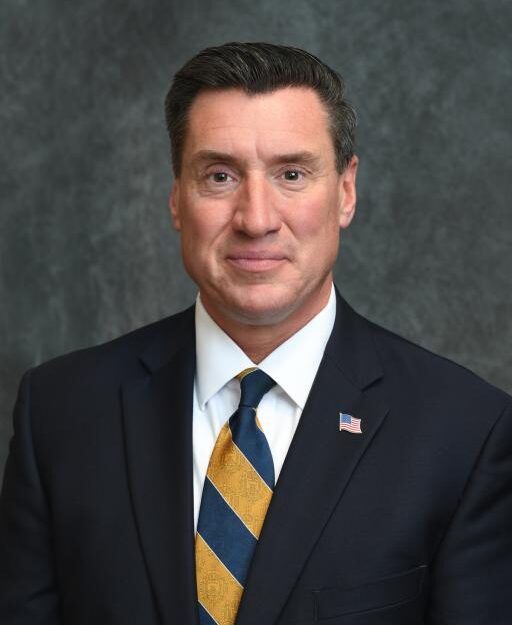
John, meanwhile, returned to elected-government terrain through his appointment as Tonawanda town supervisor. Ryan returned to a jail telephone. That disparity carries a political benefit for the established figure: the accuser spends his days fighting custody, access to records, and criminal exposure while the former prosecutor retains a public platform.
Ryan calls it retaliation. The documented succession inside the prosecutor’s office gives that accusation an institutional context that officials cannot dismiss as merely a private family squabble.
Another piece of John Flynn’s public record is worth remembering. As Frank Parlato reported, Flynn invoked “I stand with the child” in the railroad prosecution of former Erie County Democratic Party Chair Steve Pigeon. Ryan says he was about 10 when John abused him.
Keane’s Public Integrity Unit cannot earn its name by scrutinizing everybody except the people closest to its own institutional history. Independence must reach the case assignments, supervisory decisions, recusal analysis, and communications involving the Flynn family. Otherwise, “public integrity” becomes another handsome label on a courthouse door.
Back in Hochul Gulag: Ann Nichols’s Anonymous-Message Justice
Ryan Flynn describes a courtroom trap: Ann Nichols used his answer to an accusation as evidence that the accusation was true. At the August 12 proceeding, he read a police report describing an anonymous message accusing a relative of loan-sharking. Nichols then seized on his repetition of that language as a reason to suspect he wrote it.
“I’m reading it from the police report,” Ryan explained. The government supplied the words. Reading them became incriminating, and Judge Ann Nichols imposed $50,000 cash bail or a $100,000 bond.

That is circular reasoning with a jail cell attached. A defendant’s familiarity with an accusation cannot establish that he committed the act described in it. Ryan denies owning the sending number and says investigators failed to connect it to his phone. Without that connection, the court is treating the contents of a police report as both the accusation and its corroboration.
Erie County Assistant District Attorney Emily Sipes was at the September bail review before Judge Egan. Ryan identifies ADA Sipes as the prosecutor who made disputed representations while an Instagram account (the defunct @UFC309090) was attributed to him. His bail remained unchanged.
He says the hearing ended without a meaningful opportunity to be heard or rebut her false, incomplete, and misleading statements.
ADA Sipes must answer the question that suspicion keeps dodging: what connects Ryan to the now-defunct Instagram account? Photographs, familiar grievances, and family relationships do not establish who controlled a login or pressed “send.” A prosecutor’s confident delivery cannot authenticate somebody else’s screen.
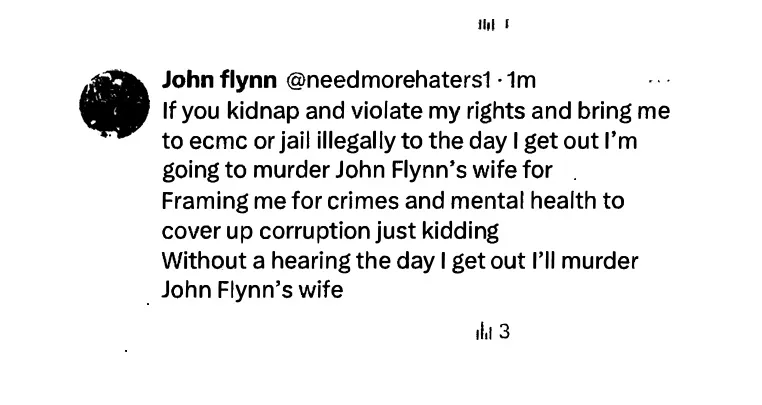
Ryan’s account describes the same mechanism operating twice: disputed authorship becomes a reason for confinement, and his objections leave him standing exactly where the prosecution wants him. Behind bars.
Back in Hochul Gulag: A Bail Exception Becomes a Blank Check
Fifty thousand dollars cash. One hundred thousand dollars bond. Those are the terms Ryan Flynn says Judge Ann Nichols imposed in a misdemeanor case, and the barrier that remained after the bail review involving Emily Sipes. His September 1 application identifies case 25-022574 as second-degree contempt involving a telephone call. His complaints describe an increase from zero or nominal bail to a price he could not pay. The practical consequence was incarceration.
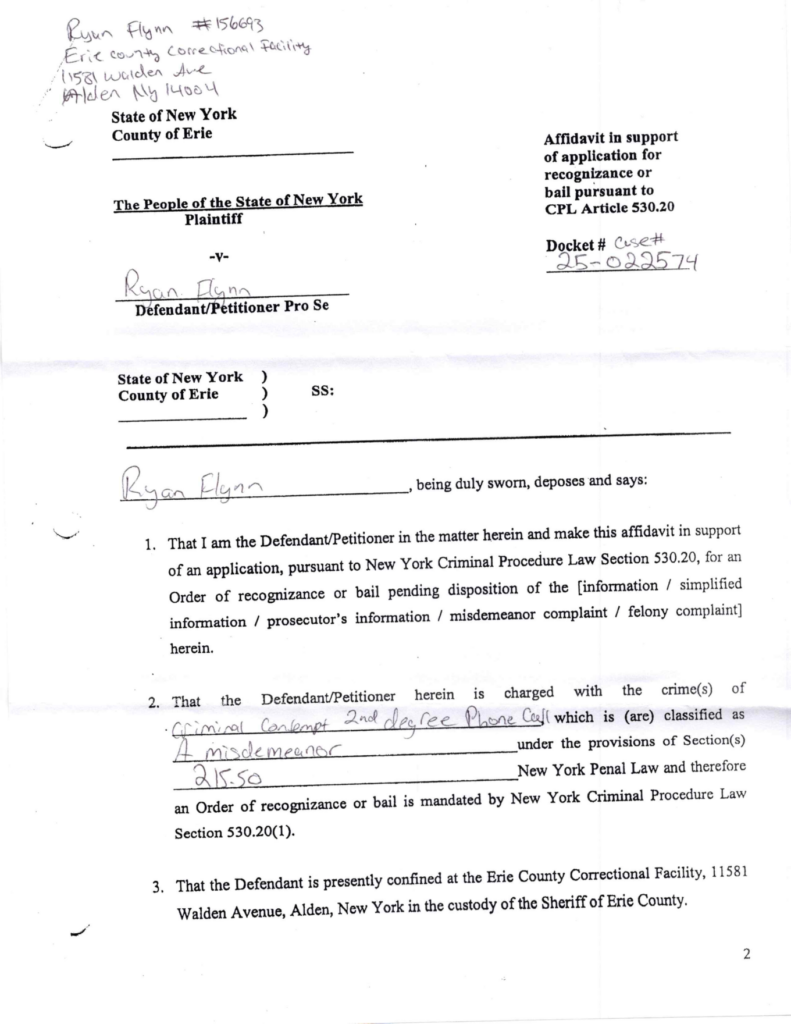
New York’s family-related contempt exception permits bail for specified misdemeanor accusations. Eligibility does not explain the amount. The ordinary determination requires an individualized assessment of flight risk, consideration of finances and undue hardship, and reasons stated on the record or in writing.
ADA Sipes and District Attorney Keane’s office cannot answer a challenge to this confinement merely by pointing to statutory permission to set bail. Authority to impose a condition does not justify every use of it.
The criminal-history summary Ryan supplied, dated October 2025, records six open misdemeanor cases, zero convictions, and zero failure-to-appear counts. That document gives the prosecution an inconvenient distinction to confront: accusations are pending; convictions are absent.
His appearance record also demands an explanation rooted in conduct. The number of accusations cannot relieve the court of explaining its decision about this defendant.
Ryan identifies CPL 530.12(11)(a) as the detention provision invoked against him. It requires a hearing and competent proof of a willful violation of a lawful protection order. He says the disputed communications received no meaningful evidentiary hearing.
ADA Sipes and the court must confront that challenge directly: identify the order, establish the violation, and show the hearing that authorized taking his freedom. A section number is no substitute for proof.
ADA Emily Sipes and the Protection Order That Changed
ADA Emily Sipes is the prosecutor Ryan Flynn identifies as delivering the “revised protection-order fairy tale.” His account is specific. First, he says, Judge Nichols treated the Family Court order as though it had never been vacated. Then prosecutors acknowledged the vacatur and asserted that Family Court Judge Mary Carney issued a “replacement order” the same day.

The explanation changed. Ryan stayed in jail. ADA Sipes now owns the explanation she put before the reviewing court. Ryan disputes the replacement’s authenticity and accuses the prosecution of relying on a false instrument.
ADA Sipes’s answer must begin with the order: its signature, terms, effective date, and the record establishing Ryan’s notice. A lawful replacement should survive that scrutiny. The older Family Court order underlying the contempt accusation and the later criminal-court order invoked during his release require separate explanations. Stacking documents does not repair a missing legal foundation.

Then comes the representation Ryan contradicts. He says ADA Sipes told the reviewing court that Carney personally instructed him not to post on social media.
“I wasn’t even at the hearing,” he said.
His denial puts an assertion by a named prosecutor in dispute. A personal warning requires an encounter and an in-court appearance. Attendance records and minutes cannot conjure legal notice from ghosts, no matter the assistant district attorney’s method of legal witchcraft.
ADA Sipes speaks with the authority of the state. That makes accuracy her responsibility, particularly when her representations help determine whether a man goes home. She cannot answer Ryan’s challenge by repeating the disputed account more emphatically.
Produce the operative order. Identify the prohibited conduct. Establish the notice. Explain the claimed conversation.
Ryan is entitled to confront the facts used against him; the prosecution has no entitlement to have its version accepted on professional status alone.
Back in Hochul Gulag: Plead Guilty, or Keep Paying With Your Life
Ryan Flynn says Judge Ann Nichols offered him the exit: plead guilty, accept time served, and go home. He refused.
“When I didn’t accept the plea deal, they asked for a 730 exam,” he said, describing a renewed request to examine his competency.
His account presents a brutal sequence. A guilty plea would end his confinement. Insisting on a defense brought another challenge to his capacity to participate in the case.

New York’s competency examination statute addresses possible incapacity. Refusing a conviction supplies no diagnosis. Ryan says he had already been found competent and permitted to represent himself. Any renewed request needs a basis concerning his capacity; frustration with a defendant who keeps contesting the charges cannot supply it.
The Erie County prosecution must distinguish an inability to understand the proceedings from an unwillingness to surrender to them. The latter is the exercise of a right.
Ryan says prosecutors also sought a competency examination at the bail hearing where ADA Sipes appeared. He says those renewed requests had not been granted. The demand itself belongs in the scrutiny of District Attorney Keane’s Office’s tactics: what changed about Ryan’s condition, and what evidence supported reopening that question?
A defendant’s refusal to plead guilty cannot carry the answer. Neither can his insistence on challenging ADA Sipes’s representations. Custody gives the bargain its force. Every additional night makes an immediate release more valuable, regardless of the merits.
“This is blackmail, this is coercion,” Ryan said.
His accusation captures the pressure he describes: freedom offered in exchange for accepting a conviction he rejects. ADA Sipes’s office must defend its evidence in a contested proceeding. Keeping a defendant miserable enough to plead is only a measure of prosecutorial success when your supreme leader is an aloof authoritarian. In other news, Kathy Hochul is up for re-election.
Back in Hochul Gulag: The Jail Put the Force Incident in Writing
Ryan says officers choked him while he was handcuffed during an August 12 movement inside the Erie County Holding Center. He also describes chemical spray and restrictive housing. The jail’s written grievance response acknowledges a use-of-force incident, then invokes a five-day grievance deadline. It states that an incident report was completed, use-of-force forms were filed, and a report went to the New York State Commission of Correction.
The institution has identified the paperwork that should allow investigators to examine Ryan’s accusation.
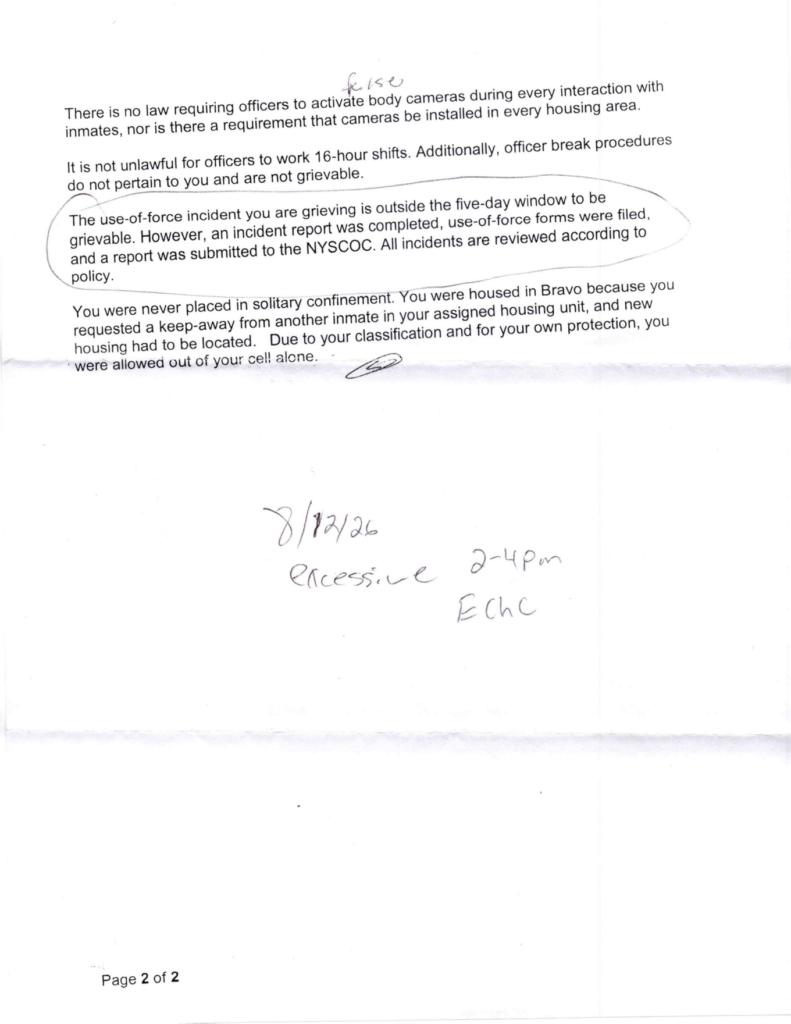
Read the response alongside his account. Ryan describes physical abuse; the jail says the filing window closed and the incident went through its reporting process. A deadline answers whether a grievance was timely. It cannot establish whether an officer’s conduct was lawful.
The response also denies solitary confinement, explaining that Ryan requested separation from another prisoner and was housed in BRAVO while officials sought another placement. It says his classification and protection required that he leave the cell alone. That is the jail’s explanation for the restrictions, and the housing records should show how those restrictions operated.
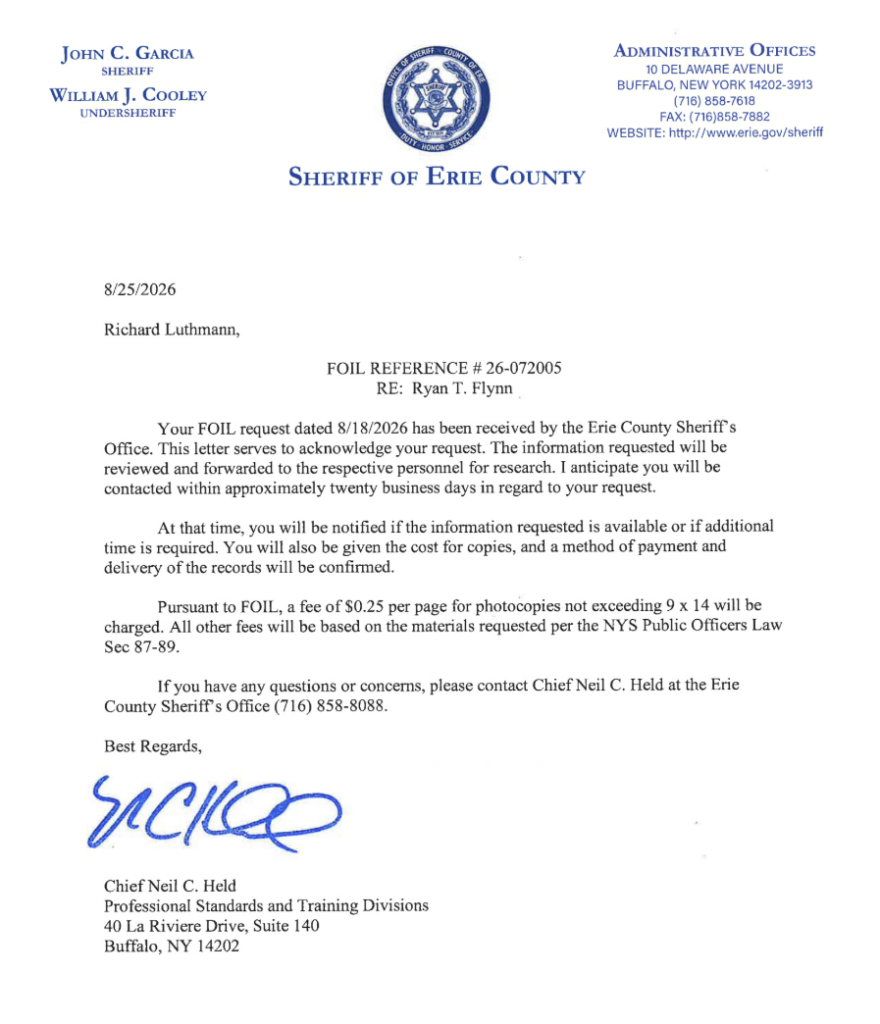
The Erie County Sheriff’s Office acknowledged this outlet’s records request on August 25, following its August 18 submission. The acknowledgment promised review and further contact by Chief Neil C. Held, and the twenty-day window has expired.
The next disclosure needs substance: the force reports, available recordings, supervisory findings, and the state commission’s response.

Jail officials have the advantage of custody, documentation, and institutional control. Ryan has a telephone and the papers he can send out. That imbalance is precisely why outside scrutiny matters. A government that can close a cell door on somebody must never be allowed to close the evidentiary record around what happens afterward.
Hochul Owns the State That Holds Him
Kathy Hochul wanted credit for changing New York’s bail system. In her 2023 budget announcement, she promoted greater judicial discretion alongside the promise that “poverty is never treated as a crime.” Ryan’s reported $50,000 cash bail puts that promise on trial. A $50,000 cash barrier requires facts that withstand examination.
The plea offer Ryan describes exposes an uglier bargain: a guilty plea could purchase the freedom his continued defense has failed to secure.
The governor’s rhetoric has reached the jailhouse door. It needs to get inside.

Albany has an institutional route into the force complaint. The Commission of Correction oversees correctional facilities; its members are gubernatorial appointees confirmed by the Senate. The jail says a report was submitted to it. Hochul’s responsibility therefore extends beyond issuing another statement about fairness. Her administration should establish what the commission received, what review followed, and whether corrective action was warranted.
The local judge controls bail, and the sheriff controls the jail. Those divisions assign responsibility. They do not dissolve the state’s obligation to supervise the institutions exercising its coercive power.
And it’s not like Kathy Hochul is unfamiliar with how Erie County justice is dispensed. According to the brother of former local Democrat Party Chair John Crangle, Kathy Hochul was a “moll” for the “Kennedys of Tonawanda.
Ryan Flynn’s case requires an independent examination outside the professional loyalties surrounding John Flynn, and his continued custody demands an immediate, reasoned judicial reckoning. The failed felony push, renewed misdemeanor confinement, disputed message attribution, and reported plea pressure make complacency indefensible.
Judge Nichols must answer for her rulings through the record. District Attorney Keane must demonstrate that his office’s decisions are insulated from its former boss. ADA Sipes must account for her questionable statements to the court. And Kathy Hochul must answer for the oversight entrusted to Albany.
A politically connected man’s accuser should never have to purchase his freedom with a confession. New York’s justice system forfeits its credibility when surrender becomes the easiest way out.
Related posts:
About The Author
