

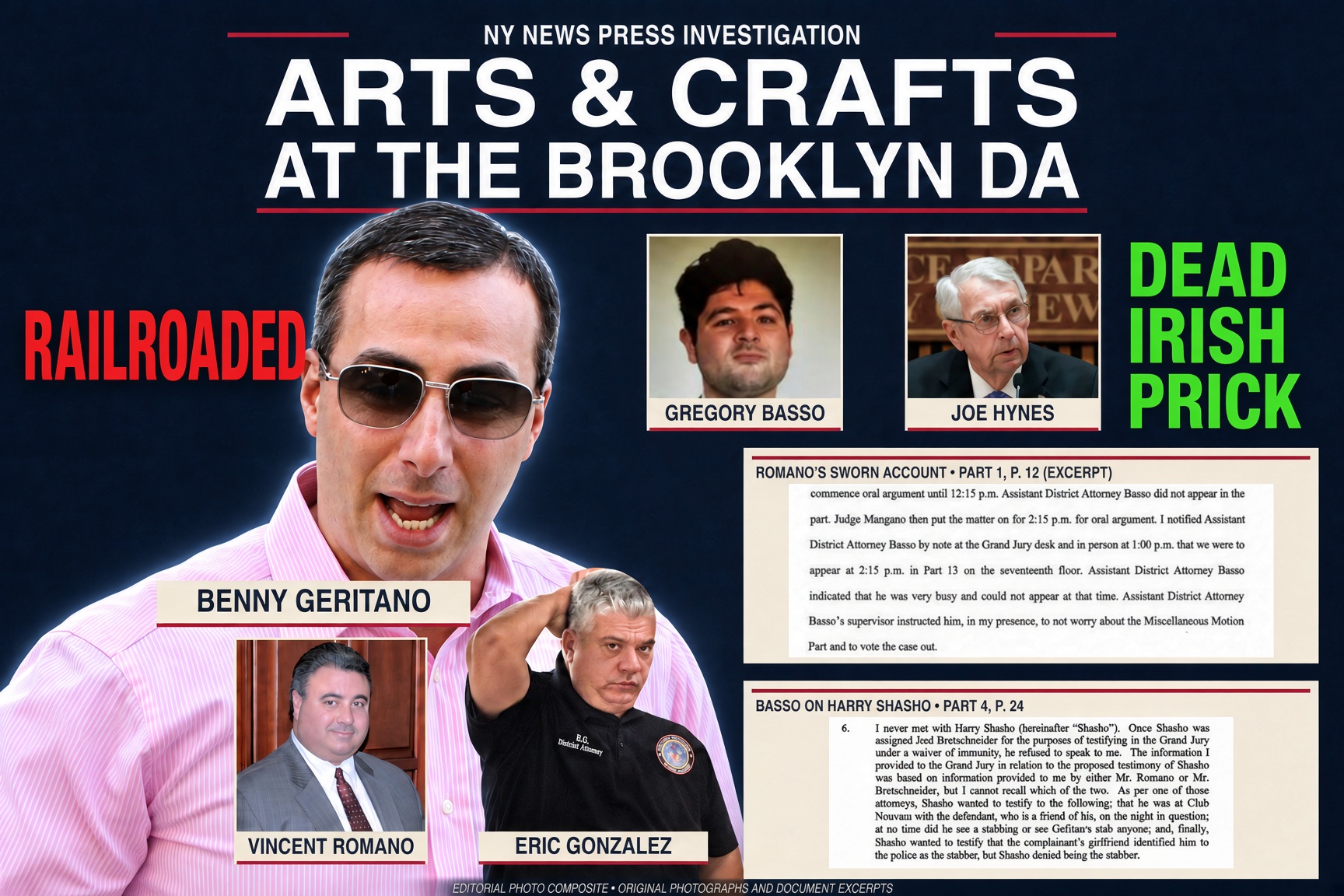
Attorney Vincent Romano swore that a Kings County DA supervisor told former ADA Gregory Basso to vote Benny Geritano’s case out while the defense was seeking judicial intervention. The DA’s own papers demand a closer look.
By Richard Luthmann
BROOKLYN, NEW YORK. At 1 p.m. on January 18, 2013, Vincent Romano says he told Assistant District Attorney Gregory Basso, face to face, that a judge was scheduled to hear a defense objection at 2:15. Basso said he was too busy. Then Basso’s supervisor weighed in. Romano put the instruction in an affirmation to the court: “Assistant District Attorney Basso’s supervisor instructed him, in my presence, to not worry about the Miscellaneous Motion Part and to vote the case out.” Read Romano’s sworn account.
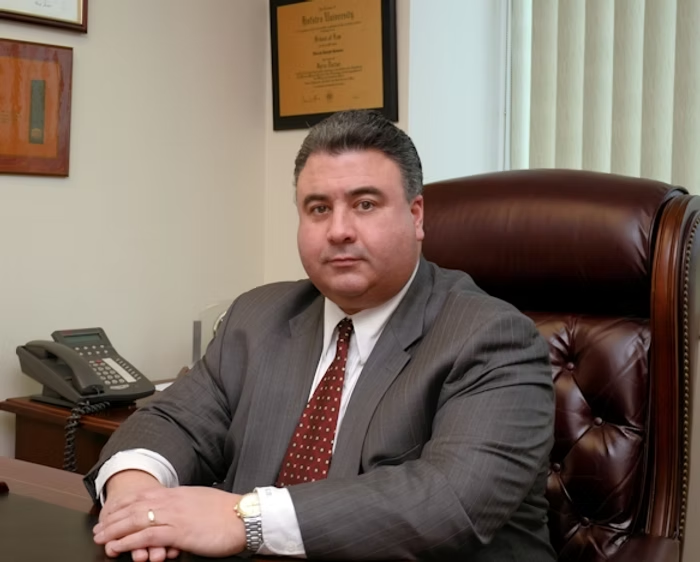
Read that again. A prosecutor knew a defense lawyer was waiting to argue about what had happened in the grand jury. According to the lawyer standing there, the instruction from above was to get the vote.
If a supervisor used the grand jury calendar to beat a defense challenge to the judge’s door, I call that prosecutorial corruption. The man who says he heard it put his name on the allegation in 2013. Kings County has had years to ask its own people what happened.


The prosecutors had all day
Basso “jerked us around for three whole days,” Romano told me on November 14. His affirmation supplies the hours. On January 14, all three defense witnesses were ready, and Romano says Basso was informed by 10:45 a.m. Basso and his supervisor, Jeffrey Levitt, arrived at 3:40 p.m., according to Romano. They interviewed club security chief Thomas Turner with Romano in the room. His account of what the two prosecutors were doing in that room was blunt: “attempting to figure out how to neutralize and rebut the witness’ testimony.” That’s Romano’s assessment of the meeting. Basso confirms that he and Levitt interviewed Turner together. Romano, ¶ 7. Basso’s October affirmation.
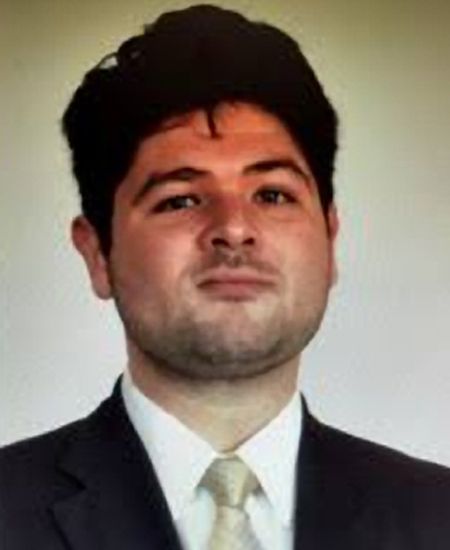
Levitt wanted independent counsel for Harry Shasho before Shasho waived immunity. Basso said there was a risk Shasho could incriminate himself. Fine. Give the man a lawyer. On January 17, he got one, signed a waiver, and the paper went to the grand jury clerk on the sixteenth floor. By then, the defense’s third witness was unavailable. Romano says the two who remained waited again. Basso came to see them about 4:05 p.m. and began the proffers at 4:36 p.m. The grand jury heard Basso summarize what the two men might say and voted against hearing them. Then the grand jury heard another witness for the prosecution. ADA Lindsay Gerdes’s own affirmation names that witness: another assistant district attorney, Inna Chumikova. Gerdes asked the court to deny the defense motion without a hearing. That’s what the office did with the extra time Romano had agreed to give it while his client remained in custody. Romano, ¶¶ 8–11. Justice William Miller’s account.
The next day brought the warning to Basso and the wait outside Justice Mangano’s courtroom. Romano says he left a voicemail and notes at the grand jury desk. He says Basso neither appeared nor called. At about 3:45 p.m., Mangano let Romano make a record without the prosecution. “After completing my record I went back down to part AP-1F at 4:00 p.m. and was informed that the case was voted and indicted,” Romano wrote. Four o’clock is when Romano got the news. The hour of the vote is still missing. Romano identifies Levitt as Basso’s supervisor earlier that week. In the paragraph about the January 18 instruction, he identifies the speaker by title alone. Ask Levitt whether it was him. Ask Basso what his supervisor told him and why he let defense counsel sit there. Romano, ¶¶ 12–14.
By September 2013, Benny was already telling the court in his own filing that Mangano said on the record Basso’s absence had kept him from intervening.
Arts and Crafts: The DA’s brief gave Basso a conversation he never had
The Hynes office filed a memorandum defending the grand jury presentation. It said Basso summarized the two defense witnesses’ expected testimony “based upon his conversations with the witnesses.” That reads as if Basso spoke with both. Here is Basso himself in a subsequent sworn affirmation: “I never met with Harry Shasho.” Basso got the account from one of two lawyers and said he couldn’t remember which. If the district attorney’s office is going to tell a judge its man gave the grand jury a faithful account, it should be able to tell that judge whose account its man was giving.

Basso also swore that after consulting Levitt, he left out Shasho’s claim that Fusco’s girlfriend had identified Shasho as the stabber. Basso said she denied identifying anyone and that the accusation was inadmissible hearsay. The appeals court agreed the prosecutor could omit the hearsay and found no showing of knowing misrepresentation in the proffers. Miller rejected Romano’s deliberate-delay claim, found the delay in assigning counsel wasn’t the DA’s fault, and said the grand jury had no fixed quitting time. Those rulings stand. What remains to be answered is when Basso knew Benny’s own notice had been withdrawn, and who wanted a vote while the defense’s objection was waiting upstairs.
Arts and Crafts: This is how they railroad
Brooklyn had Benny’s notice. Its intake sheet checks YES. Romano swore that Benny reaffirmed his wish to testify on January 11. Then comes the page the DA produced as part of its file. Somebody wrote Benny’s name in the caption of a printed Waiver of Immunity. There’s a blank line where the witness would sign. Below it, in different handwriting, is the statement withdrawing the notice. Romano recognized the note and signature as his in my first interview. He said the handwriting at the top belonged to somebody else. Geritano says he never authorized the withdrawal. The produced copy has no visible docket number, grand jury number, or receipt stamp. DA intake sheet. Romano, ¶¶ 4–5.
“You’d have Basso’s signature, you have the date, and it would be a lot more official than what it is,” Romano told me on November 14, describing the documentation he would have expected. The law gives counsel a strategic role in deciding whether the client will testify, and a withdrawal of notice is a separate act from the signed, sworn waiver of immunity a witness uses to testify. The form’s blank lines tell us no one executed the printed waiver on this copy. The handwritten note raises a separate question. When did it become operative? Romano’s affirmation gives January 17. Basso swore that was the date of the first vote. The DA’s own jacket records a withdrawal in writing without a clear receipt time. Shasho’s signed waiver could be traced to a clerk’s desk. Brooklyn ought to be able to do at least that much for a paper it says took the accused out of the proceedings. People v. Hogan. Basso’s September affirmation, ¶ 3. DA case jacket.


Benny’s version mattered. Fusco testified that he could identify the man who started the fight and couldn’t identify who stabbed him. The DA’s own statement notice records Benny saying he picked up a knife and handed it to someone. Turner subsequently gave Romano an account of seeing Benny pick up the knife. Basso swore Turner hadn’t mentioned it in their meeting. Turner’s written account came after both votes. Benny could have told grand jurors in person why he was seen with a knife. Whether they would have believed him was their business. If his notice was still in effect, it was Brooklyn’s business to give him a reasonable chance to speak. Fusco’s testimony. Geritano statement notice. Turner’s January 24 email.
Arts and Crafts: Put Basso and Levitt under oath
Joe Hynes admitted using his public office computer and email account to work on his reelection campaign, with more than 5,000 campaign-related communications. That misconduct earned him a $40,000 fine. Years later, Brooklyn’s own conviction review documented 25 wrongful convictions and 426 years of imprisonment. Brooklyn DA Eric Gonzalez can find out who was working the grand jury desk and who supervised Basso that week. He can seek the Mangano minutes, the vote records, and the original withdrawal. He can put the question to Romano, Basso, and Levitt separately. Did someone tell Basso to get the vote while the judge was waiting to hear an objection?


The ordinary deadline for a challenge to the denial of personal grand jury testimony was five days from arraignment on the indictment. The motion Romano filed focused on the other witnesses and reported that Geritano’s own notice had been withdrawn. The conviction stands. That makes a supported postconviction application and an independent conviction review all the more important. If a properly invoked notice was still live when the prosecution got a vote, and Geritano was denied a reasonable chance to appear, a later opportunity couldn’t cure it. If the investigation establishes that violation and a viable basis for postconviction relief, Gonzalez should support vacatur. CPL § 190.50(5). People v. Evans.
Benny got twelve years. Basso and his supervisor should have to give an account of one afternoon. Start with the instruction Romano says he heard. End with the minute Brooklyn took the vote.


About The Author

Leave a Reply