


Union power broker Eric Bischoff’s private Staten Island landmark lands $475K as the GOP judicial machine tears itself apart.
LUTHMANN NOTE: Staten Island’s politicians want this reduced to a heartwarming preservation story about saving an old mansion. Their version leaves out the private LLC that owns the property, the commercial wedding business, the newly incorporated nonprofit, the NYC Council funding limits, Bischoff’s firefighter-union leverage, and the Republican judicial revolt surrounding him. Justice Catherine DiDomenico was passed over for the Supreme Court nomination, Republican law chair Robert Brown crossed party lines, and nearly half a million dollars in public support was directed toward Eric Bischoff’s privately owned Kreischer Mansion. Perhaps airtight agreements protect the taxpayers, and perhaps Bischoff played no role in sinking DiDomenico. Release the records and establish it. Until then, the tuxedo captures the whole arrangement: patronage arrived dressed for a wedding, and taxpayers were handed the bill. This piece is “Staten Island Mansion Money Fix.”

By Richard Luthmann
(STATEN ISLAND, NEW YORK) – Eric Bischoff greeted Staten Island’s political establishment outside the Kreischer Mansion Tuesday morning wearing a full tuxedo, a theatrical salute to Balthasar Kreischer, the German industrialist whose family built the Queen Anne landmark around 1885. The costume fit the house, but it also fit the performance unfolding on the lawn.

Republican Councilmembers Frank Morano and David Carr stood beside Democratic Councilmember and Majority Whip Kamillah Hanks to announce $30,000 in City Council funding for the property. Only weeks earlier, state officials had celebrated another $445,000: $315,000 attributed to Democratic state Sen. Jessica Scarcella-Spanton and $130,000 requested by Republican Assemblymember Michael Reilly, with Republican state Sen. Andrew Lanza lending his praise.
By the time the cameras stopped clicking, politicians from both parties had attached their names to $475,000 in announced or allocated public support for a mansion owned by a limited liability company tied to one of Staten Island’s most politically useful union figures. The Staten Island Advance described the occasion as an investment in history and tourism. That is the flattering half of the story.
The other half begins with the identity of the property owner, continues through a newly created nonprofit and a liquor-licensed events company operating from the same address, and ends inside a Republican judicial-selection fight that has driven the party’s own law chair into the arms of the Democratic Supreme Court candidate.
At the center of every branch of that story is Bischoff, whose position inside the Uniformed Firefighters Association gives him access to a political commodity coveted by Staten Island candidates in both parties: the support of New York City firefighters and the thousands of relatives, retirees and union households surrounding them.
Staten Island Mansion Money Fix: Taxpayers Improve the Asset. The Private Owner Keeps the Value.
The Kreischer Mansion deserves preservation. Its history runs through Staten Island’s industrial rise, Balthasar Kreischer’s brickmaking empire, the collapse of the family fortune, the suicide of Edward Kreischer, a notorious 2005 Mafia murder, and the building’s later incarnation as a haunted attraction. Nobody needs to invent a public interest in saving it.
The unanswered question is why Staten Island’s elected officials committed nearly half a million dollars without publicly explaining how taxpayers will be protected from enriching the private property owner and the commercial events business being developed on the premises.

NYC Finance records identify the owner of 4500 Arthur Kill Road as Kreischer Mansion Holdings LLC, care of Eric Bischoff. The city assigned the property an estimated market value of $1.295 million for the 2025-26 tax year, meaning the $475,000 claimed by politicians for the project amounts to more than one-third of the city’s valuation. The money is formally being routed through the Kreischer Mansion Historical Preservation Society Corp., but the work will be performed at a privately owned building whose restored façade, repaired infrastructure, and expanded public profile will remain with the real estate.
The structure becomes more troubling with the addition of Kreischer Mansion Events Ltd., a business corporation formed in November 2024 with service of process directed to Bischoff at the mansion. Community Board 3 records show Bischoff and Julia Mackie appearing for the company’s liquor-license application, which contemplated indoor operations until 1 a.m., porch service and eventual use of the outside grounds and atrium.
Bischoff told the Advance that the atrium could host weddings. The taxpayers are therefore being asked to underwrite preservation and programming at the same address where Bischoff’s related business intends to sell private events and alcohol.
The public was shown a historic mansion and handed a tourism pitch. It wasn’t shown the lease between the nonprofit and the LLC, the accounting agreement separating charitable programming from commercial events, or the restrictions preventing publicly financed improvements from increasing the profitability of weddings and private parties.
New York City’s peons weren’t told who owns the improvements after the grant work is completed, what happens if the property is sold, how frequently the public will receive free access, or whether the commercial operator will reimburse the nonprofit for its use of taxpayer-supported facilities.
Those aren’t administrative footnotes. They determine whether the government is preserving public history or renovating a politically connected businessman’s event venue.
Staten Island Mansion Money Fix: The Council’s Own Rules Present Another Problem
The nonprofit selected to receive the City Council money was incorporated in New York on Feb. 6, 2026, according to state corporation information. Mackie is listed as its service-of-process contact at the mansion, and the organization uses EIN 33-3459695. Within months of its incorporation, it appeared in the Council’s final Fiscal Year 2027 Schedule C with four allocations totaling $30,000. Carr supplied two $5,000 awards, Morano supplied another $5,000, and Hanks supplied $15,000.
The Council managed to misspell the organization’s name as “Kresischer,” but it found the right tax identification number and enough public money to push the organization past the Council’s stated limit for newly created groups.

The Council’s FY2027 Discretionary Funding Policies and Procedures state that organizations created within the previous two fiscal years may not ordinarily receive more than $20,000 in total or more than $10,000 from any single member or source. The policy permits case-by-case waivers, but nothing released with the allocation identifies one.
The Kreischer nonprofit landed $30,000 overall, while Hanks supplied $15,000 on her own. If the Council waived both limits, it should produce the waiver and explain why an organization incorporated only months earlier deserved extraordinary treatment while operating from property owned by Bischoff’s LLC and alongside his commercial events corporation.
That explanation must include the nonprofit’s complete application, board roster, conflict disclosures, budget, public-programming schedule, and every agreement connecting it to Holdings LLC, Events Ltd., Bischoff, and Mackie. Council policy requires discretionary money to serve a public purpose rather than private interests, and funded programs are generally expected to remain free and open to the public.
Those protections mean nothing if officials invoke them in policy manuals while refusing to show how they were applied to a new nonprofit embedded inside a privately owned wedding venue.
Staten Island Mansion Money Fix: Politicians Claimed the Money Before It Cleared the Pipeline
The state announcement was packaged as another completed victory, but the government’s own records don’t support treating every dollar as delivered. The official State and Municipal Facilities Program project list confirms Reilly’s $130,000 request, identifies Mackie as president and project director, and says the money would finance “major repairs and renovations” to the exterior façade. The same entry carries a conspicuous status: “FINAL APPROVAL PENDING.”
The politicians have taken credit for money that hasn’t necessarily completed the approval, contracting, and disbursement process. The $315,000 attributed to Scarcella-Spanton was announced with the Reilly grant, but the controlling agreement, final approval record, and payment history haven’t appeared in the materials made public.

Before a dollar improves Bischoff’s property, the state should disclose the conditions attached to it, including public-access requirements, preservation covenants, procurement controls, ownership representations,s and repayment provisions triggered by a sale or abandonment of the promised historical programming. Otherwise, the public is being asked to applaud a preservation grant without seeing whether the government preserved anything for the public.
The chronology deserves special attention. Bischoff and Mackie began developing the mansion as an events property. Their events company sought permission to serve liquor. Plans advanced for an atrium capable of hosting weddings. A nonprofit was placed at the same address. Elected officials then announced hundreds of thousands of dollars for renovations and programming without publicly producing the agreements separating the charitable operation from the commercial one. This arrangement may have passed through government review, but no elected official standing on the mansion lawn explained how the private owner was prevented from pocketing the increase in value created by taxpayers.
Staten Island Mansion Money Fix: Bischoff Has Something Politicians Want
Bischoff isn’t merely a retired firefighter with a restoration hobby. A 2025 NYC Comptroller release identified him as the Uniformed Firefighters Association’s Staten Island representative and chair, serving among the trustees of the New York City Fire Pension Fund. His political role has repeatedly placed him at the point where union support meets candidates hungry for endorsements.
Scarcella-Spanton’s campaign website carries Bischoff’s endorsement statement and identifies him as the UFA’s Staten Island trustee. He personally announced the union’s 2022 endorsement of Republican Rep. Nicole Malliotakis. His reach isn’t confined to one party because the union’s value isn’t confined to one party. Staten Island is home to a large concentration of active and retired firefighters, union families and public-safety households. The endorsement carries institutional credibility, campaign manpower and a network capable of moving votes.
Hanks’ relationship with Bischoff didn’t begin on the mansion lawn. When she first sought the North Shore Council seat in 2017, the UFA formally endorsed her and directed members participating in its campaign operation to contact Bischoff. Nine years later, Hanks supplied the mansion nonprofit with its largest Council allocation, $15,000, three times what either Carr or Morano contributed and $5,000 above the Council’s ordinary single-member limit for a newly created organization. The politician who benefited from Bischoff’s union machinery is now the politician who reached deepest into the public purse for his mansion project.

That history transforms the mansion appropriations from an ordinary preservation story into a test of political patronage. Scarcella-Spanton benefited from UFA support promoted by Bischoff and is now credited with $315,000 for the mansion project. Hanks benefited from a UFA campaign operation routed through Bischoff and allocated another $15,000, exceeding the Council’s ordinary single-member limit for a new organization. Republicans need the same union machinery, as the Malliotakis endorsement demonstrated, and Republican officials joined the funding parade.
The exchange doesn’t need to appear in a signed contract to become politically intelligible. Bischoff controls access to something officeholders want, while those officeholders control access to public money.
Staten Island Mansion Money Fix: A Divorce Judge Becomes a Political Problem
The money trail might have remained a local patronage story if Bischoff’s name hadn’t also surfaced in the Republican battle over the 2026 Supreme Court nomination. Justice Catherine M. DiDomenico has served on the bench since 2005 and as an acting Supreme Court justice since 2009. She presides over Richmond County’s Integrated Domestic Violence Part and matrimonial matters.

Her résumé includes Fordham Law Review, a federal clerkship, complex commercial litigation, government counsel work, and decades as a law professor. On experience alone, she belonged in the center of any serious discussion about a Supreme Court nomination, although she’s made some questionable legal and political moves lately.
DiDomenico also handled Bischoff’s divorce, and the account now circulating through Staten Island Republican politics is that Bischoff wanted her stopped. According to that account, he made clear that her nomination would bring political consequences for the party. DiDomenico was passed over, and Richmond County Civil Court Judge Michael J. Pinto emerged as the Republican choice.
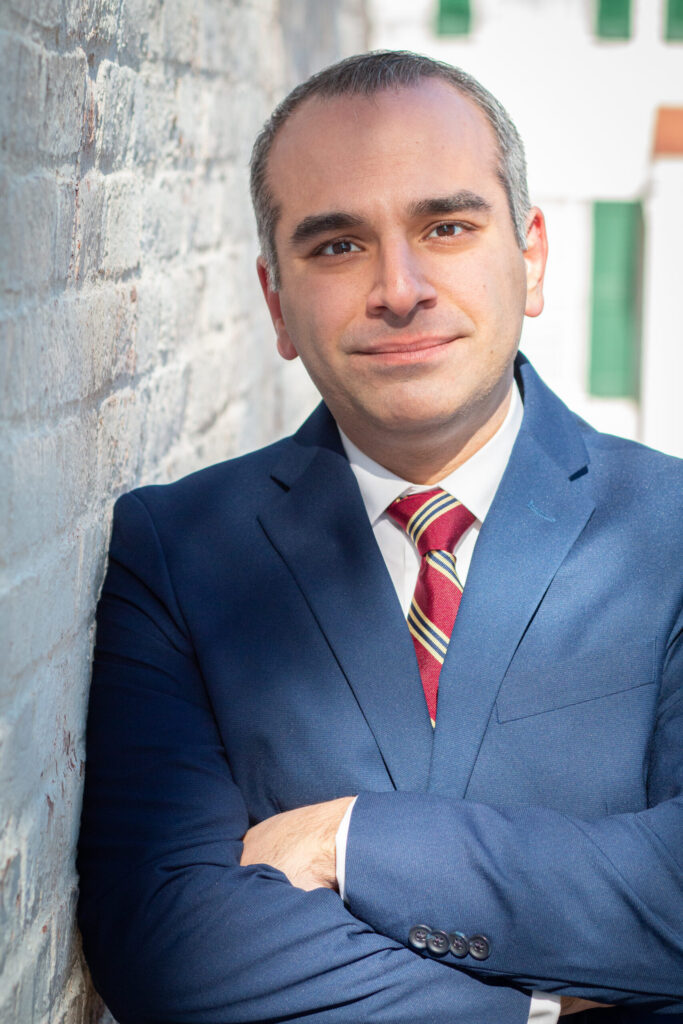
No party leader has released the screening record, delegate discussions, or internal communications that would permit voters to measure Pinto against DiDomenico or determine who killed her candidacy. Republican Chairman Michael Tannousis can settle the question by identifying who proposed each candidate, who objected, what reasons were offered, and whether Bischoff contacted him or any judicial delegate about DiDomenico.

Until he does, the party is asking the public to trust a secret process that produced exactly the result its politically connected union power broker wanted.
The absence of a written threat doesn’t cleanse the process. Political pressure is rarely drafted as a memorandum titled “Quid Pro Quo.” It operates through conversations, warnings, endorsements, withheld endorsements, and the shared understanding that crossing the wrong power center carries a price. The relevant question isn’t whether Bischoff was foolish enough to memorialize his leverage. It is whether Republican leaders allowed a private grievance arising from a divorce case to influence who received their Supreme Court nomination.
Staten Island Mansion Money Fix: The Republican Law Chair’s Defection
Robert E. Brown’s endorsement of Democratic Supreme Court candidate Kelvin Richards is the public evidence that something inside the Republican process broke badly. Brown’s Republican National Lawyers Association profile identifies him as the law chair of the Staten Island Republican Party. He is a retired NYPD captain, an experienced election lawyer, and the man Tannousis publicly thanked for nominating him as county chairman. Brown wasn’t shouting from the cheap seats. He was part of the machinery.
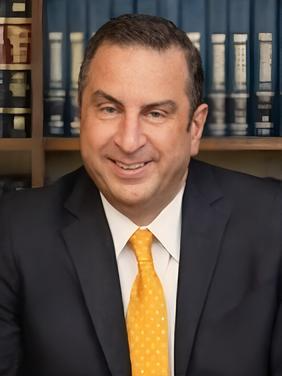
His decision to support Richards cannot be dismissed as an impulsive cross-party friendship. Brown and Richards do share a professional history, including service on a New York State Bar Association task force addressing racial injustice and police reform, and Brown plainly considers Richards qualified. That relationship explains why Richards was a credible alternative for Brown; it doesn’t explain why the Republican law chair became willing to repudiate his own party’s Supreme Court selection in public.
The Staten Island Democratic Party celebrated Brown’s endorsement because Democrats understood its meaning. This wasn’t the endorsement of a Republican gadfly with no institutional role. It came from a lawyer identified as the party’s law chair, a former police captain with deep borough relationships and a figure who helped elevate Tannousis to the chairmanship.
Some Republican critics frame the episode as another instance of Democratic Assemblymember Charles Fall outmaneuvering Tannousis.
In reality, Fall capitalized on the opening the Republican organization created when its judicial process became so compromised that one of its own senior legal figures found the Democrat more supportable than the product of his party’s machinery.

Brown’s defection ties the judicial fight to the broader Bischoff problem. DiDomenico was passed over after drawing the opposition of the union figure whose divorce she handled. Pinto received the nomination. Brown rejected the outcome and supported Richards.
During the same political season, elected officials from both parties gathered at Bischoff’s property to celebrate public funding routed through a new nonprofit and into a privately owned mansion being developed for commercial events.
Treating each event as an isolated coincidence requires more credulity than the public owes any political organization.
Patronage Dressed for a Wedding
The Kreischer Mansion may become a valuable museum, educational site and tourist attraction. It may also become a lucrative wedding and events venue whose private owner benefited from hundreds of thousands of dollars in government-financed improvements. Those possibilities can coexist, which is exactly why the public-financing agreements matter.
Taxpayers are entitled to know what they purchased, how much access they received, which entity controls the restored property, and whether Bischoff’s commercial business will profit from work financed in the name of historical preservation.

The political record makes secrecy intolerable. Bischoff occupies a strategic position inside a union whose endorsement elected officials seek. Politicians associated with that union support helped assemble nearly half a million dollars for his mansion project. A newly incorporated nonprofit received City Council allocations beyond the ordinary limits for new organizations unless a waiver was granted. The money will support activity at property owned by Bischoff’s LLC, where another Bischoff-linked corporation is developing weddings and liquor-served events.
At the same time, Bischoff’s opposition to the judge who handled his divorce became part of a Republican Supreme Court selection that ended with DiDomenico rejected, Pinto nominated, and the Republican law chair endorsing the Democrat.
Staten Island’s political class can answer this with records instead of slogans. The Council can release the waiver, application, board roster, conflict disclosures, and budget. The nonprofit can produce its lease and agreements with Holdings LLC and Events Ltd. State officials can release the grant instruments, approval status, and public-access protections.
Tannousis can open the judicial-selection record and explain Bischoff’s role. Bischoff can disclose whether he contacted Republican officials about DiDomenico and whether his union position was invoked in those conversations.
Until those records are produced, the tuxedo remains the perfect symbol for the entire arrangement: political patronage dressed up for a wedding at taxpayer expense.
About The Author

Leave a Reply