

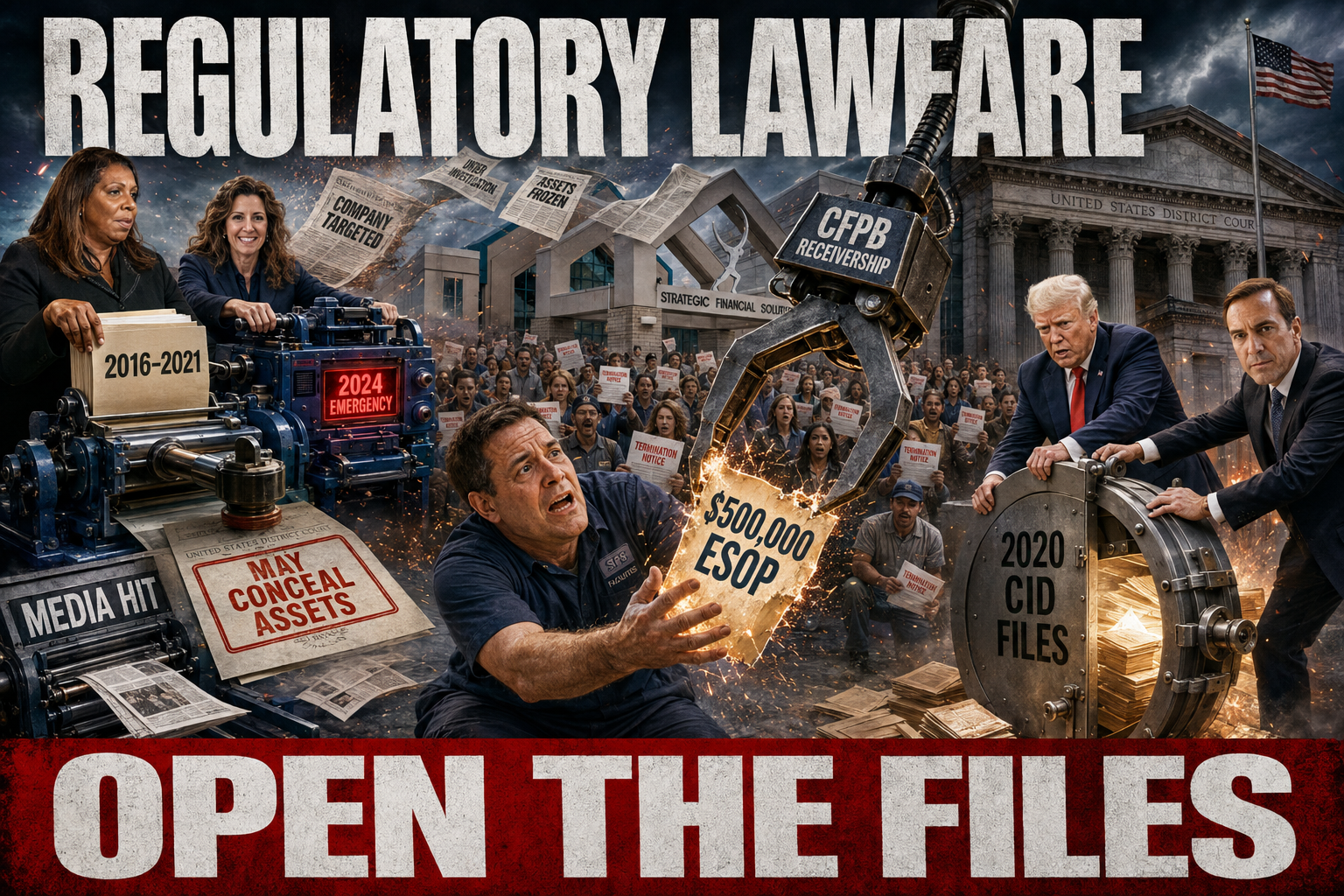
CFPB and Letitia James manufactured an “emergency,” seized an employee-owned company, and handed The New York Times the soundtrack
LUTHMANN NOTE: Regulators claim they protect working people. Here, they knew the company was employee-owned and destroyed it before trial. The janitor did not design the debt-relief program, move corporate money, or speak to the CFPB. He worked, accumulated a retirement stake, and trusted employee ownership. Then Washington and Albany turned a disputed regulatory theory into a corporate death warrant and pension raid. President Trump and Acting CFPB Director Mark Paoletta now control the federal side of this machine. Open the files. Expose the omissions. End the case if the emergency was manufactured. No regulator should be allowed to “protect” another janitor into poverty. This piece is “Regulatory Lawfare Robbed The Janitor.”

By Richard Luthmann
They Took Everything Before Trial
(AMHERST, NEW YORK) – A facilities management employee at Strategic Financial Solutions (SFS) went to work one day believing his employee-ownership account was worth about $500,000. He had not inherited the money, manipulated a stock price, written a debt-relief contract, or engineered a regulatory loophole. He earned his stake by working as facilities personnel for a company that became 100% employee-owned through an Employee Stock Ownership Plan.
The people cleaning the offices, processing paperwork, answering customers, and keeping the operation alive held retirement wealth tied to the company they had built.


Then Elizabeth Warren’s brainchild, the Consumer Financial Protection Bureau (CFPB), teamed up with New York Attorney General Letitia James, and six other Democratic state attorneys general stormed into federal court, obtained an ex parte order, froze the company, installed their chosen receiver, and destroyed the value underneath those employee accounts.
The janitor went from half-million-dollar employee-owner to regulatory roadkill. No trial. No final judgment. No finding that he had done anything wrong.
The mass destruction of the workforce is documented. The receiver’s records show that the takeover disrupted payroll, employee access, insurance, and operations almost at once. Strategic Financial Solutions warned New York that it expected to eliminate every remaining position. Buffalo Business First reported 838 planned layoffs. SFS places the full toll at more than 900 employee-owners.
In an April 2024 decision, the Buffalo Federal Court recorded the defendants’ contention that the receiver had shut down the business, imperiled the jobs, and left about 65,000 consumers without service. The court refused to stay the injunction because it believed the government was likely to prevail.
That procedural ruling did not restore a single paycheck, retirement account, or ruined career. The punishment had already landed.
That is how modern regulatory lawfare works. The government calls its target a fraud before trial, freezes the money needed to mount a defense, installs a professional receiver, and lets time finish the execution. By the time an appellate court examines the theory, the company is dead, the employees are scattered, the customers are stranded, and the government points to the wreckage as proof that the business could not survive.
The CFPB and Letitia James call this consumer protection. The employee-owners paid the bill.
The Four-Year “Emergency”
The assault began under seal on Jan. 10, 2024. The CFPB joined New York, Colorado, Delaware, Illinois, Minnesota, North Carolina, and Wisconsin in the Western District of New York and demanded immediate control over StratFS, formerly Strategic Financial Solutions, its related companies, bank accounts, and assets. The regulators submitted thousands of pages without giving the defendants a chance to respond.
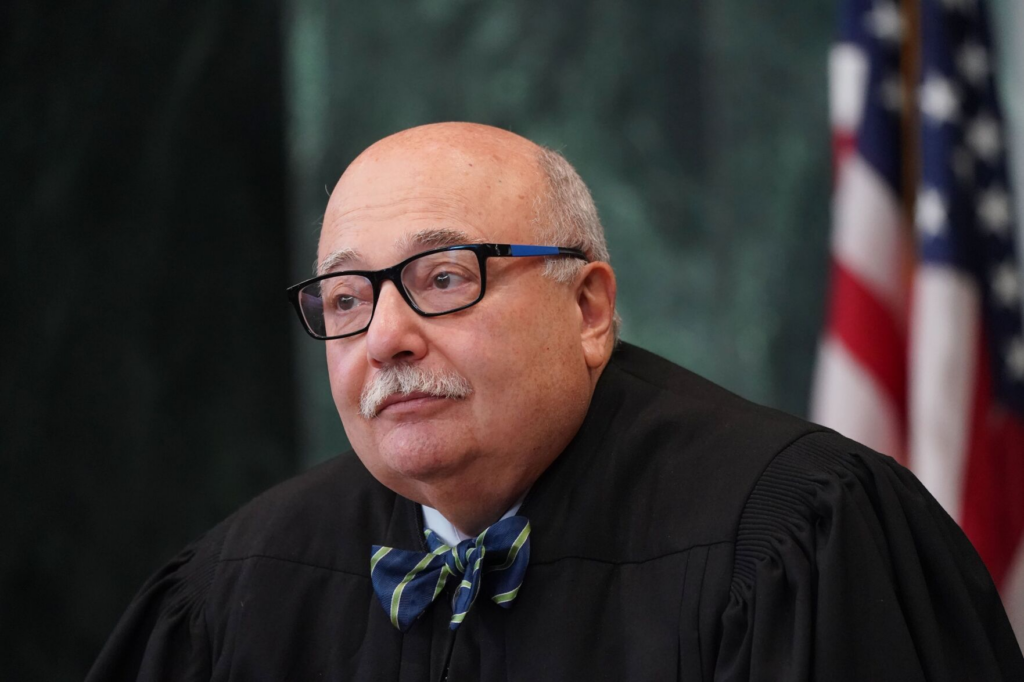
On Jan. 11, U.S. District Judge Lawrence J. Vilardo signed an ex parte temporary restraining order that froze assets and placed the enterprise under a receiver. The government secured the most destructive civil remedy available within roughly 24 hours of filing the case.
It then waited until Jan. 19 to unveil the operation publicly, with James and the CFPB announcing that they had stopped a company that “swindled” financially distressed consumers out of more than $100 million.
There was one fatal problem with the emergency story: the government had been investigating for years. The New York Times admitted it. Its Feb. 10, 2024 profile of SFS CEO Ryan Sasson reported that the investigation had started more than four years earlier. SFS says the CFPB served civil investigative demands on associated law firms in 2020 and received detailed disclosures concerning the fee structure, attorney relationships, and face-to-face compliance process that later formed the center of the government’s case.

The law firms did not hide the model. They built it with compliance advice, revised it over time, disclosed it to regulators, and submitted it to payment processors and lenders. Former New York Attorney General Dennis Vacco had provided a legal opinion addressing the face-to-face requirements years before the raid.
The CFPB did not walk into court in January 2024 after discovering an operation that had erupted overnight. It walked in after years of investigation and prior access to the business model. Yet the Bureau and the state attorneys general presented the dispute as a “crisis” requiring seizure before notice.
That was the first deception.
Regulatory Lawfare Robbed The Janitor: The Emergency Declaration Tells on Them
The second fraud was the emergency itself. Then-CFPB attorney Vanessa Buchko asked the court to freeze SFS’s assets, appoint a receiver, and keep the entire operation secret until the government seized control. Her Emergency Declaration rested on her “personal knowledge or information made known to me in the course of my official duties.” It identified no fresh crisis.

“Plaintiffs have not attempted to provide notice to the Defendants, nor should notice be required,” Buchko wrote. She insisted the emergency “was not caused by Plaintiffs’ lack of diligence.” But she identified no January 2024 transfer, destroyed document, fleeing defendant, or sudden consumer threat. The government supplied a conclusion and called it an emergency.
Its financial evidence was old. The declaration relied on transactions dating from 2016 through 2021. The CFPB had known about those transfers for years. It took stale banking records, labeled the accounts a “financial labyrinth,” and repackaged history as an imminent threat.
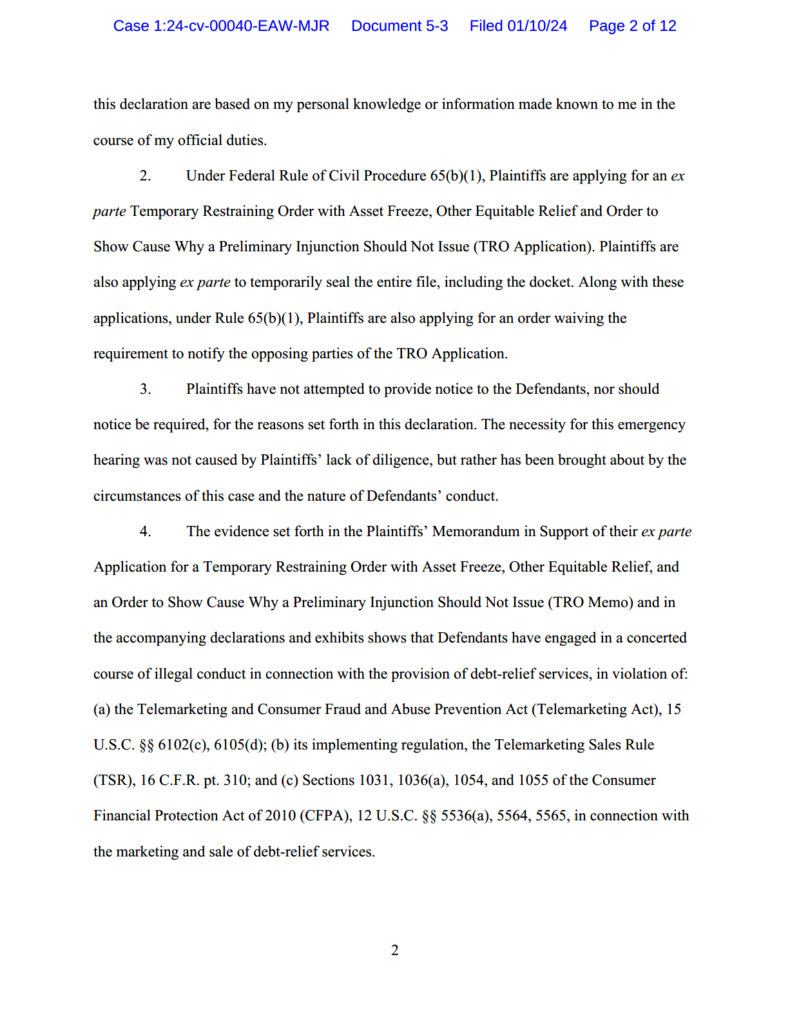
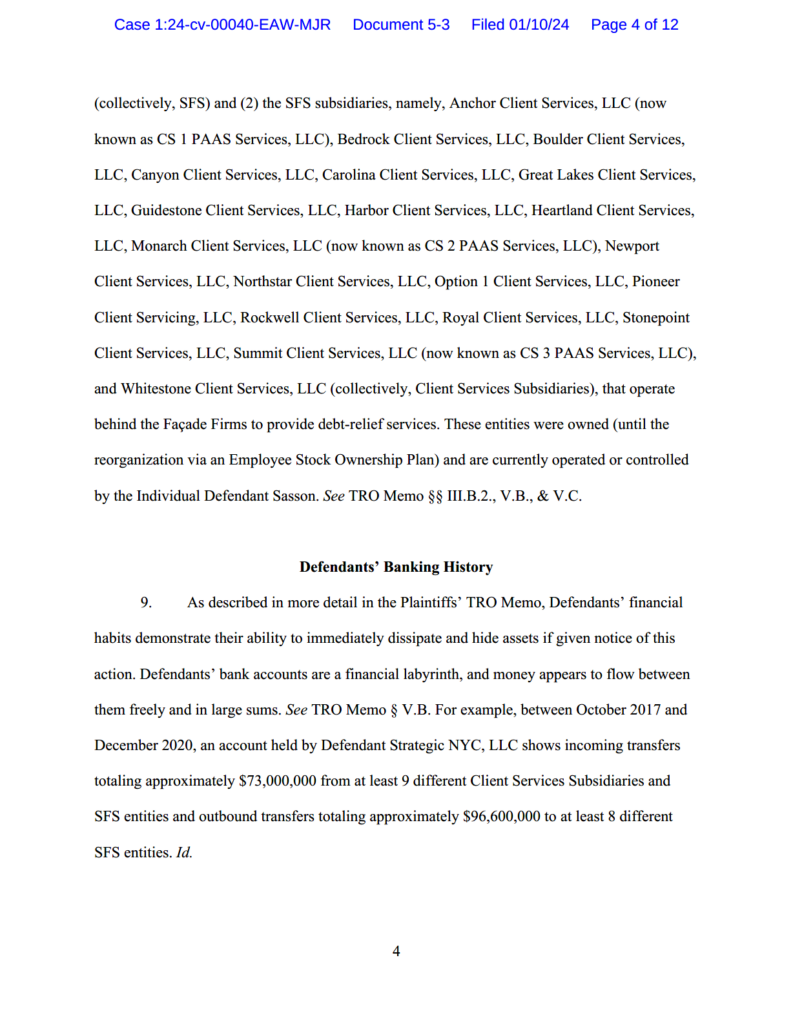
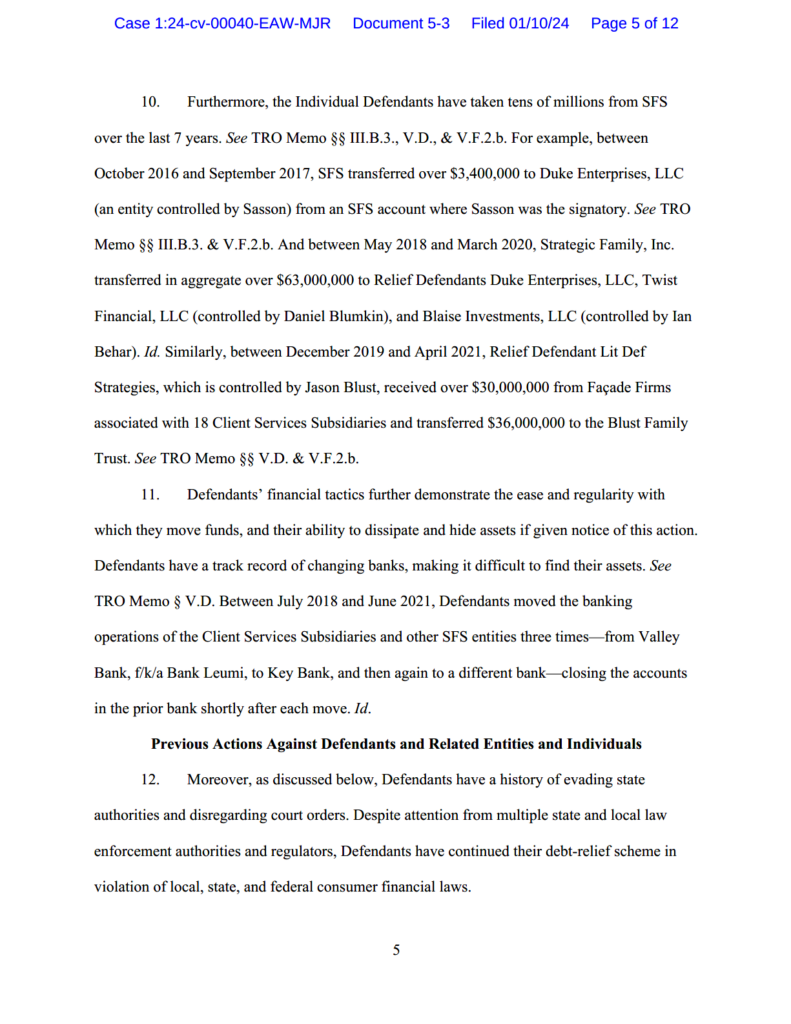
The key allegation was a prediction. Buchko claimed the defendants “may conceal or misappropriate assets and destroy evidence if given notice.” May. The declaration did not identify an ongoing effort to hide money or destroy records. That forecast became the basis for seizing the company before it could answer.
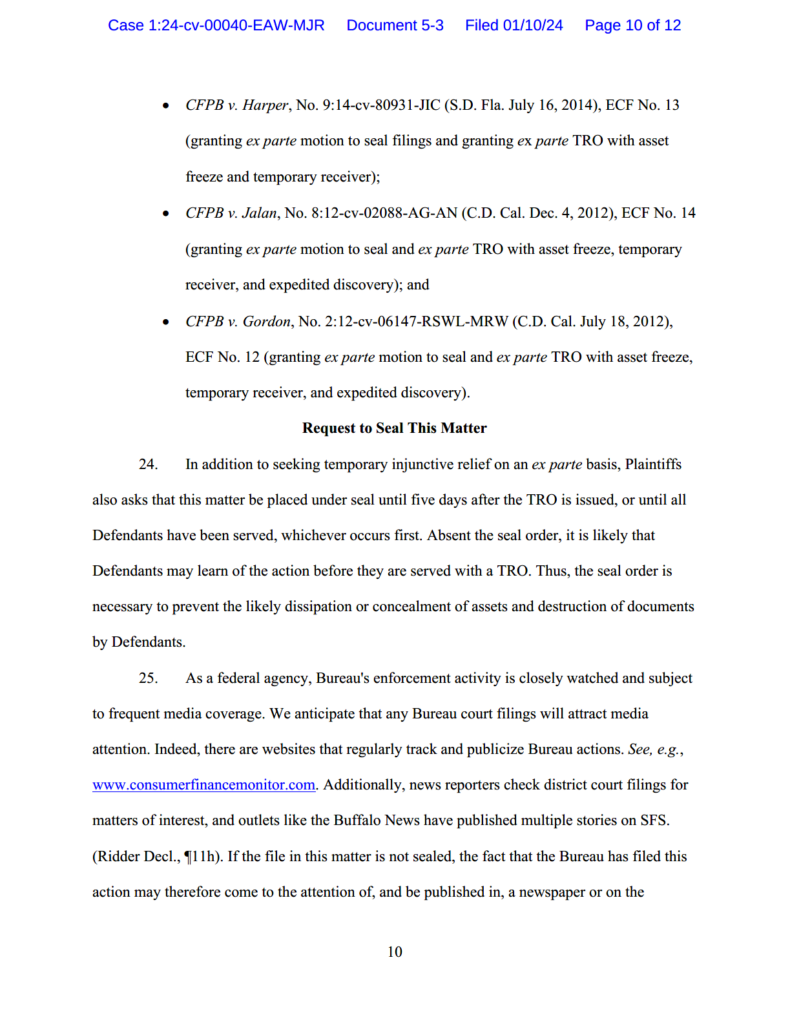
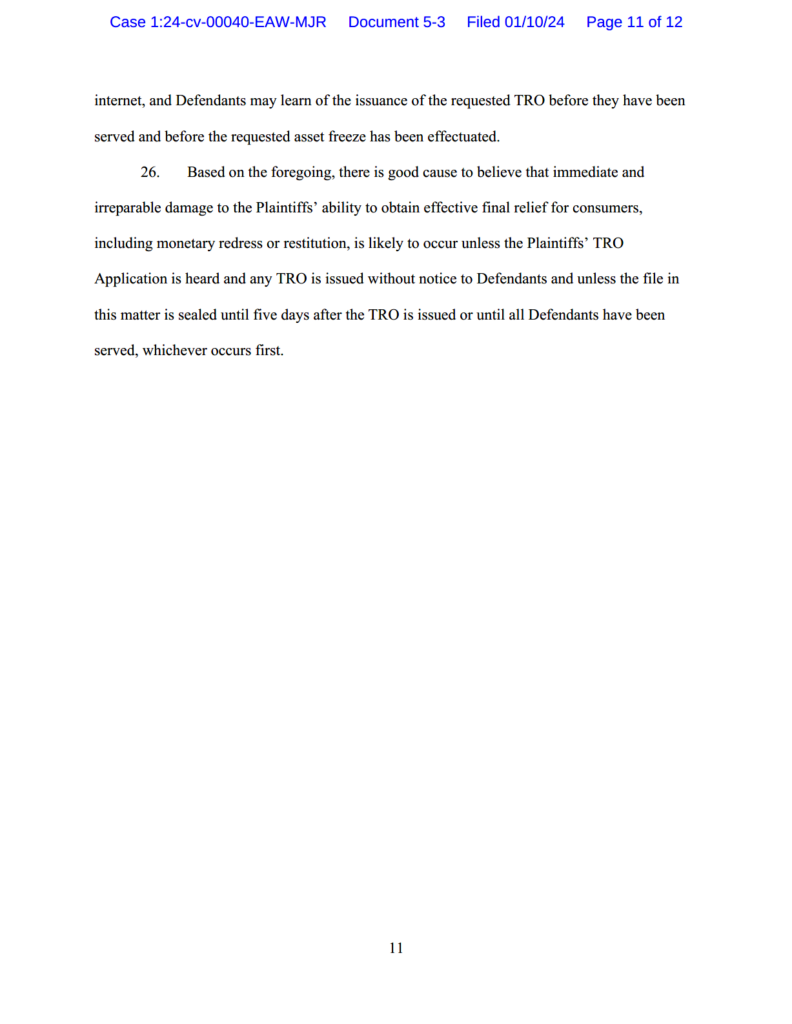
The CFPB also knew exactly who would be crushed. Buchko acknowledged that SFS had undergone a “reorganization via an Employee Stock Ownership Plan.” The employee-owners were visible in the government’s own papers. Their retirement wealth was tied to the company. The regulators pulled the trigger anyway.
The government also anticipated the media detonation. Buchko wrote that CFPB cases were “closely watched and subject to frequent media coverage” and predicted that the filing would “attract media attention.” The regulators prepared for the headlines while keeping SFS blindfolded.
SFS says discovery later exposed how the emergency was built. According to its account, the CFPB’s lead investigator admitted to omitting mitigating information, denied that face-to-face presentations occurred, described in-person meetings as remote, inflated the positions and knowledge of recorded employees, and presented 2018 material as though it were current. Those admissions must be nailed down with the deposition transcript and page citations. They are not contained in Buchko’s declaration.
The pattern is already on paper. Old transactions became a present threat. “May” became an asset freeze. A disputed Telemarketing Sales Rule theory became a corporate death warrant. The employee-owners received no hearing before their company, and their retirement wealth was destroyed.
That is regulatory lawfare: choose the target, manufacture the emergency, seize the business, and force the victims to litigate from inside the crater.
Regulatory Lawfare Robbed The Janitor: Letitia James, the CFPB, and the Times Hit
This was not a single regulator enforcing a single law. It was a political enforcement machine. The Biden CFPB joined seven Democratic attorneys general in a single complaint, a single ex parte application, a single receivership strategy, and a coordinated set of public accusations. Letitia James thanked the CFPB and the other attorneys general for their “continued partnership.”
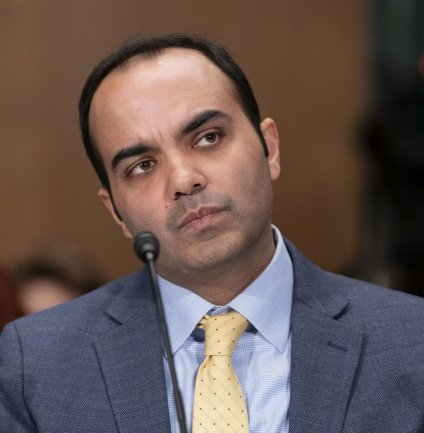
CFPB Director Rohit Chopra declared that SFS operated through shell companies and law firms used to hide illegal activity. James accused Sasson and Jason Blust of preying on working people and unjustly enriching themselves. Those words were issued nine days after the sealed filing and eight days after the company had been seized. They were accusations, but the government packaged them as a verdict.
Then came The New York Times. While the preliminary injunction decision remained pending, the newspaper published a profile that linked Sasson to Jordan Belfort, the “Wolf of Wall Street,” through Sasson’s stepfather, convicted securities fraudster Stephen Drescher. The article reached back decades, framed Sasson as the spiritual successor to financial criminals, repeated the government’s new civil allegations, and supplied the cultural imagery needed to turn a technical Telemarketing Sales Rule dispute into a morality play.
SFS says the coverage was synchronized with regulators, who supplied the accusations, the Times, which supplied the villain, and the receiver, who dismantled the company while the lawfare narrative hardened into accepted fact.
The timing exposes the fraud at the center of the government’s presentation. The same Times article used to brand Sasson reported that the government’s investigation had begun more than four years earlier. The press hit therefore carried evidence against the supposed “emergency.”
The CFPB cannot have it both ways. It cannot rely on years of investigation to establish the depth of its case while claiming that immediate ex parte seizure became necessary in January 2024. If the Bureau knew the structure in 2020, possessed the relevant recordings and documents, and waited years to act, it owed the court the entire history.
If government officials then worked with the Times to drive public pressure while withholding that history from the ex parte presentation, the scandal is larger than administrative overreach. It becomes government deception reinforced by media synchronization.

The government has won important preliminary rulings. After a two-day hearing, Magistrate Judge Michael J. Roemer found that the regulators were likely to prevail on the advance-fee issue, concluded that third-party notaries did not satisfy the claimed face-to-face exemption, and continued the receivership. The court also credited evidence that some consumers left the programs worse off and that millions of dollars had moved into private entities or accounts.
On June 2, 2025, the Second Circuit affirmed the preliminary injunction in a nonprecedential summary order.
Those decisions establish that the regulators presented enough evidence to preserve preliminary relief. They do not establish final liability after trial. More importantly, they do not decide whether the government obtained the original ex parte order through material omissions concerning its prior knowledge, the age of its evidence, the status of recorded employees, or the presentations consumers received.
That is the case inside the case. The courts examined whether the injunction could continue once a fuller record was in place.
The unresolved regulatory lawfare question is how the government obtained the power to destroy SFS before that fuller record existed.
Regulatory Lawfare Robbed The Janitor: No Answers For Workers
We reached out to former CFPB attorney Vanessa Buchko, the signatory to the Emergency Declaration larded with lies that led to SFS employees losing millions. As of press time, she did not respond. Here is what we asked:
From: Richard Luthmann <richard.luthmann@protonmail.com>
Date: On Thursday, August 20th, 2026 at 11:53 AM
Subject: PRESS INQUIRY: How Does It Feel to Rob the Janitor?
To: vbuchko@vandwlaw.com <vbuchko@vandwlaw.com>
CC: RickLaRiviere@proton.me, RALafontaine@protonmail.com, mthomasnast@protonmail.com, frankiepressman@protonmail.com, cjcinvestigates@gmail.com, jt@liquidlunchtv.com, mvolpe998@gmail.com, msully0916@gmail.com, charlotteobservernews1@gmail.com
Attorney Buchko:
I’m leading a group of independent journalists investigating the CFPB’s destruction of Strategic Financial Solutions and the retirement savings of its employee-owners.
You signed the emergency declaration used to freeze SFS’s assets, install a receiver, and seize the company before it could answer. You acknowledged that SFS had been reorganized through an Employee Stock Ownership Plan. You knew janitors, secretaries, customer-service workers, and other employees owned the company when the government pulled the trigger.
We want answers.
1. What specific event created an emergency in January 2024 after years of government investigation?
2. Why did your declaration rely on transactions dating from 2016 through 2021 to justify an ex parte seizure in 2024?
3. What evidence showed that anyone was actually concealing assets or destroying records? Your declaration said only that defendants “may” do so.
4. Did you disclose the full investigative history, including the CFPB’s prior civil investigative demands and SFS’s earlier compliance disclosures, to the judge?
5. Did the government tell the judge how long it had known about SFS’s face-to-face presentation model?
6. Do you deny SFS’s claim that discovery testimony exposed material omissions and mischaracterizations in the government’s emergency submissions?
7. Did the CFPB describe old recordings or documents in a manner that made them appear current?
8. Did the government misstate the titles, responsibilities, or personal knowledge of employees heard on recorded calls?
9. Identify every communication between the CFPB, the New York Attorney General’s Office, and The New York Times concerning SFS, Ryan Sasson, the sealed filing, the receivership, or the timing of press coverage.
10. Did the CFPB or any state plaintiff provide documents, background information, embargoed material, or off-record guidance to The New York Times before or during the preliminary-injunction proceedings?
Finally, how does it feel to help rob janitors and secretaries of their retirement savings based on a concocted fraud narrative and regulatory warfare that destroyed their company before trial?
The employee-owners received no hearing before their wealth was reduced to ashes. What did they do wrong?
This is your opportunity to deny the allegations, correct the record, and place your position before readers without distortion.
Please respond as soon as possible, as we intend to go to press shortly. Your answers may be quoted in full or in part. If you decline to respond, the article will state that you were provided these questions and did not answer them.
If we receive your responses after press time, we will incorporate them into a follow-up.
Thank you for your attention to this matter!
Regards,
Richard Luthmann
Writer, Journalist, and Commentator
Tips or Story Ideas:
(239) 631-5957
richard.luthmann@protonmail.com
LINKTREE
Muck Rack Profile
Substack: This is For Real.
Editor-In-Chief: FLGulf.news
Editor-In-Chief: NYNewsPress.com
Editor-In-Chief: TheFamilyCourtCircus.com
Contributor: Frank Report
Contributor: Sun Bay Paper
Follow Me on Facebook X Instagram LinkedIn TRUTH Rumble SPOTIFY YouTube
If we receive a response from Attorney Buchko, we will provide an update.
Regulatory Lawfare Robbed The Janitor: Trump Must End Biden’s Regulatory Lawfare
President Donald Trump did not launch this prosecution. The Biden CFPB and seven Democratic-led state enforcement offices did. But Trump now owns the federal response, and his man is holding the keys.
Wall Street guru and political insider John Tabacco has a message for the White House.

“President Trump, defund the CFPB immediately. While our President is draining the swamp every day, cases like this, led by Letitia James and Elizabeth Warren, prove that every single Biden-era stone must be turned over and the anti-capitalist slugs slinking around underneath must be eradicated,” Tabacco said.
Tabacco praised Trump’s new pick to lead the CFPB, Mark Paoletta, who took the helm on August 1 as Acting Director.
“The CFPB is one of the last bastions of leftist overreach. Mark Paoletta is Trump’s watchdog and doing a great job. We need more like him to let AMERICAN-OWNED businesses flourish in Trump’s Golden Age,” Tobacco said. “Shutting down this case, and other overreach like it, and allowing nearly 1,000 Americans to get back to work would be another stake in the coffin of the AutoPen, America-hating, leftist regime of Joe Biden. Shut down the CFPB. Thank you for your attention to this matter.”
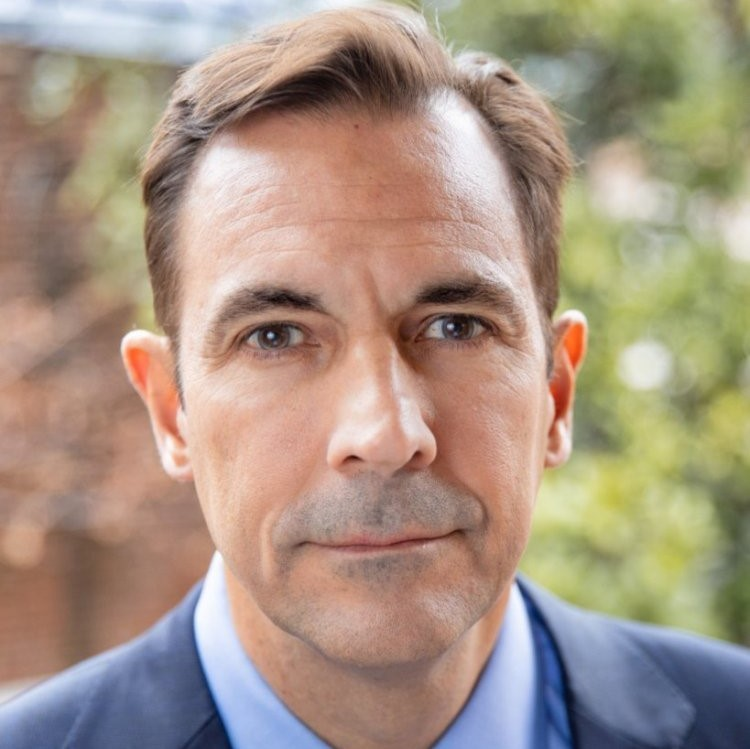
Tabacco’s demand lands at the right desk. Paoletta can order the review Biden’s regulators never expected. Open the 2020 civil investigative demand files. Compare those disclosures with the January 2024 emergency papers. Identify every omission. Preserve every communication among the CFPB, Letitia James’s office, the other state regulators, the receiver, and The New York Times. Find out who supplied the press with information, when they supplied it, and whether the media barrage was coordinated with the sealed courthouse strike.
If federal officials misled the judge, Paoletta’s CFPB must say so in court. Withdraw the tainted federal claims. Release the investigative record. Stop financing and defending a Biden prosecution built on a manufactured emergency.
Trump cannot dismiss claims belonging to seven states, and the receiver answers to the federal court. He can stop the federal government from supplying the personnel, evidence, and credibility keeping their machine alive. The Justice Department can examine the sworn submissions. The inspector general can investigate the emergency application and media contacts. Congress can subpoena the deposition transcripts, expose the receiver’s spending, and restrict the use of ex parte corporate death warrants.
Start with the janitor.
He did not collect advance fees, create law firms, move millions, or speak to regulators. He cleaned an employee-owned workplace and built his retirement one shift at a time.
Then the government seized the company. The receiver terminated the workforce. His stake vanished before trial.
Letitia James can hold another press conference. The CFPB can recycle another claim about protecting vulnerable consumers. Neither can explain why its version of consumer protection required stripping janitors and secretaries of their retirement savings.
Tabacco is right. Turn over every Biden-era stone. Expose what crawls underneath. End the federal role in this prosecution and drive a stake through regulatory lawfare before another American worker wakes up to find that the government “protected” him into poverty.
About The Author

Leave a Reply