


Orazio Petito exits with prejudice after a disputed presidency allegation, adding scrutiny to the lawsuit’s factual foundation and a separate filing error exposing an unrelated Marine’s family.
LUTHMANN NOTE: I regard New York Attorney Thomas P. Giuffra’s handling of this case as irresponsible ambulance chasing. A presidency allegation helped put Petito in the lawsuit; Giuffra has now signed away those claims with prejudice. A separate filing exposed an unrelated Marine’s family, an error the court expressly recognized. In my view, Cornell Seven Jane Doe accuser Lucy Craig’s case is cracking at its factual foundations because the people assigning responsibility have failed to get consequential facts right. Giuffra’s television campaign cannot repair that credibility problem. He owes an explanation for the allegations he advanced and the checks performed before filing. Reputations are not disposable pleading paper. This piece is “Giuffra Drops Cornell Seven Defendant.”

By Dick LaFontaine and Richard Luthmann
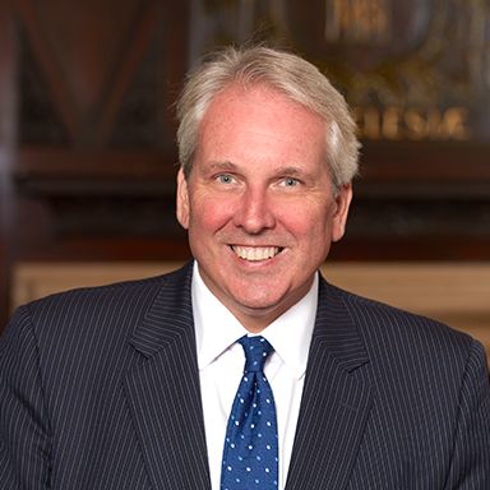
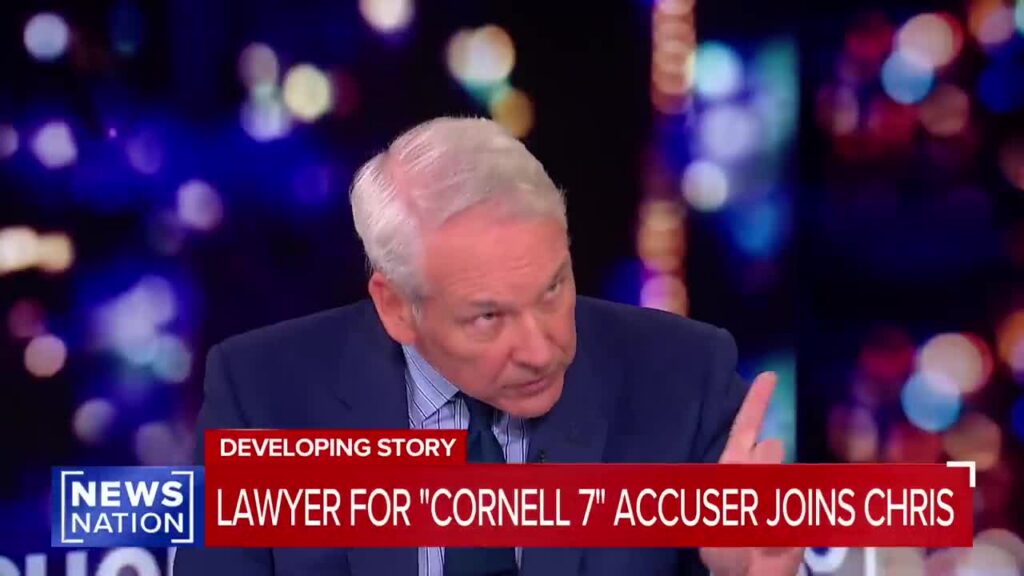
NEW YORK — Attorney Thomas P. Giuffra has agreed to discontinue Cornell Seven Jane Doe accuser Lucy Craig’s claims against Orazio Petito with prejudice, abandoning the case against a fraternity figure whose asserted leadership role helped place him inside the Cornell Seven litigation.
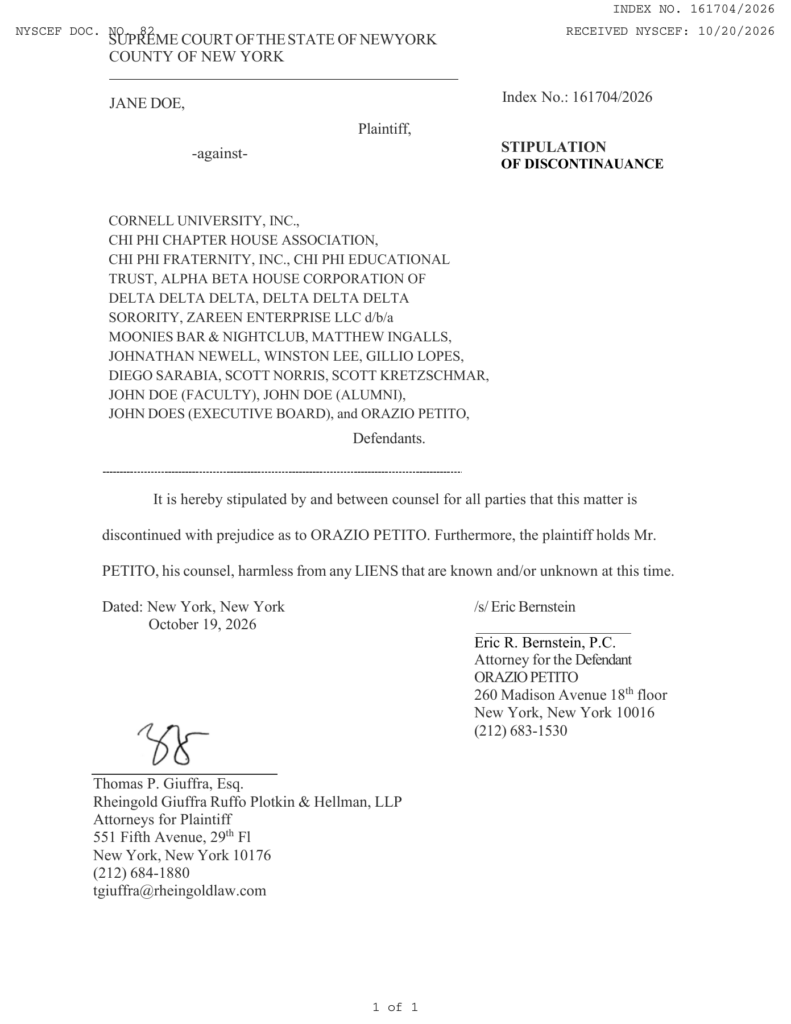
The stipulation, dated October 19 and received by New York’s electronic filing system on October 20, states that the action is “discontinued with prejudice as to ORAZIO PETITO.” It bears Giuffra’s signature and the electronic signature of Petito’s attorney, Eric R. Bernstein. The agreement also protects Petito and his counsel against known or unknown liens.
ABC News reported Tuesday that Petito had been mistakenly identified as Chi Phi’s president when the October 2024 incident occurred. He was never accused of participating in the sexual assault. The claim against him concerned his purported responsibility for supervising the fraternity.
“My client deserved to be released from this case,” Bernstein told ABC.
The retreat comes after a separate, judicially recognized address error drew an unrelated Marine’s family into the controversy. Together, the developments put a concrete question before Giuffra’s legal team: What was checked before the complaint and accompanying papers were filed?
Giuffra Drops Cornell Seven Defendant: The Presidency Allegation Was Part of the Case
The September 16 complaint did more than identify Petito as someone associated with Chi Phi. Paragraph 75 alleged that he was the chapter’s elected president “at all relevant times.” Subsequent paragraphs assigned him responsibilities for supervising the house and its members, then accused him of breaching those responsibilities.
That leadership allegation supplied a factual foundation for seeking damages from Petito. His position was therefore consequential to the pleaded theory, even though the complaint distinguished his supervisory role from the conduct attributed to the seven men accused of sexual wrongdoing.
The redacted complaint filed October 19 retained the presidency allegation. The discontinuance was dated that same day.
The original pleading also contained an internal property discrepancy. Paragraph 79 assigned Petito responsibility for supervising the fraternity house while supplying an address identified elsewhere in the complaint as belonging to Tri Delta. Other passages identified Chi Phi at a different location. That inconsistency, highlighted by the blog and confirmed in a mirror of the original filing, raises a separate question about how the supervision allegations were assembled and reviewed.
The stipulation supplies no explanation for the original presidency allegation or the work performed to verify it. It records the agreement to end the claims against Petito.
The Defense Had Already Challenged the Premise
Petito’s objection was public before his departure from the case.
An October 6 Daily Voice report, citing Newsday, expressly included his attorney’s position that Petito was not fraternity president when the incident occurred. That dispute concerned a particular office on a particular date, a question potentially answerable through election records, officer rosters, and testimony.
The media record is more complicated than a claim that reporters relied on nothing beyond the lawsuit. The Cornell Daily Sun’s original coverage linked its description of Petito’s presidency to an archived Cornell organization scorecard.
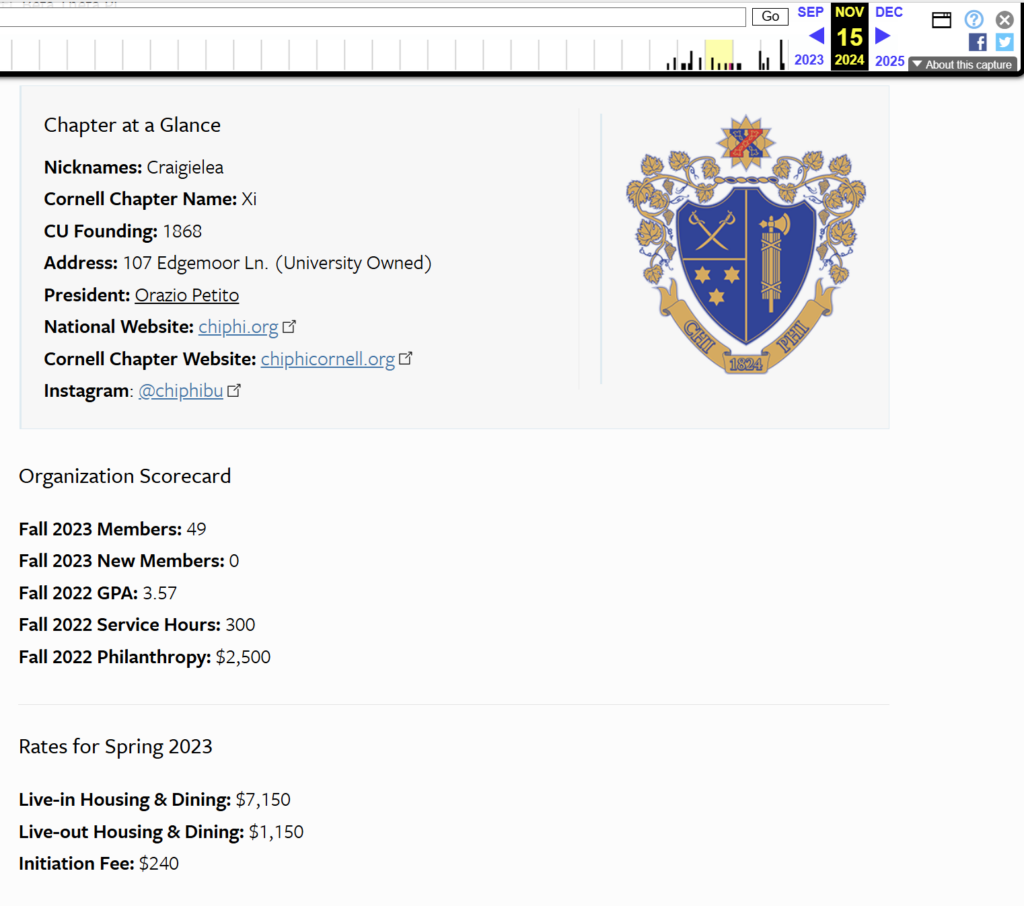
That November 15, 2024 capture listed Petito as Chi Phi president. But the surrounding information included membership figures from fall 2023 and academic and service figures from fall 2022. The page established what Cornell’s website displayed; it did not establish when Petito’s term began or ended.
The unresolved verification question is therefore narrower and more substantial: Did anyone establish who held the office on October 19–20, 2024, before assigning Petito personal responsibility for events that night? Neither the stipulation nor ABC’s account provides Giuffra’s explanation.
The Marine’s Address Was Another Documented Error
The Petito development follows an earlier filing mistake examined in Frank Parlato’s “Marine in Cornell Seven Crossfire.” The article was based on an inquiry Luthmann sent to Giuffra, which appeared with Luthmann’s editorial note and the complete questions to Giuffra on Substack and NY News Press
In an October 6 letter to the court, attorney Elliot A. Hallak said the plaintiff’s initial Request for Judicial Intervention listed the family address of an unrelated Marine who shared defendant Matthew Ingalls’s name.

Hallak identified the Marine as a nonparty who had never attended Cornell. He said plaintiff’s counsel acknowledged the incorrect address and filed an amended form. According to Hallak, the family nevertheless received threats and required police protection. The record establishes an address misidentification, rather than a separate lawsuit against the Marine.
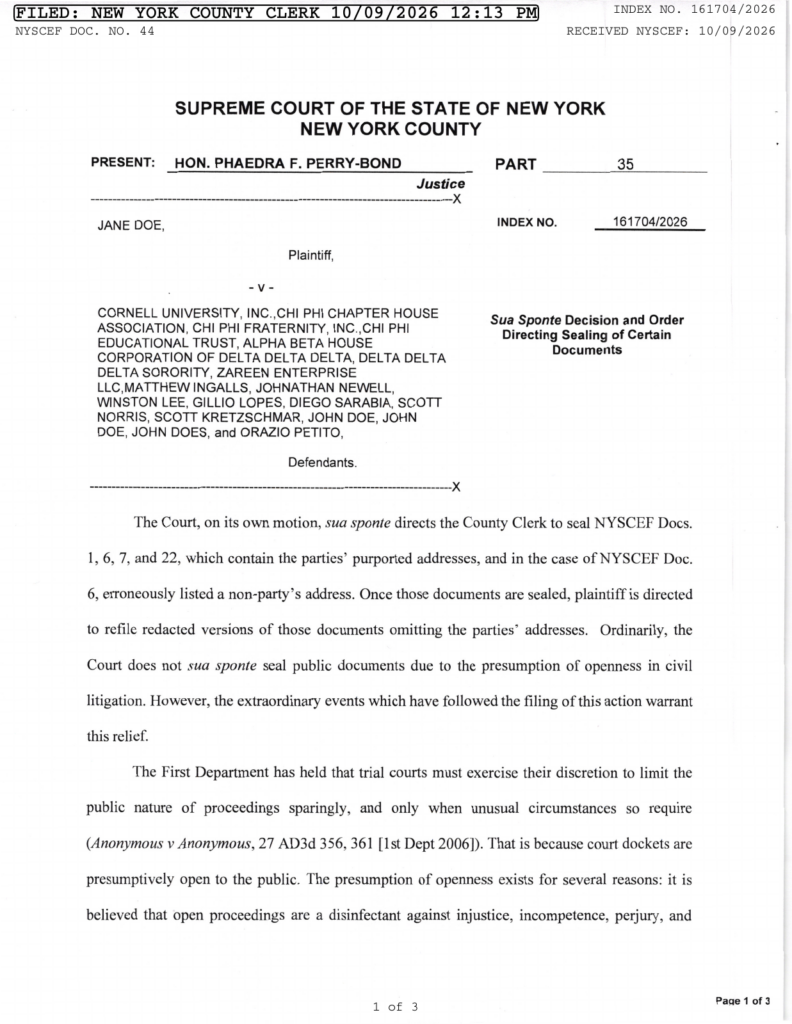
Justice Phaedra F. Perry-Bond subsequently recognized the problem in an October 9 sealing order. She wrote that the filing “erroneously listed a non-party’s address” and condemned the resulting threats and doxing as dangerous internet vigilantism.
The same order said the court took the complaint seriously and appreciated the attorneys’ advocacy on behalf of all parties. It did not find intentional exposure or professional misconduct by Giuffra.
The current docket shows the affected original records sealed and redacted replacement forms filed October 19.
Giuffra Drops Cornell Seven Defendant: The Public Narrative Meets the Filing Record
LucyCraig.blog’s “Named, Blamed, and Then Dropped” argues that Petito’s inclusion illustrates failures of verification by the plaintiff’s lawyers and the outlets covering their complaint. Its central concern is now attached to a concrete litigation outcome: the claims against Petito have been abandoned with prejudice.
Luthmann’s earlier examination of the Cornell evidence challenged the relationship between the complaint, other reported accounts, and the case’s public presentation. Petito’s departure adds a distinct development: a named defendant has obtained a final discontinuance after his attorney disputed a factual premise used against him.
The remaining lawsuit continues. ABC reported Tuesday that the seven men accused of sexual wrongdoing deny wrongdoing and that no criminal charges had been filed. The Petito agreement does not adjudicate those allegations or dispose of the institutional claims.
What the record does establish is that consequential corrections followed filing. One concerned a family with no involvement in the case. Another concerned the office attributed to a man from whom the plaintiff sought damages.
Giuffra has signed the document ending the case against Petito. The public filing still leaves unanswered what justified bringing it against him in the first place.
Related posts:

ELON'S AMERICA PARTY BANNED
Kathy Hochul Gulag Exposed: The Ryan Flynn Interview

Kathy Hochul Hunger Strike – Whistleblower Prepared to Die

Too Many Coincidences? The Hidden Agenda Behind Comey, Hussein, Joe & Crew

Staten Island’s Real Crime Family: Judge Judy & The DA Mike McMahon

MANHATTAN GOUN SQUAD SCANDAL
About The Author
