

A Marine’s lawyer says an incorrect address in the Cornell Seven Ambulance Chasers’ lawsuit brought death threats and police protection to an uninvolved military family.
LUTHMANN NOTE: I sent Cornell Seven Jane Doe accuser Lucy Craig‘s Ambulance-Chaser lawyer, Thomas Giuffra, a comprehensive email. It is reproduced in full below; that is my editorial decision and not Frank Parlato’s. Among other things, I asked him what identity checks his office performed before putting this unrelated military family’s address into a rape lawsuit. That question deserves an answer, but Giuffra won’t give it. Attorney Elliot A. Hallak says an uninvolved Marine’s family faced death threats and needed police protection. Counsel’s demand for Lucy Craig’s privacy makes the care taken with somebody else’s information fair game for scrutiny. Filing a replacement form hardly settles the issue if the original still exposes the wrong address. My position is simple: anonymity requests carry no exemption from accountability. A law firm should explain how it exposed the wrong family and what it did to repair the damage. This piece is “Marine in Cornell Seven Crossfire.” Read Frank Parlato’s coverage on Frank Report.

By Frank Parlato
The lawyers suing seven former Cornell students for rape put the wrong Matthew Ingalls in the court file.
The Matthew Ingalls whose family address went into the public record is an active-duty U.S. Marine. According to his lawyer, he has never been to Cornell. On the night in question, in October 2024, he was stationed at a military base in North Carolina.

Since then, his family has received death threats, their phone numbers have been posted online, and police have had to guard the house.
THE FILING

The case is Jane Doe v. Cornell University, Inc., et al., Index No. 161704/2026, in New York County Supreme Court before Justice Phaedra F. Perry-Bond.
The plaintiff, a former Cornell undergraduate suing under the pseudonym Jane Doe, says she was drugged and raped at the Xi Chapter house of Chi Phi fraternity in October 2024. She named seven defendants: Matthew Ingalls, Johnathan Newell, Winston Lee, Gillio Lopes, Diego Sarabia, Scott Norris and Scott Kretzschmar. She also sued Cornell and other institutions.
On September 16, 2026, her lawyers filed a Request for Judicial Intervention, the form that gets a case assigned to a judge. It listed an address for Matthew Ingalls. It was the wrong Matthew Ingalls.
THE LETTER
Elliot A. Hallak, the Marine’s lawyer, wrote to Justice Perry-Bond. His letter is Docket No. 37, reported as October 6.
“Non-Party Matthew Ingalls identified in the initial RJI is a Servicemember in the United States Marine Corps and has never been to Cornell University,” Hallak wrote. “He was stationed at a military base in North Carolina on the date which is the subject of this action.”
Hallak wrote that because of the wrong address,
“Mr. Ingalls and his family have been the subject of continued and ongoing harassment, including death threats from members of the public.”
He wrote that the family’s phone numbers had been published and the family:
“received ongoing and continued threatening calls directed at the family of a non-involved and wrongfully identified person.”
“Mr. Ingalls and his family are in fear for their safety and have required the presence of law enforcement at the address incorrectly included on the RJI to protect them,” Hallak wrote.
According to Hallak, the plaintiff’s lawyers admitted the address was wrong and filed an amended form with a different address (Docket No. 22). The original stayed on the public docket.
Hallak asked the judge to strike the original filing or black out the address.
WHO IS PROTECTED
The plaintiff asked the court for two things: to keep her name secret, and to keep her address, phone number, date of birth, Social Security number, and email away from everyone except the lawyers. In her sworn affirmation (Docket No. 4) she said she fears “retribution and retaliation.”
Justice Perry-Bond signed an order to show cause. She will decide on the written papers whether the plaintiff can stay anonymous. Opposition papers are due October 20, and the return date is October 23.
The complaint names the seven men she accuses. So, for three weeks, a Marine 500 miles away.
Journalist Richard Luthmann made public a letter he sent to the plaintiff’s lawyer, attorney Thomas P. Giuffra of the Rheingold law firm, on October 11. The questions included one about what identity checks the firm ran before filing the address and what it did to remove it and protect the Marine’s family.
Giuffra had not responded by the time of this publication.
THE GIUFFRA EMAIL
This is the email that Richard Luthmann sent to Cornell Seven Jane Doe accuser Lucy Craig‘s attorney, Thomas P. Giuffra. As of the publication of “Marine in Cornell Seven Crossfire,” Luthmann has received no response:
From: Richard Luthmann <richard.luthmann@protonmail.com>
Date: On Sunday, October 11th, 2026 at 8:49 AM
Subject: Cornell Seven: Explain the Contradictions, the Takedown Demand, and Your Own Privacy Failures
To:tgiuffra@rheingoldlaw.com, drheingold@yahoo.com, drheingold@rheingoldlaw.com, whitney@cochrunseals.com
CC: RickLaRiviere@proton.me, RALafontaine@protonmail.com, frankparlato@gmail.com, frankiepressman@protonmail.com, mvolpe998@gmail.com, mthomasnast@protonmail.com, msully0916@gmail.com, jsaland@salandlaw.com, tdavis@nmllplaw.com, ebernstein@nylegaljustice.com, asash@bushellsovak.com, sfc-part35@nycourts.gov, tgiuffra@rheingoldlaw.com, abhimani@hackermurphy.com, jknox@hackermurphy.com, ehallak@harrisbeachmurtha.com, joeycamp2020@gmail.com, Joey@YourDaddyJoey.news, joey@yourdaddyjoey.news, joey@joeycamp2020.com, cjcinvestigates@gmail.com, jt@liquidlunchtv.com, greg_m@newsitem.com, juliea005@proton.me
Attorney Giuffra:
Your Cornell complaint turns an encounter your client initially described as consensual into an allegation of forced sex from the outset. Your office sought protection for her residential address, then filed an affirmation displaying that address. Now a reported takedown request bearing your name seeks removal of material identifying her. Those issues demand answers about the evidence, your handling of confidential information, and the authority you invoke against publishers.
I am Richard Luthmann, a writer, journalist, and commentator leading a group of independent journalists examining the Cornell Seven litigation and its political presentation. We are preparing follow-up coverage of Jane Doe v. Cornell University, Inc., et al., New York County Supreme Court, Index No. 161704/2026, including my reporting on the takedown request attributed to you. Please answer the following questions individually and identify the documents supporting your answers.
1. We are reporting that the Cornell Seven Jane Doe accuser, your client, is LUCY CRAIG. Is that untrue?
We believe, in good faith and based on all available evidence, that Lucy Craig is your client. If we are wrong, tell us.
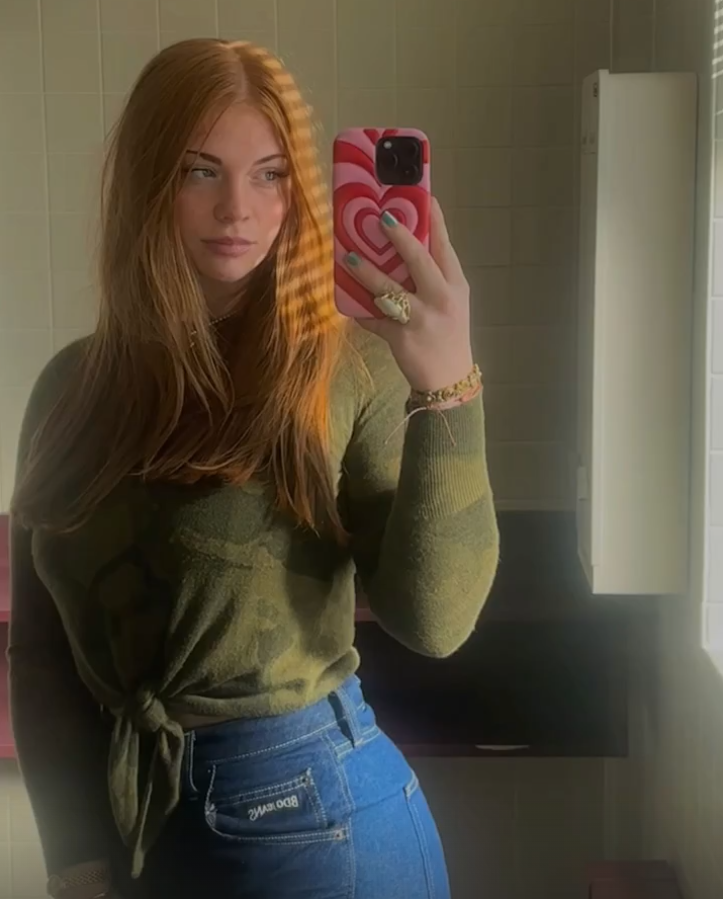
We will stop reporting Lucy Craig as the Cornell Seven Jane Doe accuser if you tell us, on your word as an attorney, that your client is not Lucy Craig. We are searching for the truth. Remember your obligation to tell the truth: “A lawyer or law firm shall not… engage in conduct involving dishonesty, fraud, deceit or misrepresentation” https://www.law.cornell.edu/regulations/new-york/22-NYCRR-1200.8.4
2. Why does the complaint omit your client’s express agreement to the first encounter?
In her six-page November 2024 statement, Lucy Ctraig describes agreeing to the initial two-man encounter, feeling attracted to the participants, and initially being “pretty ok” with what was happening. Paragraphs 149–150 and 155–156 of your complaint allege incapacity and forced sexual acts at that stage. What evidence supports that change in characterization? Is your position that she expressed agreement but lacked legal capacity, that consent was subsequently withdrawn, or that her earlier account was factually inaccurate? Identify the point at which you contend each participant’s conduct became nonconsensual and explain why the complaint omitted her description of initially agreeing.
3. What supports the complaint’s account of the first ketamine dose?
Her statement says she has no memory of the first dose and learned about it afterward from another participant. Paragraphs 152–154 supply an affirmative sequence involving a passed plate, pressure to take ketamine, and additional substances before the first sexual encounter. Who supplied that sequence, when did you obtain it, and what corroborates it? Distinguish your client’s remembered observations from information supplied by someone else. A memory gap leaves an evidentiary question; it does not supply the missing events.
4. Why do the later drug allegations omit the language in her statement?
Her statement describes consciously taking a later ketamine dose and explains her reasoning at the time. It describes a participant’s conduct as “implying” that she should snort a line. Paragraph 167 says he “commanded” her to do so. What supports that stronger wording?
On page five, she also recounts answering “Sure” when asked about taking drugs from her body, while saying she could not identify the substances poured there. Paragraph 169 identifies all seven defendants and ketamine. What evidence establishes each person’s participation and the substance involved? Why was her reported answer omitted? If you contend intoxication invalidated that agreement, explain the factual basis for that contention.
5. How do you reconcile the accounts of how the night ended?
Page six says that at approximately 5:45 a.m. she asked the two men to stop, they stopped, and she moved to a bedroom to sleep. She describes later refusing additional requests and eventually getting a ride home. Paragraph 174 says the assault ended when she lost consciousness, followed by paragraph 175’s account of waking at home. Why does the complaint omit the intervening sequence? Does “lost consciousness” mean sleep, a blackout, or a medical event? What evidence supports your description?
6. Will you address the complete message chronology?
The October 21 messages supplied for review include her statement that “non of the sexual stuff was illegal” and positive descriptions of the first two participants. How do those messages bear on the specific allegation that the initial encounter was forced?
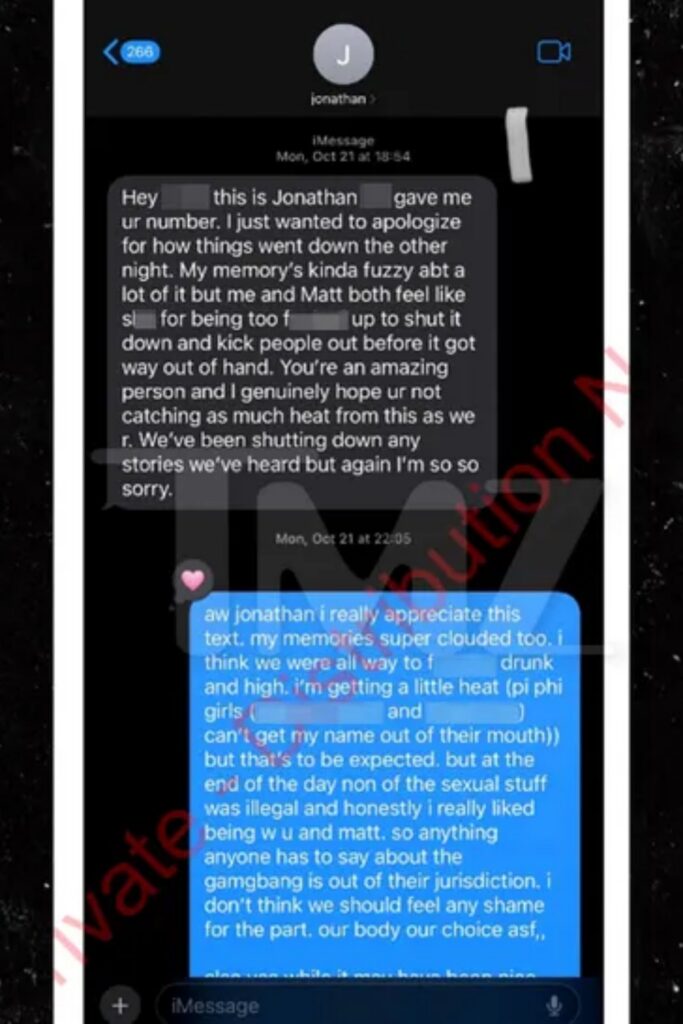
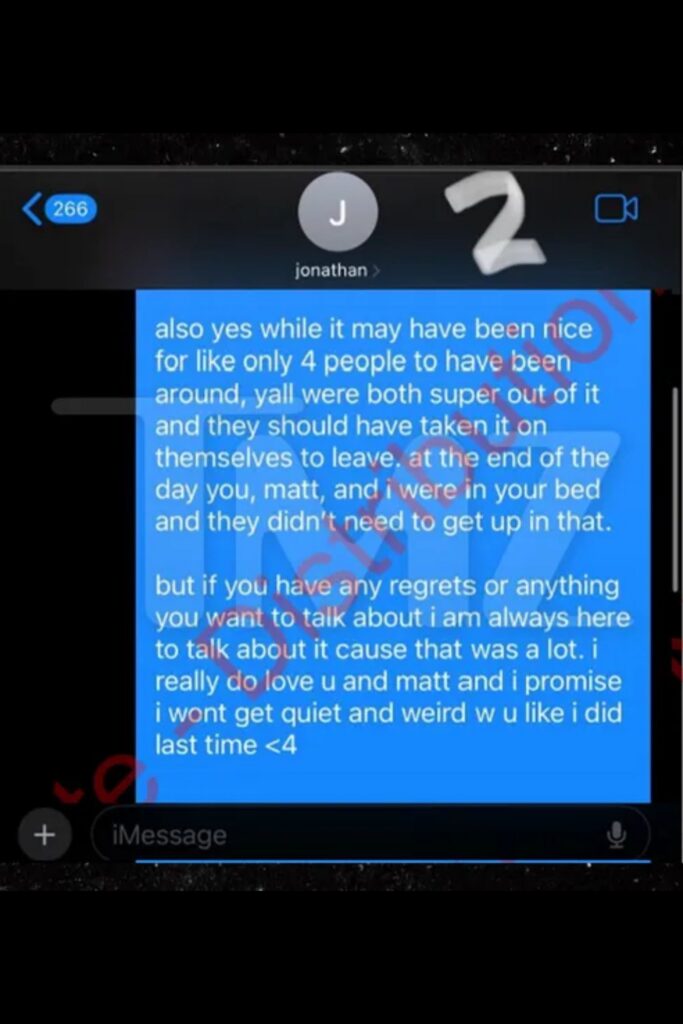
The later record also includes her November 3 message that “90% of what happened that night was not consensual,” reported by CBS, and a separate police-interview transcript containing an explicit rape allegation. Those statements require examination alongside the earlier messages. Please provide the complete, authenticated exchanges and identify which encounters each statement concerns. What changed in her recollection, her understanding, or the information available to her?
7. Does your consent standard apply to Matthew Ingalls too?
The statement describes the first participant as unable to maintain an erection, falling asleep, and dry-heaving. The complaint identifies Ingalls as the participant who could not maintain an erection and fell asleep.
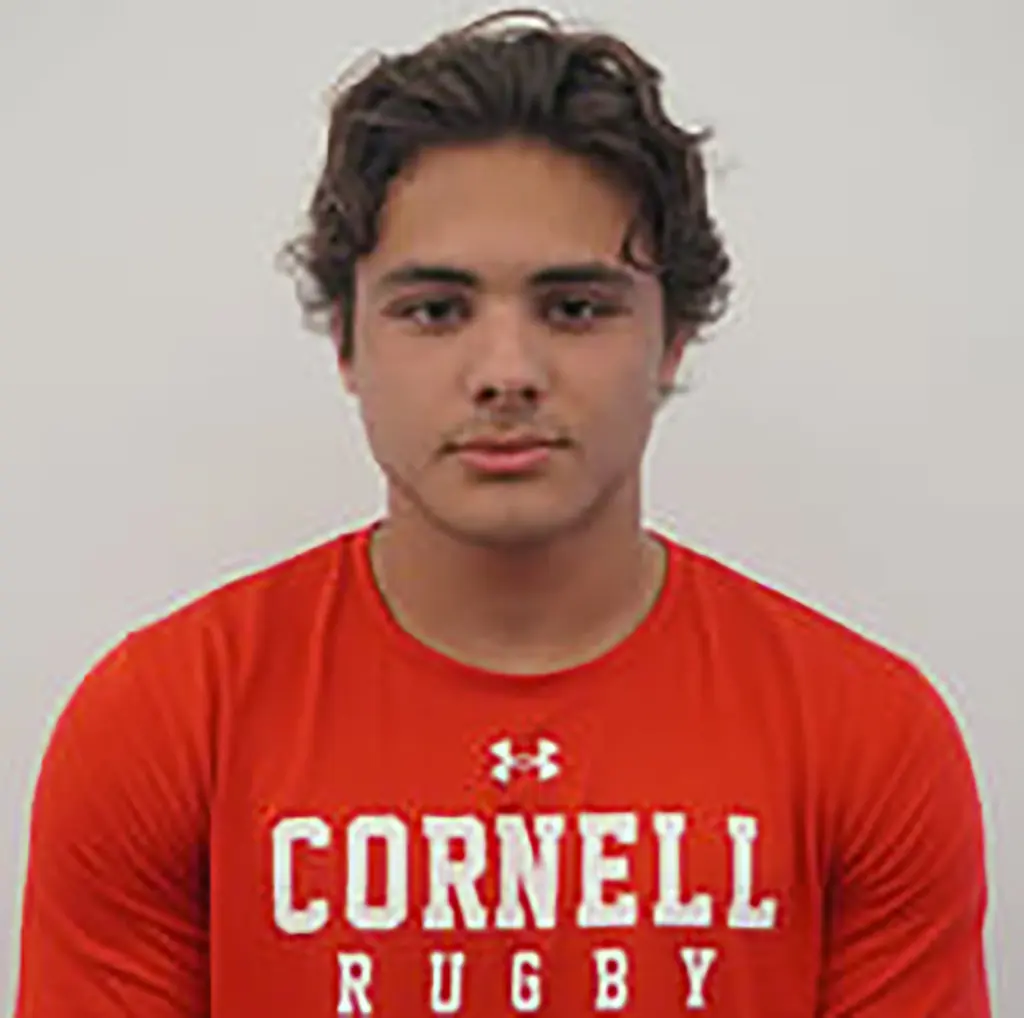
Did you investigate his intoxication, his ability to understand the encounter, and whether he consented? What evidence establishes his capacity at the relevant moments? If intoxication can invalidate your client’s expressed agreement, do you apply the same legal standard to every participant? Explain how your pleading accounts for the evidence of his condition.
8. What medical evidence supports the pleaded injuries?
Paragraph 177 describes bruising and medication taken preemptively for a feared urinary tract infection. Does a contemporaneous clinical record establish a diagnosed infection, an injury, or a causal connection to particular conduct? Please identify the evidence supporting the public allegations and provide appropriately redacted material where available. Preemptive medication and a confirmed diagnosis are different facts, and the complaint should permit readers to understand which one is alleged.
9. What precisely do you mean when you call your client a “victim”?
Are you describing her allegations, a status recognized for confidentiality or services, or a finding that a particular defendant committed an offense? Please distinguish those grounds. Which agency or court has made a relevant determination, and what criminal charges or indictments, if any, exist as of your response? We are asking for the procedural record and the basis for your public language. An allegation deserves investigation, and a statutory protection can operate without a conviction; neither should be presented as an adjudication of the defendants’ guilt.
10. Are you trying to expose your own client’s identity, or did your office fail to protect it?
NYSCEF document 4 leaves handwritten signature strokes visible outside the black redaction. Paragraph 10 of that same affirmation expressly seeks attorneys’ eyes only protection for her residential address and other identifying information.
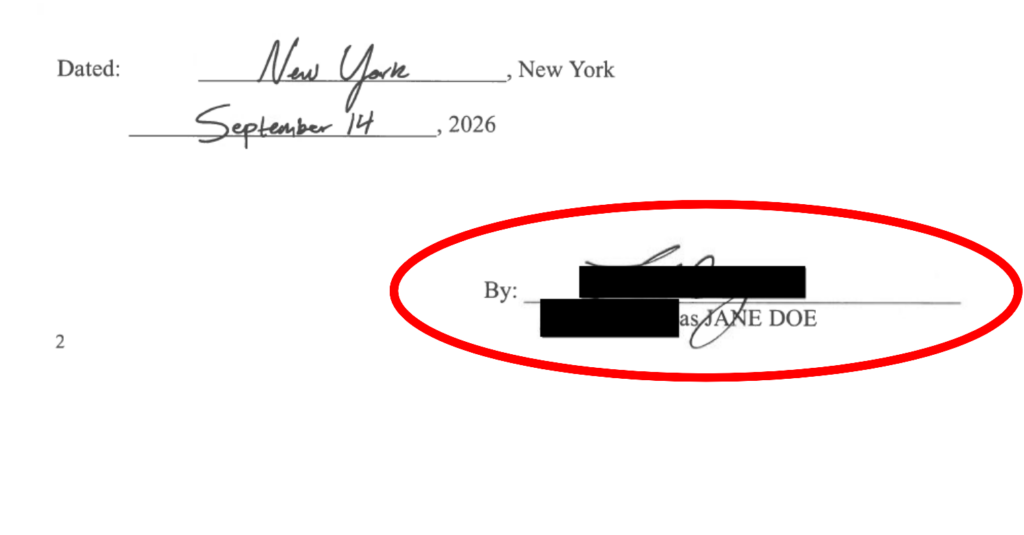
NYSCEF document 42, filed October 9 in response to a venue demand, displays her full residential address and apartment in paragraph 4. We will not reproduce that address in this inquiry.
Who prepared, reviewed, and authorized these submissions? Why was the address filed publicly after your office sought protection for it? Did you consider a redacted or confidential submission supporting venue? When did you discover each exposure, notify your client, and seek corrective action? Please provide any correction request and resulting order. Was either disclosure intentional? If you attribute the exposure to court personnel or a third-party publisher, identify the evidence distinguishing their actions from the material your office submitted.
11. Did you authorize the reported DMCA takedown request, and what copyright claim supports it?
The material underlying my October reporting shows a request entered under your name on October 8, with the subject “Identifying Jane Doe Sexual Assault Victim” and a “dmca” category. Did you send or authorize that request? Was “dmca” your designation or the recipient website’s classification?
Please provide the complete notice, identify the recipient, and specify the copyrighted work, its owner, the allegedly infringing material, and your authority to act. Section 512 of the Copyright Act addresses copyright takedown notices. If your demand concerned privacy or a court order instead, why was it presented or recorded as a DMCA matter?
What signed order or other authority do you contend restricts a publisher that is not a party to the Cornell case? Please supply the operative language and explain its application to the recipient. Identify any other outlets, hosts, registrars, or platforms your office has contacted, the grounds asserted, and the action requested. Does your office maintain that criticism, commentary, or identifying information is copyright infringement? If not, define precisely what you demanded be removed.
12. Why did you take the allegations to civil court without first seeking reconsideration from the district attorney, if that account is accurate?
ABC News reported Matthew Van Houten’s statement that neither your client nor her attorneys contacted his office to seek reconsideration or say her sworn statement was inaccurate. Is that statement accurate? It is a narrower claim than saying you never contacted his office at all.
When were you retained, and when did you personally contact the district attorney before filing suit? Identify the dates, participants, and evidence you supplied. If you made no request for reconsideration, why? Were there investigative failures you believed required immediate civil litigation? Explain what you did to obtain criminal scrutiny of the allegations before launching the lawsuit and its publicity.
13. Why did your office expose an unrelated U.S. Marine and his family by filing their address in the Cornell case?
In his October 6 letter, NYSCEF document 37, attorney Elliot A. Hallak states that his client merely shares a defendant’s name, has never been to Cornell, and was stationed in North Carolina when the alleged incident occurred. Hallak says you acknowledged the incorrect address, yet the original filing remained in the court record while the Marine’s family endured harassment, death threats, and threatening telephone calls that required law-enforcement protection. What identity checks did your office perform before filing that address? When did you discover the mistake, and what did you do to remove the original disclosure, correct the public record, and protect the family? You demand anonymity for your client. What accountability do you accept for exposing an uninvolved service member’s family? Do you hate the military and military families, like New York Governor Kathy Hochul and former President Barack Hussein Obama?
14. Does proving rape matter to your payout strategy?
Are you an “ambulance chaser” pursuing a settlement through maximum reputational pressure? Is the prospect of an insurance payout driving your public presentation? These are direct questions about your professional conduct and financial incentives.
If the evidence does not establish rape, which civil claims would you continue to pursue, against whom, and on what facts? What role does the rape allegation play in liability, damages, and settlement leverage? Identify the applicable contingency arrangement, any outside litigation funding, and any nonprivileged settlement demand or insurance claim you can disclose. A civil case can involve claims beyond a criminal offense. Explain whether your public presentation accurately distinguishes those claims.
15. Are you a political operative, and was this case coordinated as an election-season production?
Have you coordinated the complaint, its publicity, or your media appearances with Kathy Hochul, Letitia James, Democrat Party organizations, political consultants, or anyone acting for them? Identify nonprivileged contacts, dates, and the purposes of those communications. Did anyone outside the legal team help select the filing date, shape the public message, arrange interviews, or encourage the governor’s intervention?
Are you acting as a Hochul political ally in this litigation? How do you answer the “HOCHUL HACK” criticism? Are you a KATHY HOCHUL HACK? Was any part of the case’s rollout conceived as an “October surprise” benefiting New York Democrats?
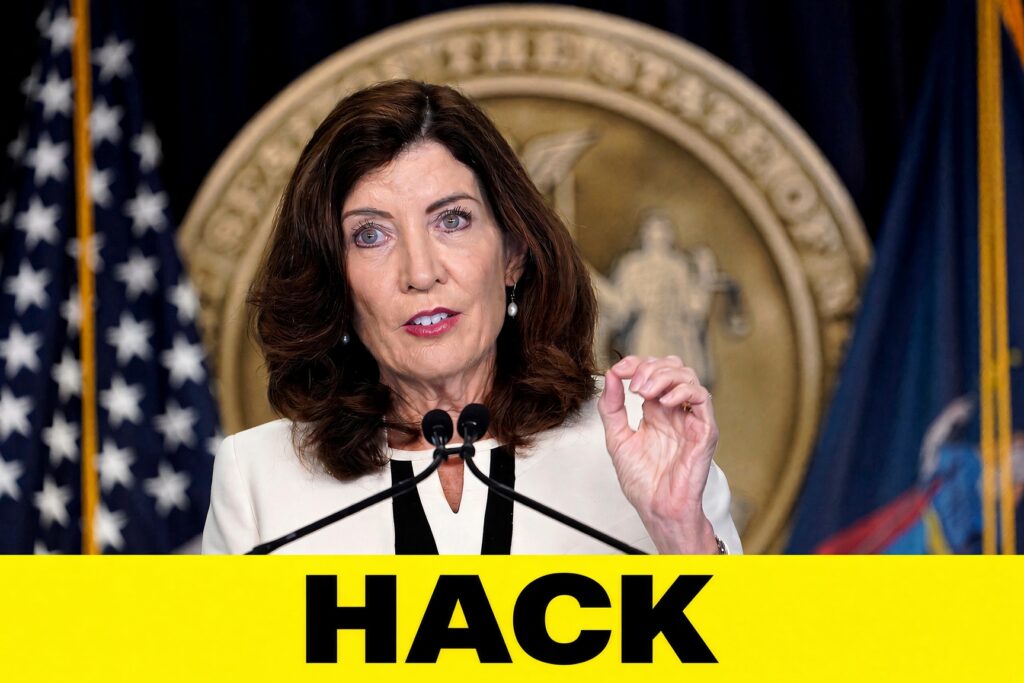
I believe the political presentation warrants investigation as a possible PsyOp. That is my assessment, and I am asking whether the underlying coordination occurred. Please confirm or deny it and identify any public-relations, crisis-management, or reputation-management engagement connected to your representation, including who commissioned and paid for it. You have taken the case to the public. The public is entitled to examine the production as well as the pleading.
Please correct any factual premise you dispute and supply the supporting record. If privilege or a court restriction prevents an answer, identify the basis and answer the portions you can address. Do not send an unredacted residential address or unrelated private medical information.
Do you have a better headshot than this one?
And finally, can you confirm or deny that your client’s favorite thing about New York City is the “SEVEN TRAIN”?
Please respond as soon as possible, as we intend to go to press shortly. Your answers may be quoted in full or in part. If you decline to respond, the article will state that you were provided these questions and did not answer them. If we receive your responses after press time, we will incorporate them into a follow-up.
Thank you for your attention to this matter!
Regards,
Richard Luthmann
Writer, Journalist, and Commentator
Tips or Story Ideas:
(239) 631-5957
richard.luthmann@protonmail.com
LINKTREE
Muck Rack Profile
Substack: This is For Real.
Editor-In-Chief: FLGulf.news
Editor-In-Chief: NYNewsPress.com
Editor-In-Chief: TheFamilyCourtCircus.com
Contributor: Frank Report
Contributor: Sun Bay Paper
Follow Me on Facebook X Instagram LinkedIn TRUTH Rumble SPOTIFY YouTube
Sent with Proton Mail secure email.





About The Author
