

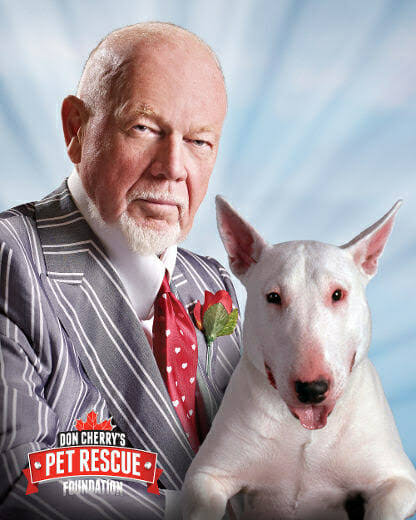
The Buffalo Sabres’ Lindy Ruff: A Rare Reminder of an Era Gone-By
LUTHMANN NOTE: Matt “Sully” Sullivan gets to the marrow here. This is not just a hockey nostalgia piece. This is a culture piece in skates. Don Cherry represented an era when hockey still understood accountability, loyalty, toughness, and consequence. Lindy Ruff is not Cherry reincarnated in costume. He is something better: the workingman’s continuation of that code. Buffalo did not win the Cup. The Sabres did not even survive Montreal in Game 7 of the Eastern Conference second round. But Ruff restored belief, structure, and snarl to a franchise that had forgotten what spring hockey feels like. That is not a loss. That is resurrection. This piece is “The Grit That Endures.”

By Matt “Sully” Sullivan
(BUFFALO, NEW YORK) – In the bruising heart of 1970s hockey, Don Cherry stood as the ultimate champion of self-policing, hard-nosed play. A fringe NHL defenseman with just one playoff game on his résumé, Cherry found his true calling coaching the Boston Bruins from 1974 to 1979.
He forged the Lunch Pail A.C.—blue-collar warriors who finished every check, protected teammates, and enforced the unwritten rules of the game. Four division titles and two Stanley Cup Final appearances proved his philosophy: no analytics or excuses, just heart, toughness, and accountability.
Cherry’s teams played with swagger and grit, and he defended that ethos loudly for decades as the flamboyant voice of Coach’s Corner on Hockey Night in Canada.
What type of NHL heroes are Cherry-styled?
That same warrior spirit defined players like Boston icon Derek Sanderson. A flashy, fearless center and key piece of the Big Bad Bruins, Sanderson blended skill with toughness.
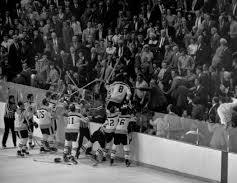
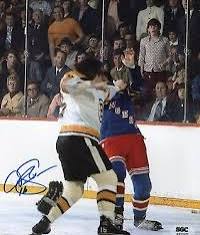
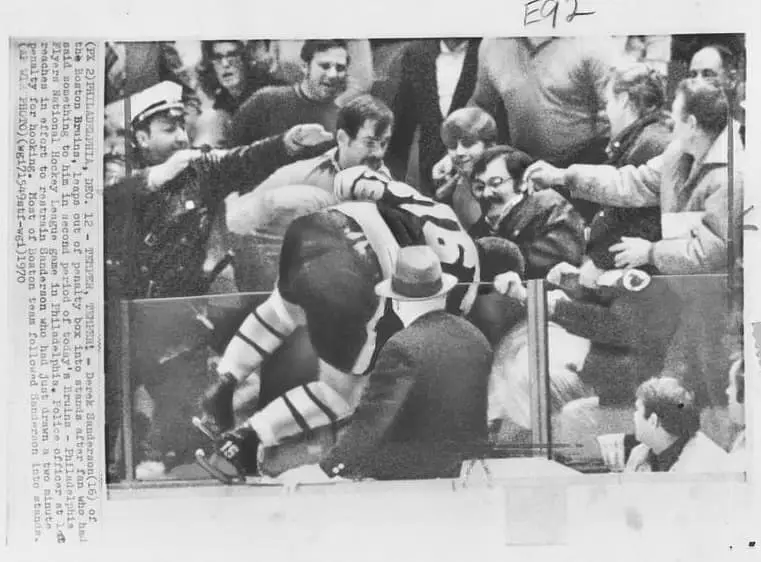
In 598 NHL games, Sanderson accumulated 911 penalty minutes while contributing significantly as a two-way player and agitator. His willingness to battle in the trenches perfectly embodied Cherry’s era.
The Grit That Endures: Is Lindy Ruff, Don Cherry reincarnate?
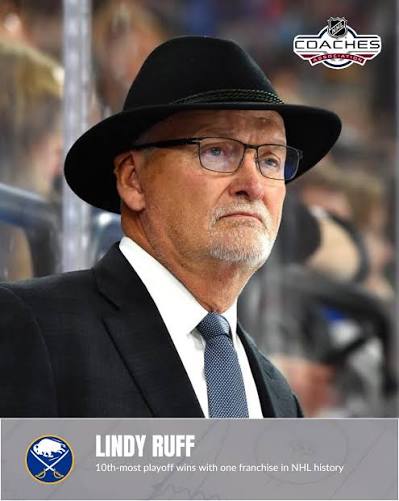
Lindy Ruff carried comparable DNA into his own career. Drafted by Buffalo in 1979, the hard-nosed forward/defenseman hybrid played 691 NHL games (primarily with the Sabres and a stint with the Rangers). He logged 1,266 penalty minutes—roughly 1.83 PIM per game. This placed him solidly among the tough competitors of the Cherry coaching years. For context:
• Dave “The Hammer” Schultz, the iconic enforcer, racked up 2,294 PIM in just 535 games (about 4.29 PIM/game), peaking with a record 472 in one season.
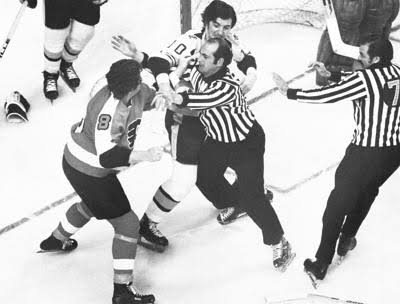
• Tiger Williams, the all-time PIM leader, totaled 3,971 minutes across 962 games.
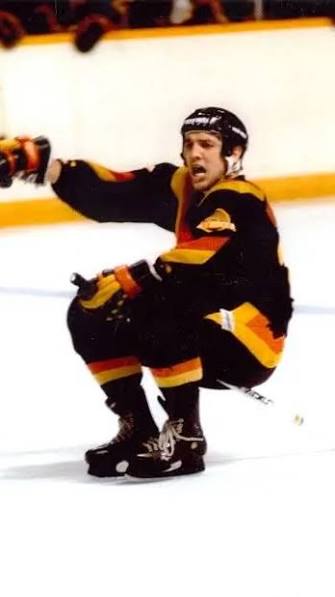
• Sanderson’s 911 PIM in 598 games showed a balanced toughness while producing offensively.
The Grit That Endures: What does Ruff bring that is unique today?
Ruff wasn’t a pure fighter like Schultz or Williams, but like Sanderson, he was a reliable, physical contributor who captained teams, blocked shots, won corner battles, and played through pain. His stats reflected honest, grinding toughness rather than specialized enforcement.
That on-ice credibility translated seamlessly to coaching. Named Buffalo’s head coach in 1997, Ruff instilled the same demanding, team-first mentality. In just his second season, he guided the Sabres to the 1999 Stanley Cup Finals against Dallas in a memorable, hard-fought series.
Fired in 2013 after a decorated run that included a Jack Adams Award, Ruff stayed relevant through stints in Dallas, as an assistant with the Rangers, and with New Jersey. Re-hired by Buffalo in 2024, he entered his third decade as a head coach, still making an impact.
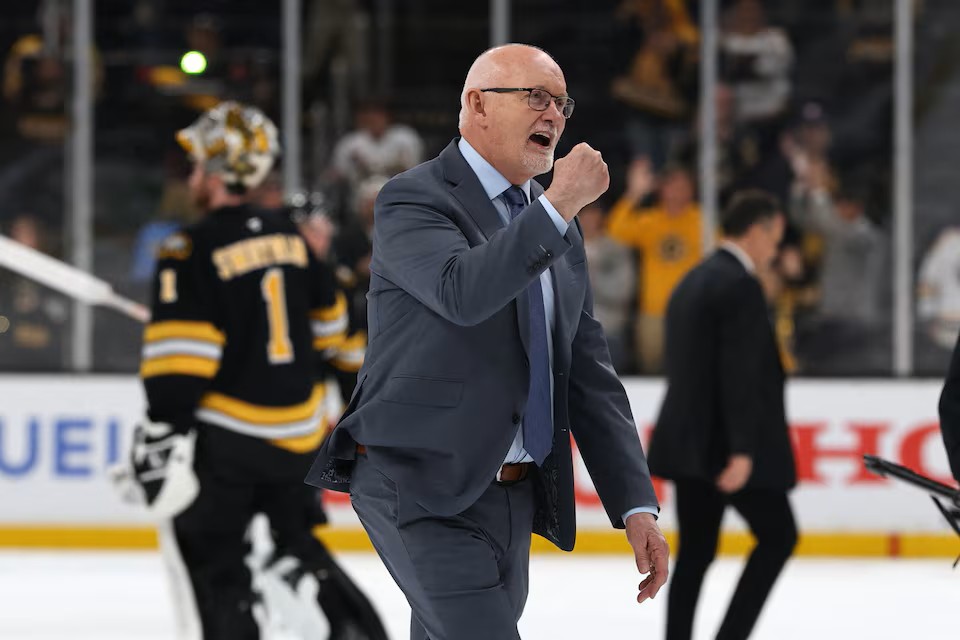
In the 2025-26 season, Ruff’s Sabres played with controlled aggression—relentless forechecks, physical puck battles, disciplined structure, and modern speed fused with old-school heart. The club surged into the playoffs and forced and lost Game 7 of the Eastern Conference second round against Montreal. The Sabres extended Ruff two more years after a 50-23-9 season and first playoff appearance in 14 years.
Ruff’s longevity proved Cherry’s principles could adapt without losing their soul. Where Cherry’s Bruins were loud and flamboyant, Ruff’s teams competed with quiet fire and accountability. His 691 games and 1,266 PIM gave him instant respect when preaching battles; players knew the coach had lived the grind, much like Sanderson had under Cherry.
As the Sabres prepared for that decisive Game 7, Ruff addressed his team with the steady intensity of a battle-tested veteran. “Battle for each other. Police the ice. Play hard and honest.” The message echoed the dressing-room demands Cherry once delivered and the competitive fire Sanderson once showed on Boston Garden ice.
Lindy Ruff – – NHL old-school hope
Don Cherry became the charismatic voice of an era. Derek Sanderson and the tough players of that time lived it shift after shift. Lindy Ruff carried the torch forward—his playing numbers and coaching success proving that hard-nosed hockey, rooted in games played and honest penalty minutes earned, still delivered relevance deep into a new century.
As the puck dropped in Game 7, Buffalo skated with the enduring spirit all of them represented: grind, protect, and never back down. Ruff didn’t finish the job, but he revived the code.
For the sake of hockey, please let the legacy of Don Cherry carry on as embodied by Lindy Ruff, and a few others today…
About The Author