


Kevin Guthrie says Judge Caroline Wojtaszek’s court, DA Brian Seaman’s office, and Niagara County Probation turned disputed Instagram evidence into a modern government leash.
LUTHMANN NEWS: The Guthrie File is what happens when family court stops being a courthouse and becomes a conversion chamber. Kevin Guthrie says he walked in as a father and came out gagged, branded, prosecuted, searched, monitored, and treated like a state-owned problem. The fake-or-disputed Instagram evidence is the fuse. Judge Caroline Wojtaszek’s court, DA Brian Seaman’s office, ADA Aubrie Allen, and Niagara County Probation all have questions to answer. If a law-abiding citizen can be transformed into a government subject through a rotten order and unauthenticated digital garbage, no parent is safe. Sunlight first. Accountability next. This piece is “Niagara Family Court Cage.”

By Rick LaRivière and Richard Luthmann
A Father Walked Into Family Court — Then the Machine Picked a Target
(NIAGARA COUNTY, NEW YORK) – Kevin Guthrie did not walk into Niagara County Family Court as a criminal. He walked in as a father, a working man, and by every account, a law-abiding citizen who believed courts still existed to sort out facts instead of manufacture villains. Then he hit the Niagara County family-court grinder, and his life went straight into the institutional wood chipper.
What started as a family breakdown that Guthrie says should have been handled through arbitration became a state-controlled nightmare: custody loss, orders of protection, criminal contempt allegations, probation supervision, jail time, medical chaos, and a daily existence where every word, movement, old photo, and social-media ghost could become a pretext for punishment.
The names matter. This is not some anonymous “system” floating in the clouds. Judge Caroline A. Wojtaszek presided over the Integrated Domestic Violence machinery that Guthrie says swallowed him. Niagara County District Attorney Brian Seaman’s office prosecuted him. Assistant District Attorney Aubrie Allen appears in the Guthrie criminal contempt matter. Niagara County Probation, including Probation Officer Jaclyn Danvir, became part of the machinery that helped turn a father into a monitored subject.

Guthrie says that ecosystem did not protect the truth. It protected the fraudulent narrative, laundered by Katharine Popovice, Guthrie’s ex, and fed hook, line, and sinker, to the attorneys for the children, Debra D. Wilson and Kathleen E. Gaines.
That narrative was simple: father bad, mother protected, court always right.
Guthrie says his older daughter had serious problems with her mother, including physical altercations, and would run to his home because the mother lived nearby. But once the dispute entered court, the spotlight moved away from what was happening to the children and onto him.
Jill Jones Soderman, family court advocate and founder of the Foundation for the Child Victims of the Family Courts (fcvfc.org), recognized the pattern immediately: protective parent walks in, accused abuser walks out. Evidence becomes optional. Courtroom mythology becomes law.
Niagara Family Court Cage: Judge Wojtaszek’s Gag Order and the Instagram Trap
The constitutional stink bomb in the Guthrie case is the speech restriction. According to the custody materials and the discussion, Guthrie was restricted from posting pictures or comments on social media regarding his children.
That is not a housekeeping provision. That is a gag order. When a court tells a parent he cannot speak about his own children, his own family, and his own case-adjacent experiences, that court is walking directly into the First Amendment minefield.
If Judge Wojtaszek’s order was not narrowly tailored, not precise, not supported by a compelling interest, and not limited to actual unlawful conduct, then it was not protection. It was prior restraint with a family-court stamp.
Then came the alleged Instagram setup. Guthrie says the posts used against him were connected to an account he insists was not his. He says some images appeared to place him in locations where he had not been and could not have been because he was not allowed to leave the jurisdiction.
He says old photos were used. He says access to his iCloud and family photographs became a problem after his daughter’s phone was ordered returned. Put bluntly: Guthrie alleges criminal impersonation, digital evidence manipulation, and a fake Instagram account were transformed into a silver bullet for family-court contempt and criminal prosecution.
That is where DA Brian Seaman’s office must answer. Who authenticated the account? Who proved Guthrie created it, controlled it, logged into it, posted from it, or directed someone else to post from it? Did ADA Aubrie Allen’s office have Meta records, IP logs, device identifiers, login history, forensic downloads, or chain-of-custody proof before using this material to help criminalize a father?
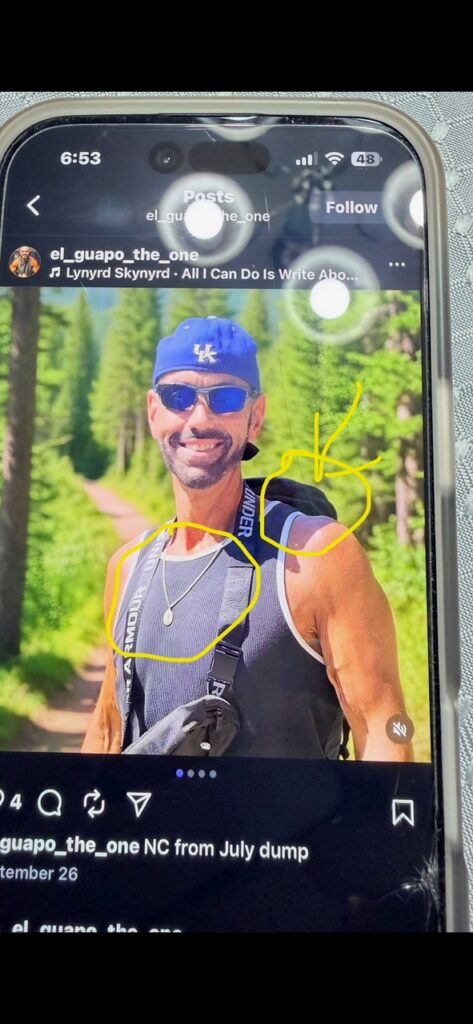
If not, Niagara County did not prosecute evidence. It produced a storyline.
This is the new family-court dirty trick: create the speech ban, create or exploit the alleged violation, then use the contempt hammer to crush the parent. That is not justice. That is a frame-up with Wi-Fi.
Niagara Family Court Cage: The Integrated Domestic Violence Part Flips the Victim Into the Offender
The next outrage is the Integrated Domestic Violence Part itself. Guthrie says he was placed in the IDV court even though he maintains he was the victim of domestic violence, not the perpetrator. He says Popovice physically assaulted him, that witnesses existed, and that he did not commit domestic violence. Yet the courthouse machinery treated him as the danger. That is institutional DARVO — deny, accuse, reverse victim and offender — dressed in black robes and backed by armed officers.
Judge Wojtaszek’s IDV courtroom appears to have become the Hotel California of domestic allegations: once the label sticks, the citizen can never really leave. Guthrie says he was ordered into domestic violence classes, therapy structures, reunification processes, and other court-driven programs despite denying that he committed abuse. He says his life was financially drained and psychologically battered by court-mandated “services” that did not heal anything.
They branded him first, sold him the treatment second, and threatened him when he resisted the label.
Soderman called this out for what it is: a national pattern. Family courts routinely recast protective parents as abusers, minimize inconvenient evidence, and rely on courthouse repeat players — judges, law guardians, evaluators, favored lawyers, therapists, and probation departments — to keep the machine moving. Guthrie’s case, in her view, is not an outlier. It is the playbook.
Wilson and Gaines, as attorneys for the children, should also face public questions. Did they independently test the claims? Did they insist on forensic proof? Did they protect the children’s relationship with their father where appropriate, or did they simply become part of the courthouse chorus? And what about Guthrie’s former counsel, Kyle Calabrese, who appears in communications discussing custody and criminal consequences?
Guthrie says he repeatedly tried to raise evidence, inconsistencies, and concerns. The question is whether anyone in authority actually listened.
The Questions We Asked Went Unanswered
We asked detailed, on-the-record questions of Niagara County District Attorney Brian D. Seaman, Niagara County Supreme Court / IDV Court Administration, the Niagara County Probation Department, and counsel or public information officers for the involved agencies regarding the Guthrie case, the disputed Instagram evidence, the family-court speech restrictions, probation supervision, and the constitutional concerns raised by the record. Here is what we asked:
From: Rick LaRivière <RickLaRiviere@proton.me>
Date: On Monday, May 18th, 2026 at 10:31 AM
Subject: Press Inquiry: Questions Regarding People v. Kevin J. Guthrie, Family Court Speech Restrictions, Probation, and Digital Evidence Issues
To: brian.seaman@niagaracounty.com, doreen.hoffmann@niagaracounty.com, peter.wydysh@niagaracounty.com, maria.stoelting@niagaracounty.com, aubrie.allen@niagaracounty.com, susan.bjornholm@niagaracounty.com, thomas.brandt@niagaracounty.com, carrington.crossley@niagaracounty.com, victoria.dailey@niagaracounty.com, mattie.davis@niagaracounty.com, david.dechellis@niagaracounty.com, erica.dombrowski@niagaracounty.com, raymond.fadel@niagaracounty.com, derek.hafner@niagaracounty.com, laura.jordan@niagaracounty.com, richelle.kloch@niagaracounty.com, kathryn.mangus@niagaracounty.com, liesel.marcantonio@niagaracounty.com, heather.nicholson@niagaracounty.com, zarianna.peterson@niagaracounty.com, amber.poulos@niagaracounty.com, nichole.sands@niagaracounty.com, christine.savoia@niagaracounty.com, kaitlynn.schmit@niagaracounty.com, grace.tesmer@niagaracounty.com, robert.zucco@niagaracounty.com, jmussell@nycourts.gov, hsloma@nycourts.gov, jmtyson@nycourts.gov, dheschke@nycourts.gov, jbrown@nycourts.gov, ncda@niagaracounty.com, Deborah.LaRock@niagaracounty.gov, amanda.bond@niagaracounty.gov, ncda@niagaracounty.gov, brian.seaman@niagaracounty.gov, doreen.hoffmann@niagaracounty.gov, peter.wydysh@niagaracounty.gov, maria.stoelting@niagaracounty.gov, aubrie.allen@niagaracounty.gov, susan.bjornholm@niagaracounty.gov, thomas.brandt@niagaracounty.gov, carrington.crossley@niagaracounty.gov, victoria.dailey@niagaracounty.gov, mattie.davis@niagaracounty.gov, david.dechellis@niagaracounty.gov, erica.dombrowski@niagaracounty.gov, raymond.fadel@niagaracounty.gov, derek.hafner@niagaracounty.gov, laura.jordan@niagaracounty.gov, richelle.kloch@niagaracounty.gov, kathryn.mangus@niagaracounty.gov, liesel.marcantonio@niagaracounty.gov, heather.nicholson@niagaracounty.gov, zarianna.peterson@niagaracounty.gov, amber.poulos@niagaracounty.gov, nichole.sands@niagaracounty.gov, christine.savoia@niagaracounty.gov, kaitlynn.schmit@niagaracounty.gov, grace.tesmer@niagaracounty.gov, robert.zucco@niagaracounty.gov
CC: mvolpe998@gmail.com, frankiepressman@protonmail.com, frankparlato@gmail.com, RALafontaine@protonmail.com, ralafontaine@protonmail.com, richard.luthmann@protonmail.com, richard@nynewspress.com, dave@fraudwarrior.org, amy.d@fraudwarrior.org, director@fcvfc.org, directorfcvfc@proton.me
To: Niagara County District Attorney Brian D. Seaman, Niagara County Supreme Court / IDV Court Administration, Niagara County Probation Department, and Counsel or Public Information Officers for the above agencies:
We are a group of independent journalists preparing a report on the case of Kevin J. Guthrie, including the family-court orders, criminal contempt prosecution, probation supervision, and disputed digital evidence that appear to have converted an otherwise law-abiding citizen into a person living under sweeping state control.
Our reporting concerns People v. Kevin J. Guthrie, including Niagara County IDV/Supreme Court matters and related criminal contempt proceedings. The records we reviewed indicate that Guthrie was charged with Criminal Contempt in the Second Degree and Disobey Court, arising from an alleged incident on September 20, 2025. The Niagara County District Attorney’s Office identified the matter as People v. Kevin J. Guthrie, Docket No. CR-06966-25. Records also indicate related discovery packages under Case No. 2025-3135, Docket/Index No. IDV-60100-25, with an arrest date of September 30, 2025.
The case raises serious public-interest questions about constitutional speech restrictions, the authentication of digital evidence, family-court coercion, the criminalization of parenting disputes, probation searches, and the use of “silver bullet” criminal allegations in custody litigation.
Based on available court materials, the family court order appears to have restricted Guthrie from posting pictures or comments on social media regarding his children. The same order awarded sole custody to Katharine Popovice, required Guthrie to engage in mental-health treatment and TASC/probation compliance, and restricted his access to broad categories of his children’s records and information.
We are asking Niagara County authorities to answer the following questions on the record.
First, what constitutional analysis was performed before enforcing a family-court order that appears to restrict Guthrie’s speech about his own children and family life? Was the order reviewed for First Amendment overbreadth, prior restraint concerns, vagueness, and narrow tailoring?
Second, what compelling governmental interest justified a blanket or near-blanket restriction on Guthrie’s social media speech, and what less restrictive alternatives were considered before criminal enforcement was pursued?
Third, did any Niagara County authority consider whether old family photographs, memories, captions, or non-threatening commentary about family members are protected speech, even when the speech is uncomfortable, embarrassing, or unwanted by another party?
Fourth, who authenticated the Instagram account allegedly used to support the criminal contempt enforcement? Please identify whether Niagara County obtained IP logs, device identifiers, Meta account records, login history, recovery email records, phone-number associations, metadata, or forensic evidence proving that Guthrie created, controlled, accessed, or posted from the account at issue.
Fifth, what steps were taken to investigate Guthrie’s claim that the Instagram account was fake, manipulated, misattributed, or created by someone else using old photographs or cloud-based family images?
Sixth, if an Instagram account was used to help transform a family-court dispute into a criminal prosecution, what safeguards did Niagara County employ to prevent a forged, spoofed, or impersonation account from becoming the modern equivalent of planted evidence?
Seventh, did Niagara County investigate whether anyone other than Guthrie had access to his iCloud, family photographs, children’s devices, old phones, social media accounts, or related digital credentials?
Eighth, did the District Attorney’s Office disclose all digital-forensics materials, Meta records, warrants, returns, affidavits, screenshots, and chain-of-custody materials to the defense? If so, please identify what was disclosed and when.
Ninth, did prosecutors, police, probation, or court personnel consider the possibility that a “silver bullet” criminal allegation was being used to gain leverage in a custody dispute?
Tenth, what policy does Niagara County have to prevent family-court litigants from weaponizing criminal process through false or misleading claims of order-of-protection violations?
Eleventh, what does Niagara County believe the consequences should be when an innocent citizen is wrongfully converted into a de facto ward of the state — subjected to speech restrictions, warrantless searches, probation supervision, incarceration risk, and loss of family contact — based on an unconstitutional order, defective digital evidence, or a false allegation?
Twelfth, does Niagara County believe that a person under these conditions is functionally free? If the state can restrict his speech, enter his home, search his drawers, control his movement, threaten incarceration, separate him from his children, and punish him for disputed online expression, what meaningful distinction remains between lawful supervision and modern government servitude?
Thirteenth, does Niagara County believe there should be civil, professional, criminal, or disciplinary consequences for officials, litigants, attorneys, or witnesses who knowingly or recklessly use family-court orders, probation, or fake digital evidence to wrongfully deprive a citizen of liberty?
Fourteenth, were any Niagara County officials aware that Guthrie alleged probation officers entered his home, questioned him about ordinary conduct, and created a climate in which he believed every answer could be twisted into a violation? Guthrie forwarded descriptions of probation visits, including questions about paystubs, residency, toxicology issues, medical conditions, therapy notes, and home searches.
Fifteenth, what limits does Niagara County place on probation officers searching the home of a person whose underlying conduct arises from a family-court contempt matter rather than violent felony conduct?
Sixteenth, did any agency review whether Guthrie’s alleged inability to provide a urine sample was medically supported by documentation concerning prostate issues, paruresis, or other urological conditions before treating the issue as noncompliance?
Seventeenth, did Niagara County officials investigate Guthrie’s claims that he was deprived of medications or proper medical care while incarcerated? If so, what were the findings? Guthrie and Jill Jones Soderman described allegations involving delayed or denied medications and disputed medical treatment during incarceration.
Eighteenth, did the IDV Court, prosecutors, or probation consider that the combination of custody deprivation, speech restriction, criminal prosecution, probation supervision, home searches, and incarceration risk could itself become coercive punishment beyond any legitimate protective purpose?
Nineteenth, was Guthrie ever given a plain-English explanation of exactly what speech was forbidden, what speech was permitted, what platforms were covered, whether private messaging apps were included, whether reposting old family memories was prohibited, and whether third-party or fake accounts could be attributed to him absent forensic proof?
Twentieth, will Niagara County agree that any future criminal enforcement based on digital speech should require competent forensic authentication before arrest, prosecution, incarceration, or probation violation proceedings?
We also ask the District Attorney’s Office and court authorities to address the broader policy question.
If a family-court order is unconstitutional because it is overbroad, vague, not narrowly tailored, or operates as a prior restraint, and if that order is then used as the basis for arresting, prosecuting, incarcerating, supervising, searching, and financially exhausting a citizen, what remedy does Niagara County believe is adequate?
A dismissal alone does not restore lost time with children. It does not erase jail trauma. It does not refund legal fees. It does not repair reputation. It does not undo the fear of probation searches. It does not give a parent back the years spent living under state control.
So we ask directly: what should the consequences be for wrongfully making citizens into government-controlled subjects through unconstitutional family-court orders, silver-bullet allegations, and fake or unauthenticated social media evidence?
Please provide any response, statement, records, policies, or corrections as soon as possible. We will fairly include any substantive response from your offices in our reporting. If you respond after press time, we will incorporate your responses into a follow-up.
Thanks,
Rick LaRivière
Independent Journalist
(239) 766-5800
Follow Me On Substack
Our questions went unanswered as of press time. We will update the readership if we receive any response.
Niagara Family Court Cage: Probation Became the Leash — Now Who Pays for the Damage?
Once the criminal system latched onto the fake-or-disputed Instagram allegations, Niagara County Probation got the leash. Guthrie says probation officers entered his home, questioned him about ordinary life, searched private spaces, and created a climate where every answer could be twisted into noncompliance. Luthmann played video from inside Guthrie’s home. Guthrie described officers going through drawers, piggy banks, and personal spaces. He said he installed cameras because he felt he needed protection from the very people supervising him. That is the image of the case: a citizen recording state agents in his kitchen because his own house no longer feels like his castle.
Danvir’s name appears in the record of communications concerning Guthrie’s alleged understanding of court restrictions. The question for Niagara County Probation is basic: were officers supervising a legitimate offender, or were they enforcing the fallout from a constitutionally defective family-court gag order and unauthenticated digital allegation?
If Guthrie never committed a real crime, if the Instagram account was fake or unproven, and if the speech order was unconstitutional, then probation was not rehabilitation. It was government servitude.
Guthrie says he spent 72 days in jail, struggled to get proper medication, and was even told while incarcerated that he had severe liver disease, only to later receive clean scans. He says he now lives with uncertainty, fear, and the possibility of more incarceration.
This is what happens when family court and criminal court merge into one punishment machine: the citizen loses custody, speech, privacy, money, health, and peace.
So what should happen to the real perpetrators? Start with investigation. Then discipline. Then civil liability. Then criminal charges where fake evidence, perjury, official misconduct, conspiracy, or deprivation of rights can be proven. Judges who knowingly enforce unconstitutional gag orders should not hide behind robe worship. Prosecutors who use unauthenticated digital garbage to make citizens criminals should answer for it. Probation officers who micromanage a man into submission based on a rotten predicate should be scrutinized. And anyone who created or used a fake Instagram account to cage Kevin Guthrie should face the consequences they tried to dump on him.
Dismissal is not enough. Lost liberty demands payback through law—whether institutional, natural, or otherwise.
About The Author
