
America’s kitchen-table news voice goes dark after nearly 100 years
LUTHMANN NOTE: CBS News Radio signing off is a funeral bell for the old shared America. Once, a voice came through the static and everyone heard the same thing: the storm, the war, the traffic, the president, the bulletin. Now every citizen lives inside a personalized information bunker built by algorithms, outrage merchants, and corporate cost-cutters. CBS says this is about economics and programming strategy. Fine. But beneath the spreadsheet is something bigger. The trusted civic voice has been replaced by fractured feeds and weaponized noise. Murrow’s microphone did not simply go silent. It was buried under the algorithm. This piece is “CBS Radio News Signs Off.”

By Greg Maresca
With the radio positioned above the refrigerator, WCBS Newsradio 88 was the soundtrack of our kitchen. For much of the 20th century, AM radio news was the country’s heartbeat.
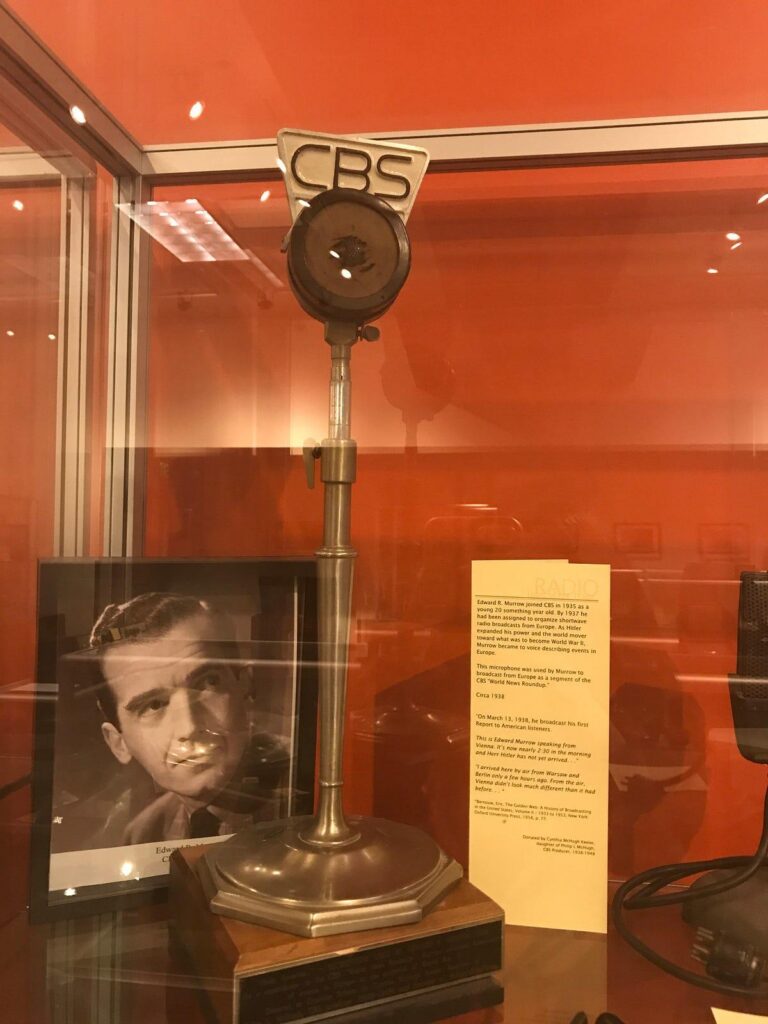
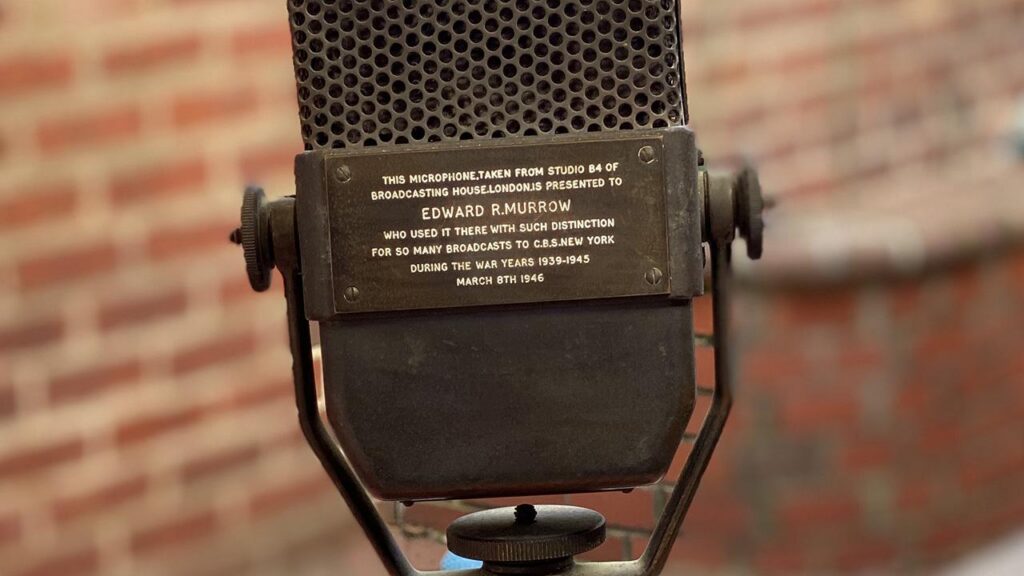
CBS was the gold standard. It was the home of Edward R. Murrow’s rooftop broadcasts during World War II, Walter Cronkite’s war dispatches, and Eric Sevareid’s reports from a collapsing Paris that defined American news to the present.
Radio made a snowstorm, a blackout, a presidential address, a shared experience. The intimacy of a human voice cutting through static created a bond that television never replicated and digital platforms never attempted.
I recall helicopter traffic reporter Lou Timolat calling live updates from the FDR and GWB to the BQE and Major Deegan decades before GPS or digital traffic sensors existed. Such reporting crystallized WCBS’s “traffic and weather together” format, setting a national standard for all news radio and making Timolat an unforgettable memory over 50 years later.
Once upon a time in America, families gathered around the radio, commuters listened in unison, and breaking news traveled through a single, trusted pipeline. Even into the 1980s and 1990s, AM news stations like WCBS, WINS, KYW, and locally at WKOK served as civic institutions with a reliability no other medium could match, with their anchors’ voices woven into the daily rhythms of life.
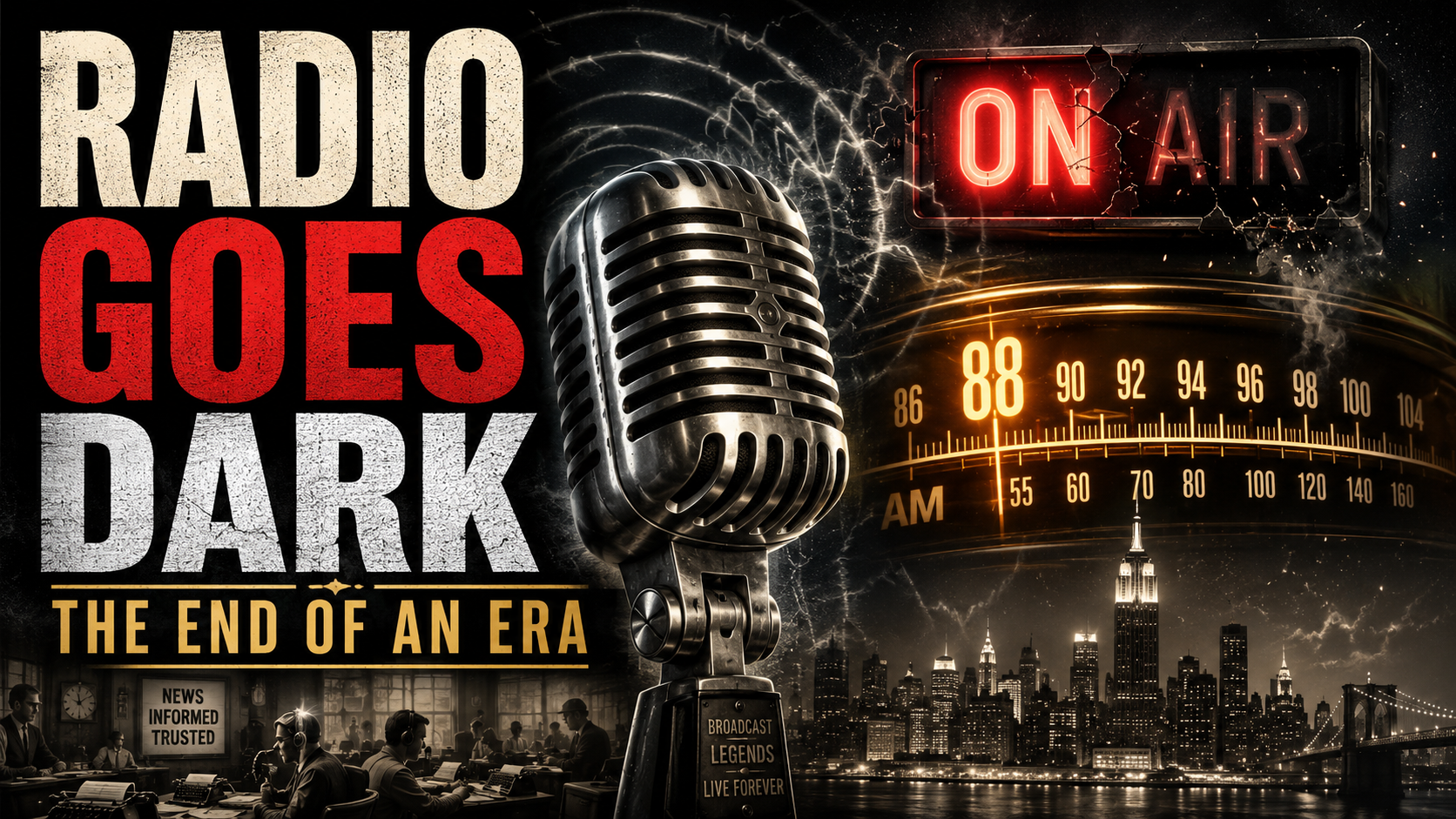
Despite selling its stations in 2017, CBS still fed news to 700 affiliates, including its historic “World News Roundup,” the longest-running newscast in the country. That will end on May 22 as CBS News Radio will cease operations. The announcement cited “challenging economic realities” and “shifting programming strategies” as corporate verbiage for the AM business model no longer sustaining.
AM radio’s competition came from its own sister stations on the FM side of the house, with its superior sound quality that pulled the plug on most music programming, leaving AM to reinvent itself as the home of news, talk, and sports.
For a time, that pivot worked.
CBS News Radio’s shutdown is not an isolated event; rather, it is the culmination of operational constraints that have been hollowing out the medium since the 1970s, fighting physics, economics, and cultural drift all at once.
Cable news arrived in the 1980s, followed by the 24-hour cycle of the 1990s. Then, in 1996, the Telecommunications Act accelerated consolidation, allowing companies to buy dozens of stations in a single market. Local newsrooms were gutted. National feeds replaced them. Syndicated talk became cheaper than journalism while advertising dollars migrated to digital platforms.
As AM’s audience aged and younger listeners ghosted the dial. The signal turned into a static-ridden hostage choked by increased power lines, cell towers, and ubiquitous chargers. Another killing blow occurred when carmakers tossed AM radios overboard. The internet finished the job, and by the 2000s, AM radio survived more on memory than momentum, leaving storied names like CBS News Radio vulnerable.
Waiting for a top‑of‑the‑hour newscast is antiquated in a world where breaking news arrives instantly and continuously in your pocket before the anchor even clears their throat. AM radio’s linear, scheduled format simply cannot compete with the immediacy and personalization of digital platforms tailored to niche interests.
Roger Haddon Jr., president and CEO of Sunbury Broadcasting Corp., said WKOK— a central Pennsylvania news institution since the 1930s and a 73-year CBS News Radio affiliate—will switch to USA Radio News, saying, “It’s the only network that comes close to the CBS News Radio offerings.”
WKOK will also continue to maintain its newsroom as one of the few independently owned news stations left in American radio. CBS is signing off, but the spirit of radio – that familiar and trusted voice in the background hasn’t gone anywhere.
Related posts:
Catholic Academy Defies Secular Collapse
SMILIN’ JACK'S PAYBACK? LUTHMANN TO APPEAR IN STATEN ISLAND COURT
UNBELIEVABLE COMPLIANCE OR MANIPULATION? MARKET INFORMATION PLATFORM DENIES TURBOCHARGING ANONYMOUS …
President Trump's Excellent Health Sends Radical Left Media into Meltdown
Staten Island’s Real Crime Family: Judge Judy & The DA Mike McMahon
Stirring the Gravy
About The Author
