


Quathisha Epps’ lawyer attacks reporters but still won’t answer the pregnant Mary Rocco, contempt, bankruptcy, and overtime questions.
LUTHMANN NOTE: Self-styled civil rights lawyer Eric Sanders says, “The work continues.” Good. So does ours. Sanders tried to respond like a courtroom tough guy and landed like a press-release pratfall. He attacked Luthmann, ignored LaRivière, dodged Nast, and left a pregnant Mary Rocco sitting untouched in the middle of the room. “Good standing” is not a washing machine. A $15 million verdict is not a magic eraser. A credit-score flex is not a contempt-order rebuttal. Sanders wants grace, context, and nuance for himself, but scarlet letters for everyone else. That is not civil rights. That is brand management with a bar card. The work continues — and clowns like Eric Sanders keep making our work easier. This piece is “Eric Sanders Ducks His Record.”

By Rick LaRivière and M. Thomas Nast with Richard Luthmann
Sanders Throws A Tantrum, Not A Rebuttal
(NEW YORK, NEW YORK) – Self-styled civil rights attorney Eric Sanders finally responded, just not to the questions.
Not to the Mary Rocco pregnancy-discrimination and retaliation matter. Not to the reported $175,000 award. Not to whether an appellate court upheld it. Not to whether Rocco was paid promptly. Not to whether a contempt order was vacated. Not to whether bankruptcy was used while a former employee tried to collect.
Not to whether Quathisha Epps actually worked every hour of the massive NYPD overtime that made her the department’s highest-paid employee.
Instead, Sanders did what weak lawyers do when the record gets ugly. He made personal attacks against Richard Luthmann, one of the contributors to the reporting.
That was the tell. The article Sanders attacked was by Rick LaRivière and M. Thomas Nast with Luthmann as a minor contributor. Sanders did not rebut LaRivière’s reporting. He did not engage the ten detailed questions sent before publication. He did not produce the records requested. He did not answer the hard questions about Epps, Maddrey, overtime, retaliation, payroll, or his own troubled history.
He simply tried to make Luthmann the story. That is not a rebuttal. That is a diversion.
Sanders’ piece was dressed up as a “public-record response,” but it functioned like a smoke grenade. He used Luthmann’s controversial past as a shield to avoid his own. That may work on social media. It does not work in journalism. Public records do cut both ways. That is exactly why Sanders was asked about his own public record in the first place.
The question was never whether Luthmann has a criminal past. He does, and he has publicly discussed it for years while talking about second chances.
The question is whether Sanders, as Quathisha Epps’ lawyer and public spokesman, can answer the credibility issues now sitting in his own lap.
So far, the answer is no. The work continues.
Eric Sanders Ducks His Record: The Rocco Problem Still Sits On The Table
Sanders’ central dodge is obvious. He wants readers to focus on Richard Luthmann’s federal conviction rather than on the employment discrimination against Mary Rocco, who was terminated because she was pregnant.
“Go make babies,” Sanders said.

Mary Rocco is the issue Sanders will not answer. According to the New York Post’s 2013 reporting, Sanders was arrested at his Melville, Long Island home after a federal bankruptcy judge had enough of missed court dates and failure to make required payments. The same report said Sanders had been found liable for retaliating against and firing former employee Mary Rocco because she was pregnant. The state Division of Human Rights awarded Rocco $175,000, and the award was reportedly upheld on appeal.
That is the contradiction at the center of the Sanders problem. He markets himself as a civil-rights lawyer, representing clients in discrimination, retaliation, sexual-harassment, and workplace-abuse matters. He now represents Quathisha Epps in a case built around allegations of sexual coercion, retaliation, and institutional misconduct.
Yet his own file includes a reported pregnancy-discrimination and retaliation matter involving his own former employee. That is not stale gossip. That is directly relevant hypocrisy.
Sanders had the chance to say the Rocco award never happened. He did not. He had the chance to say the award was vacated. He did not. He had the chance to say the contempt order was reversed. He did not. He had the chance to say Rocco was paid promptly. He did not. He had the chance to produce records showing the New York Post got the story wrong. He did not.
Instead, he screamed about Luthmann. That is what guilty narratives do when the facts are inconvenient. They change the channel.
Sanders may be licensed and an attorney “in good standing.” Sanders may have won cases. None of that answers the Mary Rocco problem.
The record remains on the table, untouched. The work continues.
Eric Sanders Ducks His Record: “Good Standing” Is Not A Washing Machine
Sanders repeatedly says he is licensed, “in good standing,” and has never been professionally disciplined. Fine. Report it. No one is hiding it.
But Sanders wants to turn “no attorney discipline” into “no adverse facts.” That is nonsense.

A lawyer can remain in good standing and still have a troubling public record. A grievance committee can decline discipline without erasing a discrimination award. A bar committee can say “no action warranted” without deciding that every underlying fact was false. Good standing is not a magic wand. It does not make contempt disappear, reverse a human-rights award, prove bankruptcy was clean, or answer whether Mary Rocco was forced to chase money she was owed.
Sanders knows this. He is a lawyer. He understands the difference between professional discipline and factual accountability. That is why his response is so slippery.
He wants readers to believe the only question is whether the bar took his license. That was never the question. The question is whether the public should evaluate his credibility when he publicly sells Quathisha Epps as a victim, attacks the NYPD, attacks Maddrey, and tries to bury the overtime scandal under the word “retaliation.”
The answer is yes.
A lawyer’s public role matters. When a lawyer becomes part of the media operation, his credibility becomes part of the story. Sanders is not quietly filing motions in a private employment dispute. He is shaping a public narrative involving sex, power, payroll, federal investigators, the NYPD’s highest levels, and hundreds of thousands of dollars in disputed overtime.
In that role, “I still have my license” is not enough. The public is allowed to ask whether the civil-rights lawyer carrying the microphone also carries baggage.
Sanders’ own response proves he does. The work continues.
Eric Sanders Ducks His Record: Bankruptcy “Strategy” Still Needs An Answer
Sanders says the bankruptcy story is a lie. Then he admits he filed for bankruptcy protection. That is not a denial. That is a rebranding exercise.
His explanation is that bankruptcy was a “legal strategy” to protect a client, not evidence that he was drowning in personal debt. Maybe. But that does not answer the public question. The question is whether bankruptcy was used while Mary Rocco, a former employee with a reported discrimination and retaliation award, was trying to collect money owed to her.

The question is whether the bankruptcy filing delayed, blocked, complicated, or frustrated collection. The question is why a federal bankruptcy judge reportedly held Sanders in civil contempt and why he spent six days in custody.
Sanders wants to talk about his credit score. Who cares? A high credit score does not answer why a discrimination creditor allegedly had to chase payment. In fact, it makes the contradiction worse. If Sanders had strong finances, stable income, and “A-1 credit,” why was Rocco still fighting for money years after the reported award? Why did the matter reach contempt? Why did he end up in federal custody? Why did the Post report that Judge Dorothy Eisenberg ordered him jailed until he paid $181,666 with interest?
Those are specific questions. Sanders’ answer is vibe. He talks about being housed with murder suspects, about inmates and guards respecting him, and about carrying himself with dignity. That may be interesting autobiography, but it is not a legal rebuttal.
It does not explain the contempt order. It does not explain the payment history. It does not produce the docket. It does not produce the satisfaction.
A lawyer who demands accountability from the NYPD should understand accountability when it knocks on his own door.
Sanders still has not opened it. The work continues.
Eric Sanders Ducks His Record: Civil Rights Lawyer’s Attack On Journalism Is The Ugly Irony
The most revealing part of Sanders’ response is not his attack on Luthmann. It is his contempt for the journalism itself.
Sanders tried to dismiss the reporting as a hit piece, a smear, a fraudster’s project, and a sideshow. But the article was published under the bylines of Rick LaRivière and M. Thomas Nast with Richard Luthmann as a minor contributor. Sanders did not seriously engage Rick LaRivière’s questions. He did not treat independent journalism as legitimate. He treated it as something to be sneered at, mocked, and erased.
That is rich coming from a Black civil-rights lawyer.

New York City has publicly recognized that journalists of color are underrepresented and that local reporters play an essential role in elevating voices and holding power accountable. City Hall announced a journalism scholarship initiative aimed at students of color precisely because newsrooms do not reflect the communities they cover. Black Americans are about 12 percent of the U.S. population but only about 6 percent of journalists.
So what does Sanders do when confronted by independent Black journalism? He tries to delegitimize it.
He does not answer the Black journalist’s questions. He does not respect the inquiry. He does not respond with records. He instead tries to reduce the whole project to Richard Luthmann’s past, as if a Black independent journalist cannot stand on his own reporting, ask his own questions, or publish his own investigation unless Sanders approves the messenger.
That is not civil rights. That is professional arrogance. Sanders is free to fight. He is free to criticize. But a Black civil-rights lawyer attacking independent Black journalism while claiming to defend accountability is hypocrisy so thick it should come with a warning label.
He wants the microphone when it helps his career.
He wants to break the microphone when it questions him. The work continues.
Eric Sanders Ducks His Record: Second Chances For Me, But Not For Thee
Sanders’ response is also hypocritical on second chances. The country has spent years recognizing that people can change, rebuild, and contribute after incarceration. More than 400,000 people leave state and federal prisons every year and face barriers to employment, housing, education, health care, and social reintegration. The entire point of reentry work is that a conviction should not automatically erase a person’s future.
FAMM’s second-chance advocacy rests on a simple truth: people change.

Sanders knows this world. Civil-rights lawyers live off the idea that people are more than the worst thing alleged against them. They argue context, rehabilitation, and opportunity. They argue against permanent civic death.
But when it comes to Richard Luthmann, Sanders suddenly turns into the prosecutor of eternal damnation. He does not argue the facts. He argues the label. Fraudster. Disbarred lawyer. Convict. Prison. Restitution. Forfeiture.
That is the whole move. Not because those facts are hidden. They are not. But because Sanders wants Luthmann’s past to disqualify the journalism without Sanders having to answer the questions.
That is not principle. That is convenience. The same society Sanders invokes when he wants civil-rights credibility is built on second chances. Reentry is not just a slogan for grant applications and panel discussions. It means allowing people to work, write, report, build, expose, and participate after paying their debt.
Sanders does not have to like Luthmann. But he does not get to pretend that a past conviction bars someone from asking present-tense questions about him.
The hypocrisy is glaring. Sanders wants grace for his own record, context for his own contempt, nuance for his own bankruptcy, and respect for his own career.
But for others, he offers only a scarlet letter. The work continues.
Eric Sanders Ducks His Record: The $15 Million Verdict Does Not Answer The Questions
Sanders also points to his 2016 $15 million federal jury verdict for Black NYPD Officer Larry Jackson, who alleged he was beaten and falsely arrested by police officers. That verdict is part of Sanders’ record. It should be acknowledged.
It still does not answer the questions. Winning a civil-rights verdict does not erase a reported pregnancy-discrimination and retaliation award involving a former employee. Trying cases does not vacate contempt. Representing a Black officer does not answer whether Mary Rocco was paid.
A good result for one client does not make a lawyer immune from scrutiny in another scandal. This is the same sleight of hand again.
Sanders keeps pointing to everything except the hole in the wall. He says he is in good standing. Fine. Was the Rocco award entered?
He says he won a $15 million verdict. Fine. Was the Rocco award upheld?
He says he fought police brutality. Fine. Was he jailed on civil contempt?
He says Luthmann went to prison. Fine. Was the bankruptcy connected to collection efforts?
He says he kept working. Fine. Was Rocco paid?
He says he is not broken. Fine. Did Epps work every hour?
That is how you know he is dodging. Nobody claimed Sanders never won a case. Nobody claimed Sanders never helped a client. Nobody claimed Sanders lacks courtroom ability. The issue is not whether Sanders has some wins.
The issue is whether Sanders’ own credibility problems matter when he becomes the public face of Epps’ case against Maddrey. They do. A lawyer can have victories and still have baggage. Sanders’ mistake is believing the victories make the baggage disappear.
They do not.
They simply make his refusal to answer more insulting. The work continues.
Eric Sanders Ducks His Record: The Epps Questions Are Still Unanswered
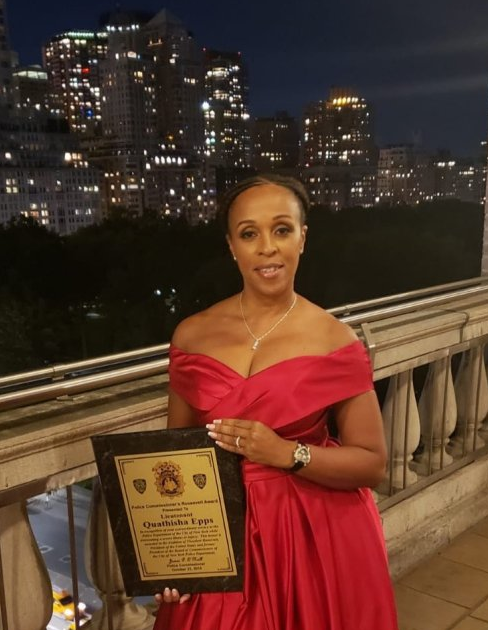
Sanders’ response also fails Quathisha Epps. If Sanders wanted to protect his client’s credibility, he should have answered the overtime questions with facts. Did Epps work every hour? Who approved the overtime? Were the records complete? Were approvals lawful? Did she sign her own slips? Were any slips backdated? When did she first complain about Maddrey? Did she complain before or after overtime scrutiny began? Did she have a consensual relationship with Maddrey? If she says coercion began, when did she document it?

These are not cheap-shot questions. They are the heart of the case.
Epps was reportedly the highest-paid NYPD employee while working in Maddrey’s office. The NYPD reportedly sought to claw back more than $231,000 in overtime. Maddrey has denied coercion and characterized the relationship as consensual. Epps alleges abuse, retaliation, and institutional misconduct. Federal investigators have entered the picture. The stakes are enormous.
Sanders had the chance to provide clarity. He gave readers a personality attack. That is not advocacy. That is malpractice by press release.
A strong lawyer meets damaging facts head-on. A weak public narrative throws mud at a third party and hopes the audience forgets the questions. Sanders wants everyone talking about Richard Luthmann because he does not want everyone talking about Quathisha Epps’ overtime, Mary Rocco, civil contempt, bankruptcy, NYPD discipline, and the unanswered documentary record.
But those issues remain. The public deserves more than insults. The public deserves records.
If Epps worked the hours, show the proof. If the overtime clawback is retaliation, show the timeline. If the Rocco matter has been misreported, show the orders. If the contempt story is false, show the reversal. If Sanders has answers, publish them.
Until then, the silence is louder than the tantrum. The work continues.
Conclusion: Sanders Made Himself The Story
Eric Sanders says the lawyer attack does not answer the Maddrey/Epps facts. He is right.
So why did he answer with a lawyer attack?
That is the contradiction sitting in the middle of his response like a smoking crater. Sanders accuses others of distraction while producing a document built almost entirely on distraction. He complains that critics are attacking the lawyer rather than the facts, then attacks Richard Luthmann instead of addressing the facts.
He claims to defend accountability, then dodges accountability.
He calls for scrutiny of institutions, then cries foul when scrutiny lands on him.
That is not strength. That is exposure. Sanders made himself the story because he is the one publicly selling the Epps narrative. He is the one asking readers to dismiss the overtime cloud as retaliation. He is the one using his civil-rights brand as moral leverage. He is the one standing between the public and the documents. He is the one refusing to answer direct questions about his own record.
So here is the score.
Richard Luthmann’s past is public. Sanders’ insults are public. But neither one answers the Mary Rocco problem. Neither one answers the contempt problem. Neither one answers the bankruptcy problem. Neither one answers Sanders v. Safir. Neither one answers whether Quathisha Epps worked the overtime. Neither one answers who approved it. Neither one answers why the NYPD sought to claw back more than $231,000. Neither one answers the timing of Epps’ claims.
Sanders can keep swinging at Luthmann if he wants. That may impress the internet. It does not answer journalism.
Rick LaRivière and M. Thomas Nast asked the questions. Eric Sanders dodged them.
That is the story. The work continues.
About The Author
