
The Kings County DA’s 1,065-page production preserves disputed witness accounts, limited identifications, and erased-video testimony. Richard Luthmann’s FOIL appeal demands the rest of the accounting.
LUTHMANN NOTE: Eric Gonzalez inherited Benny Geritano’s conviction. He also inherited the obligation to account for the file. His office cannot treat a limited identification, a knife-pickup account, and erased recordings as settled questions simply because the verdict stands. Those are concrete reasons to examine how this prosecution was built. The institution defending the conviction also controls the records needed to test its story, an arrangement that rewards closure and discourages scrutiny. I filed this appeal because 1,065 pages do not excuse unanswered requests or unexplained withholding. Brooklyn got its verdict. Now it can answer for its file. This piece is “Brooklyn Still Owes Benny Geritano.”

By Richard Luthmann


My first investigation into Geritano’s conviction examined the missing recordings and the white-shirt identification; Benny No More followed the prosecutorial questions and the struggle to get records. This production deepens the cloud over the prosecution because the concerns now run through documents the KCDA has itself supplied. Some were litigated years ago. Their appearance here does not make them new discoveries, but it gives the public more of the actual record against which to judge the government’s account.
I am moving forward with a FOIL appeal because Gonzalez’s office still owes an intelligible accounting of the records needed to examine how this Hynes-era case was built.
Brooklyn Still Owes Benny Geritano: The distance between a fight and a stabbing
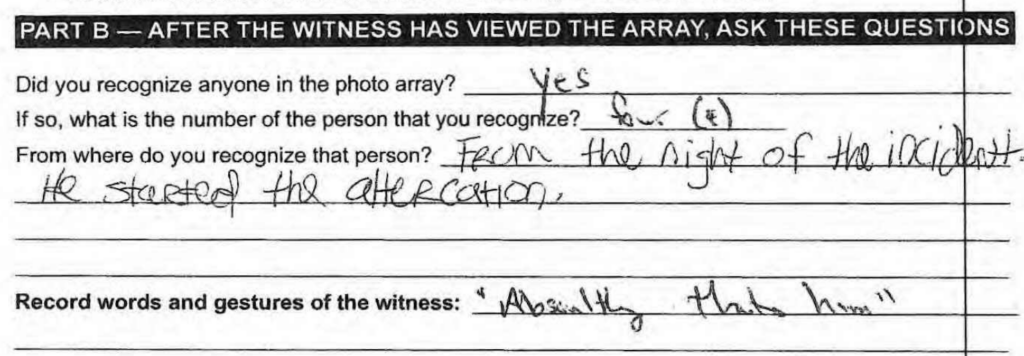
The violence at Club Nouveau, 8214 Third Avenue, on December 23, 2012, was real. Nunzio Fusco was stabbed, and Geritano was convicted of attempted first-degree assault and third-degree weapon possession. The evidentiary problem lies in the distance between recognizing a man from that fight and identifying him as the person who inflicted the wounds. In the produced identification paperwork, Part 2, pages 39, 44, and 48, the recorded bases concern Geritano’s participation in the fight or his role in starting the altercation.
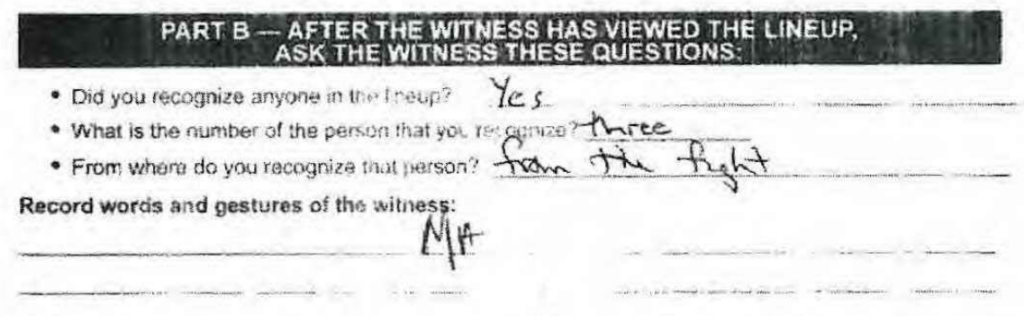
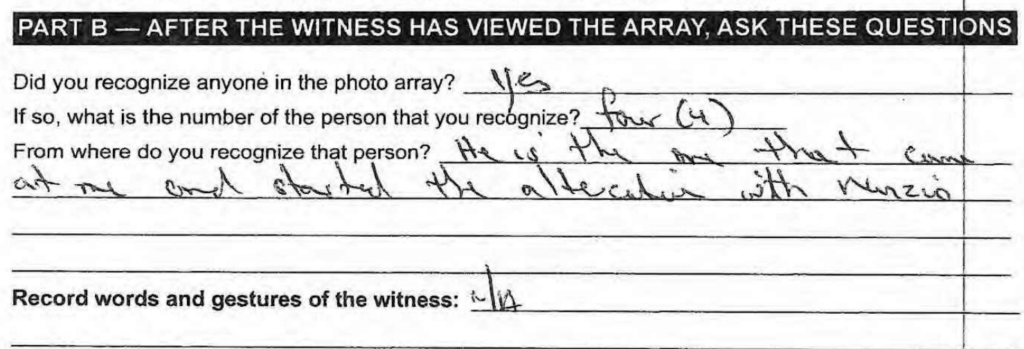
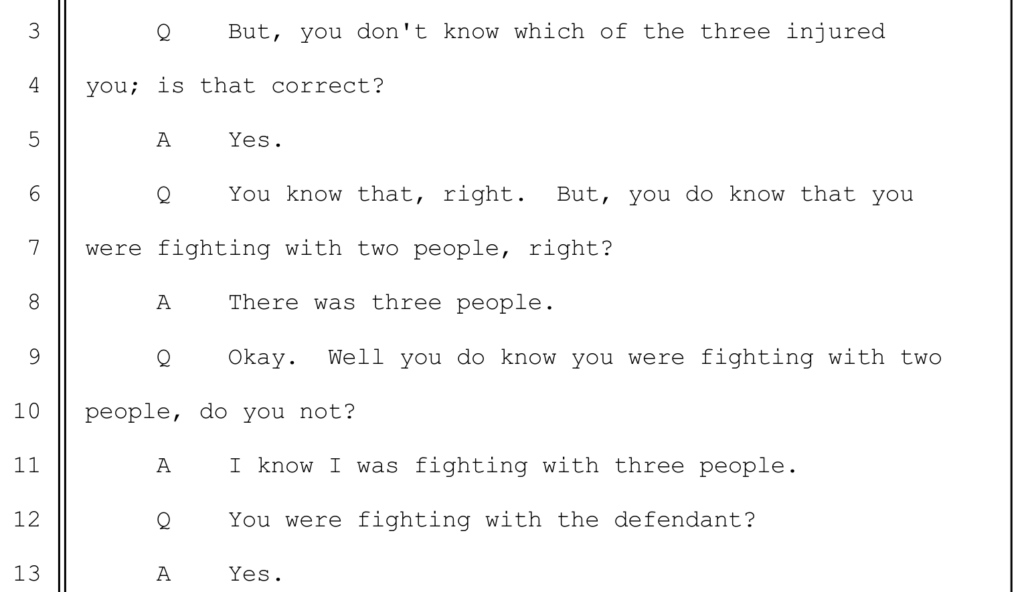
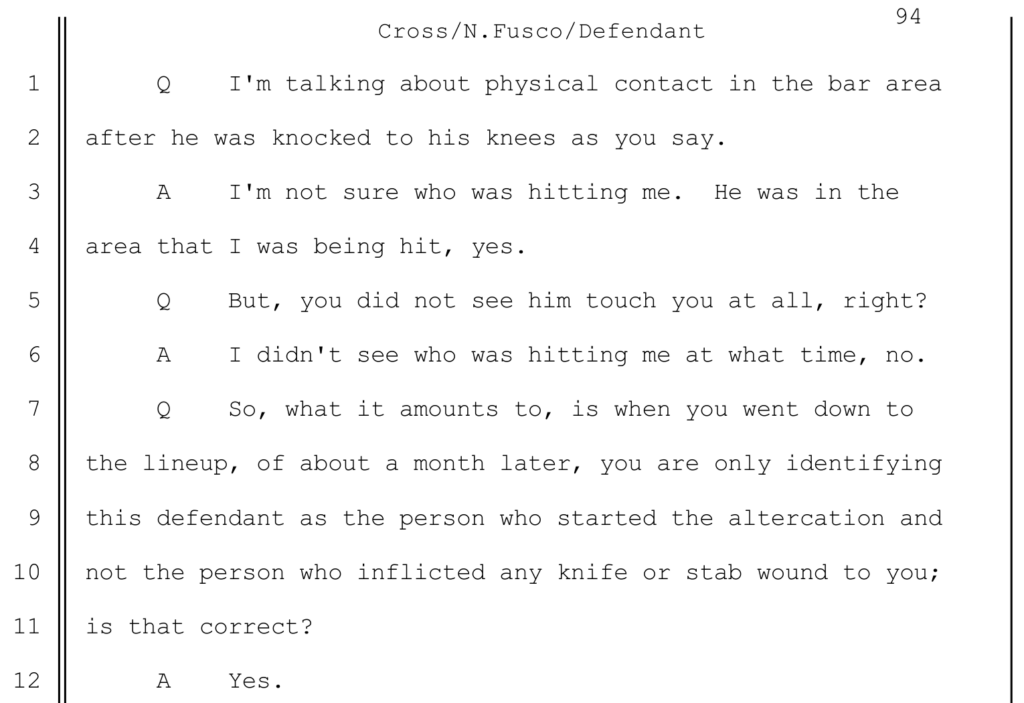
At trial pages 93–94, Fusco acknowledged fighting three people, not knowing which injured him, and identifying Geritano at the lineup as the person who started the altercation rather than someone he saw deliver a knife wound. Those limitations are essential to understanding the case Brooklyn actually proved.
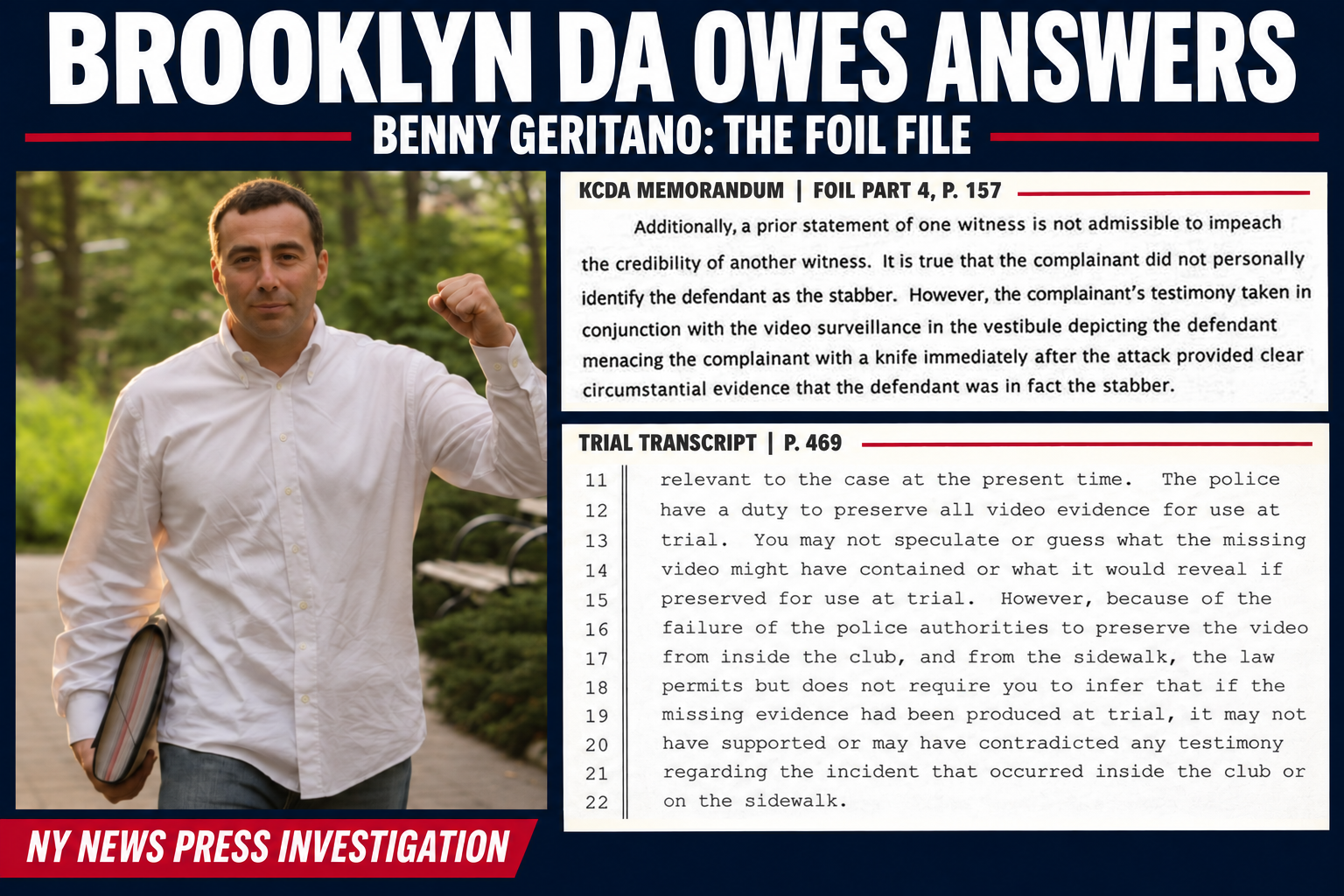
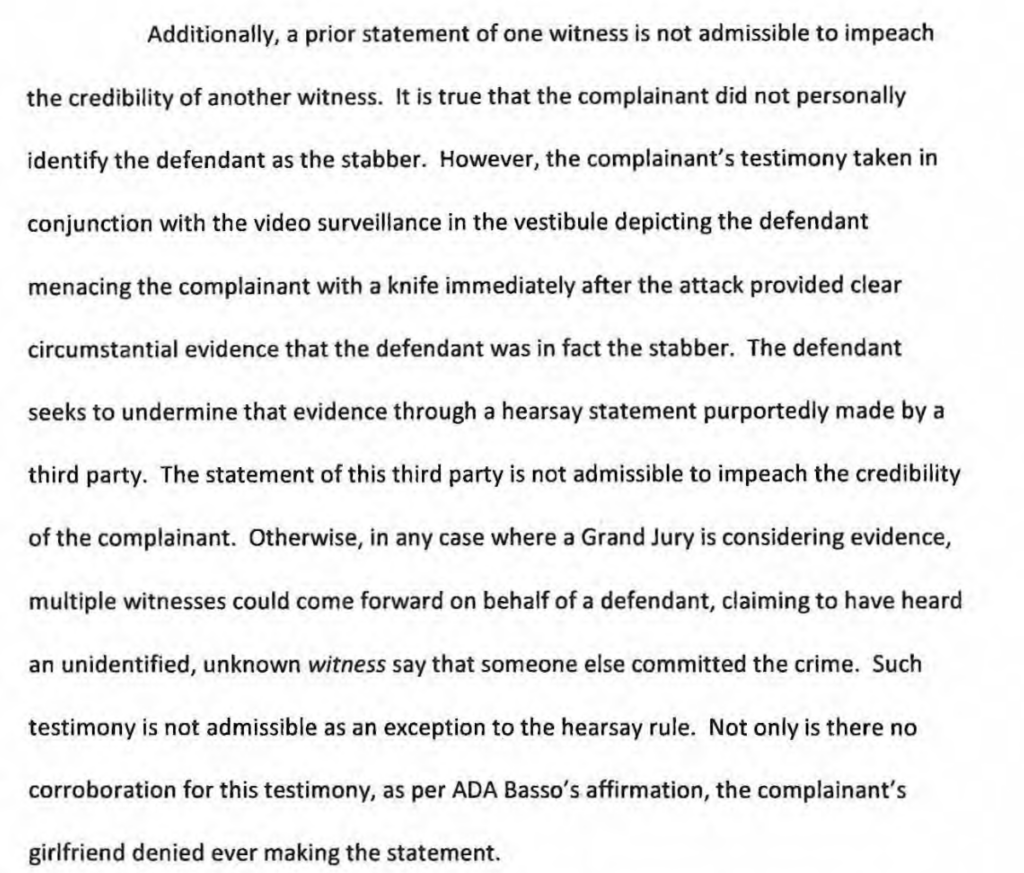
ADA Gerdes’s answer was circumstantial: combine the complainant’s testimony with vestibule footage showing Geritano holding what appeared to be a knife immediately after the struggle. The jury accepted that argument, although the footage did not capture the stabbing and no knife was recovered, as the federal court’s later account records.
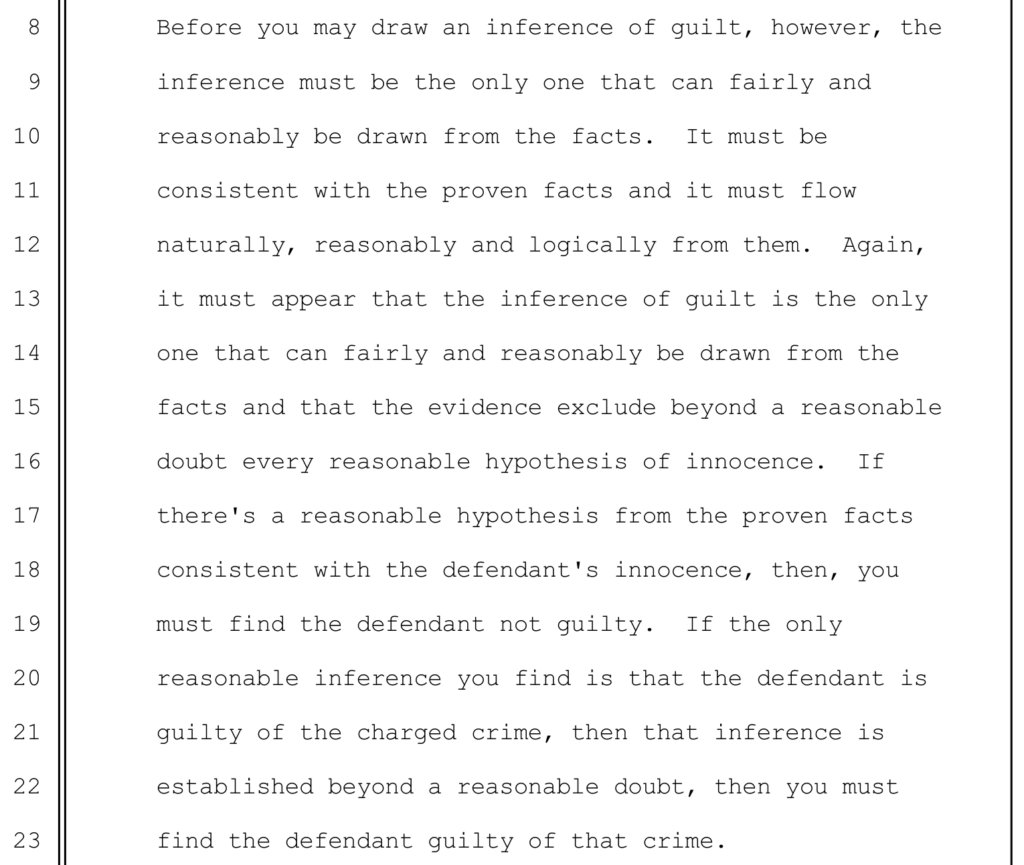
Under the trial judge’s instructions at page 468, an inference of guilt had to exclude every reasonable hypothesis of innocence beyond a reasonable doubt. That makes the explanation for Geritano’s later possession a question at the heart of the prosecution.
If he picked up a knife after the fight, the image on which Brooklyn relied carries a different meaning. A nickname cannot settle which explanation the evidence supports.
Brooklyn Still Owes Benny Geritano: The account Brooklyn DA had to confront
Security chief Thomas Turner supplied that alternative in a January 24, 2013 email, reproduced at Part 4, page 53. He described helping bouncers remove Fusco while other security personnel held back several men. Looking behind him, Turner said, he saw Geritano bend down and pick a knife off the floor, about five feet behind and to the left of the group. His account continued outside, where he said Fusco’s girlfriend identified a different patron in a white shirt and officers questioned and frisked that man.
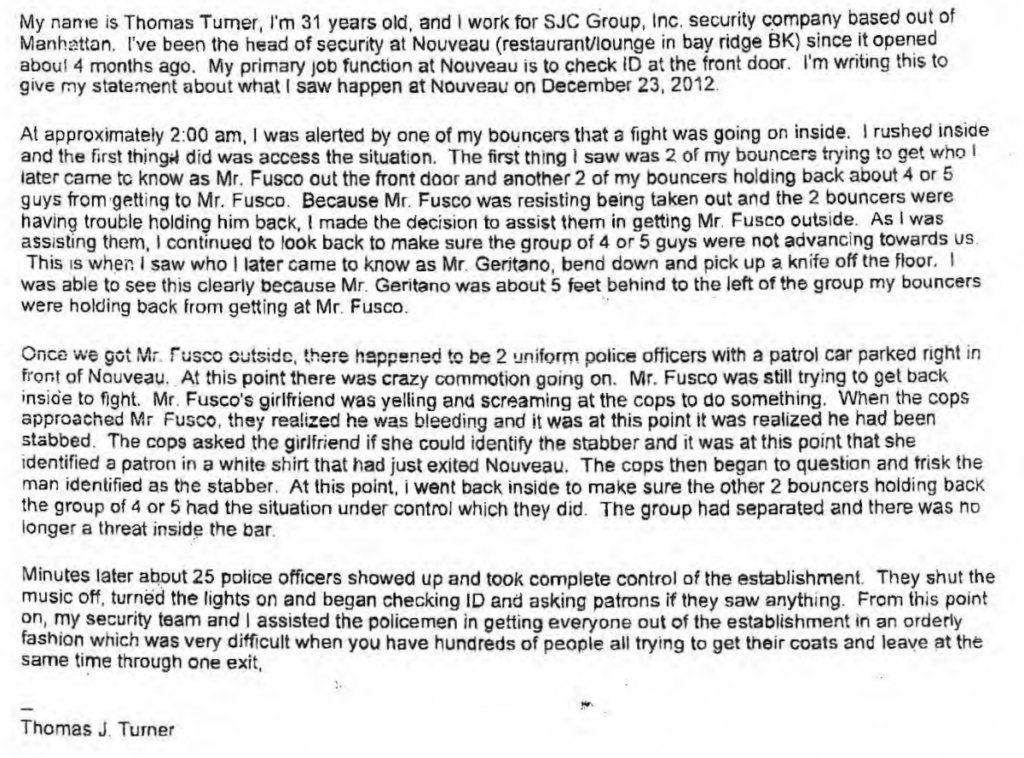
Turner was describing an observation that could explain the apparent knife without making Geritano the stabber. Its significance to the circumstantial case should be obvious.
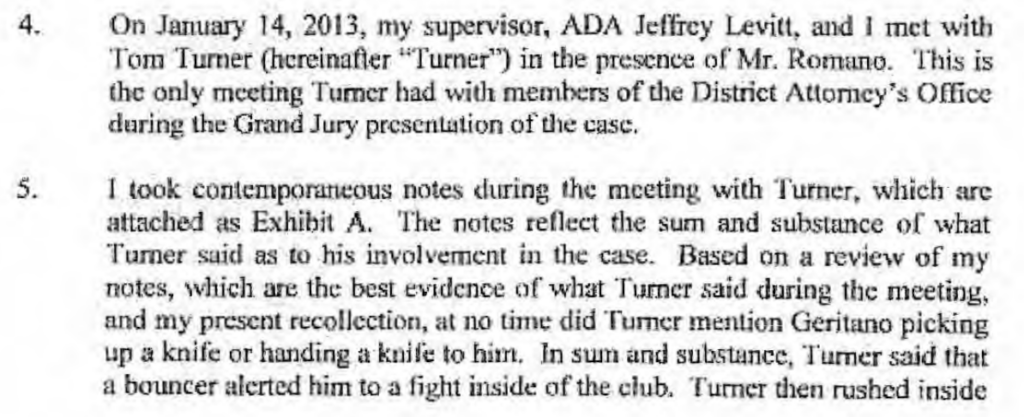
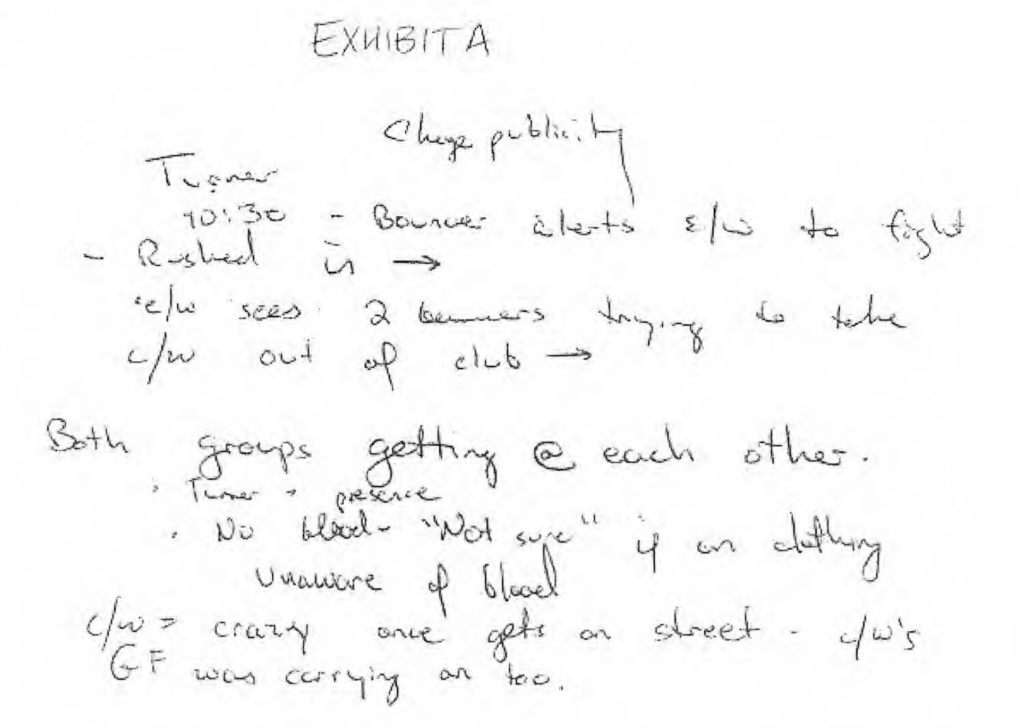
Prosecutor Gregory Basso disputed what Turner had said at their January 14 interview. His October 10 affirmation, Part 4, pages 23–24, says Turner had not mentioned picking up or handing over a knife; contemporaneous handwritten notes appear at page 27. The later email cannot establish what Turner said ten days earlier, and the difference is precisely why the complete communications matter. The public should be able to examine what Turner reported, what Basso recorded, when the written account reached prosecutors, and how the discrepancy was investigated. Brooklyn’s file preserves both versions.

Confidence in a prosecutor’s recollection cannot substitute for tracing the records that would allow an independent reader to assess them.
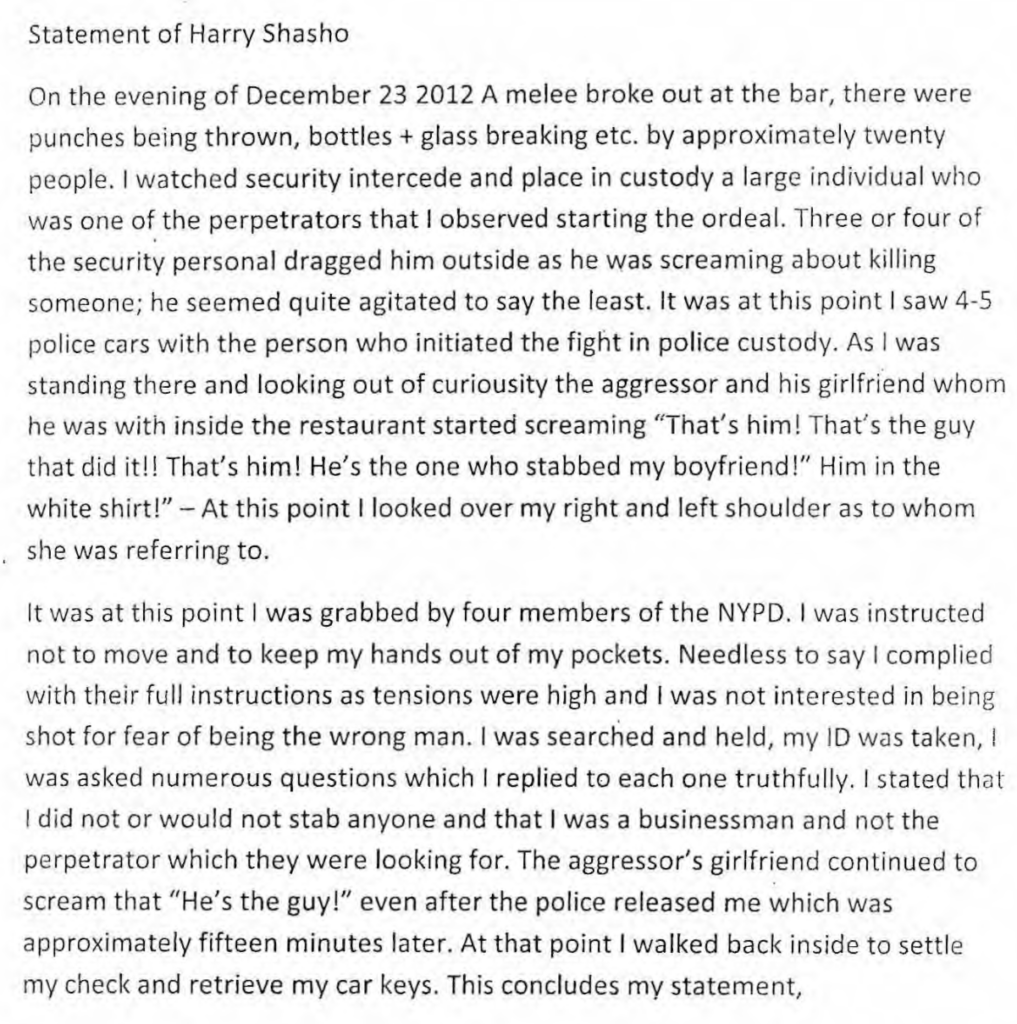
Shasho’s sworn statement at Part 4, page 52 adds another concrete dispute: he said he was identified as the white-shirted stabber, searched and held by officers, then released after approximately fifteen minutes. He denied stabbing anyone. Gerdes’s assertion that she found no reason to believe Shasho had been arrested leaves his account of temporary detention unresolved.
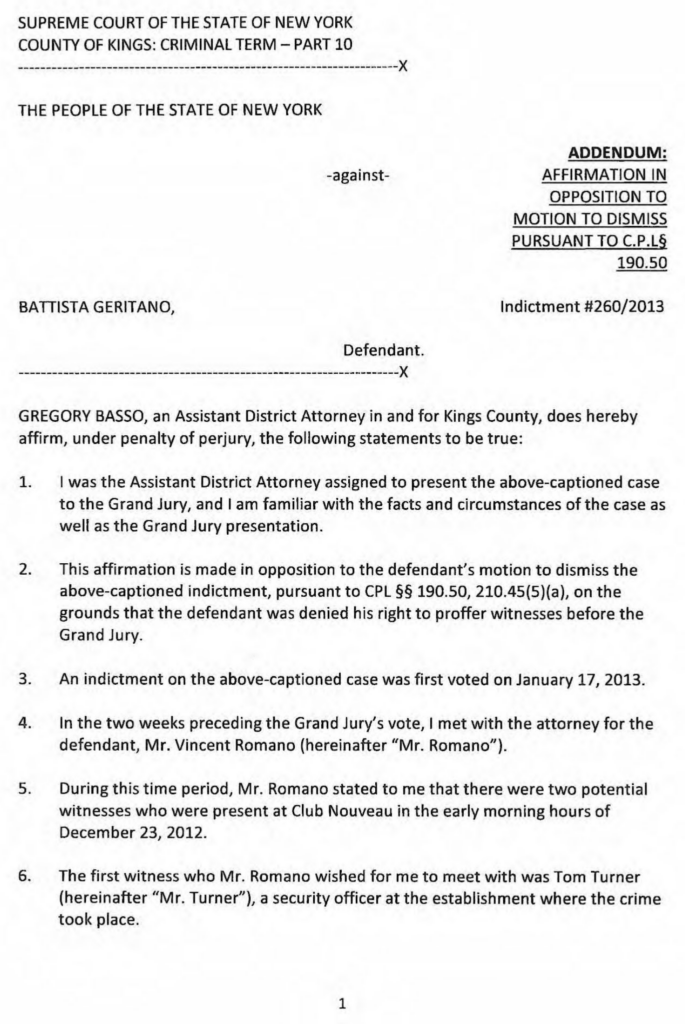
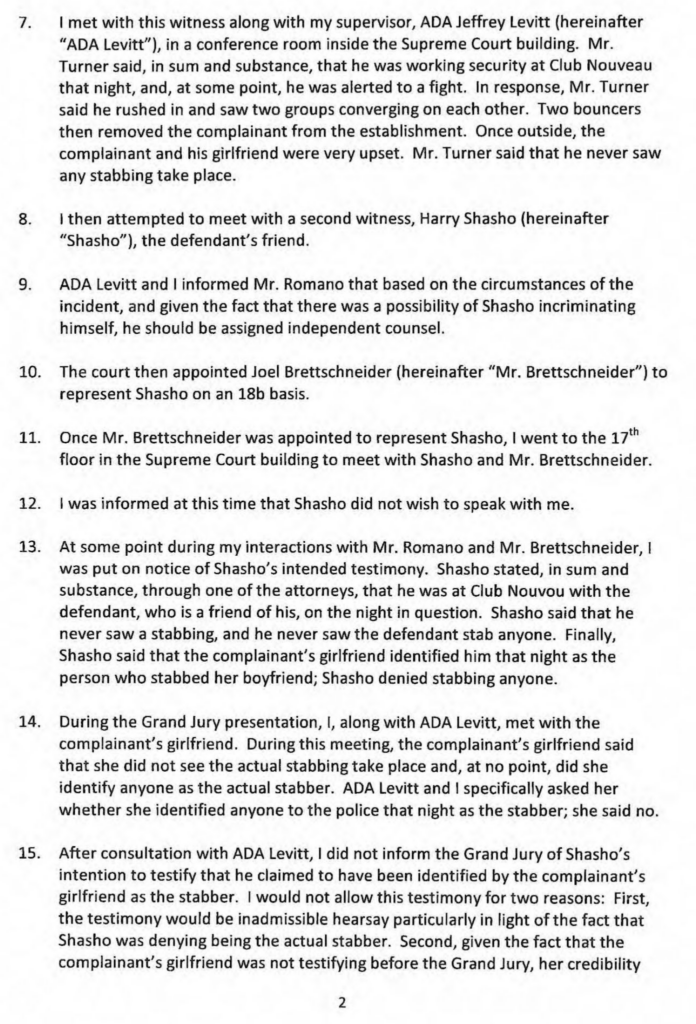
Basso’s September 18 affirmation, pages 152–154, also establishes that the alternate-identification account reached prosecutors. After consulting supervisor Jeffrey Levitt, he omitted that portion when summarizing the proposed testimony for the grand jury on hearsay and impeachment grounds; the girlfriend denied making the identification.
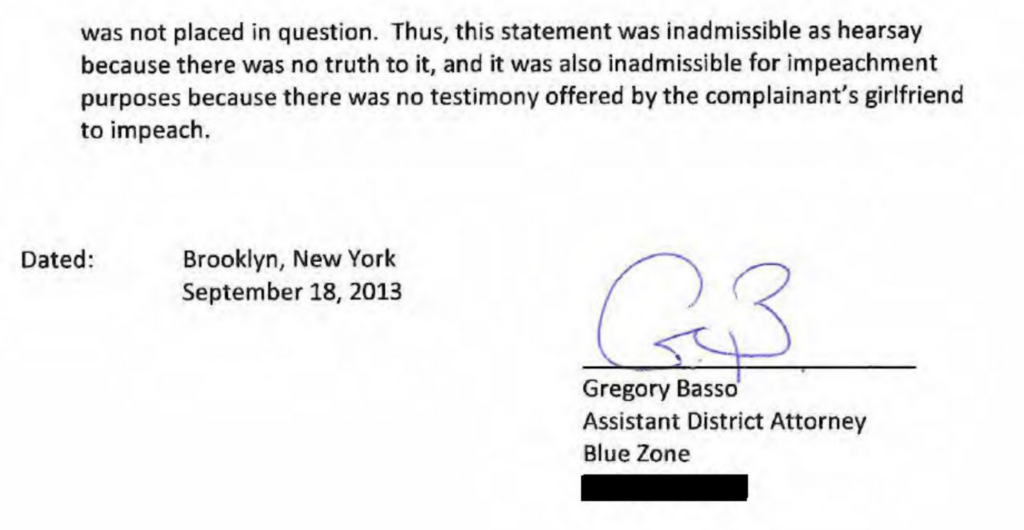
The appellate court upheld that treatment. Its ruling does not reconstruct the police activity outside the club, resolve every disputed account, or supply every missing interview record. Those remain proper subjects of investigation.
The detective decided what the defense would get to see
The lost-video record is the most disturbing part of this evidentiary process because it describes an irreversible decision by the investigator whose conclusions Geritano needed to challenge.
In trial testimony at pages 357–360, Detective Brian Meyers described saving vestibule footage on a disk while a thumb drive containing additional views was deleted and reused, probably a month or two later. He had decided the retained footage was relevant, and the other views lacked investigative value.
At page 373, under questioning by Gerdes, he acknowledged that all the collected video should have been preserved. By then, his assessment of relevance had become a barrier the defense could never undo: the material needed to test that assessment was gone.
The judge addressed the failure at trial, telling jurors at pages 468–470 that inside-club and sidewalk recordings had not been preserved and permitting an adverse inference. The instruction also recounted testimony that cameras did not capture the immediate stabbing area.

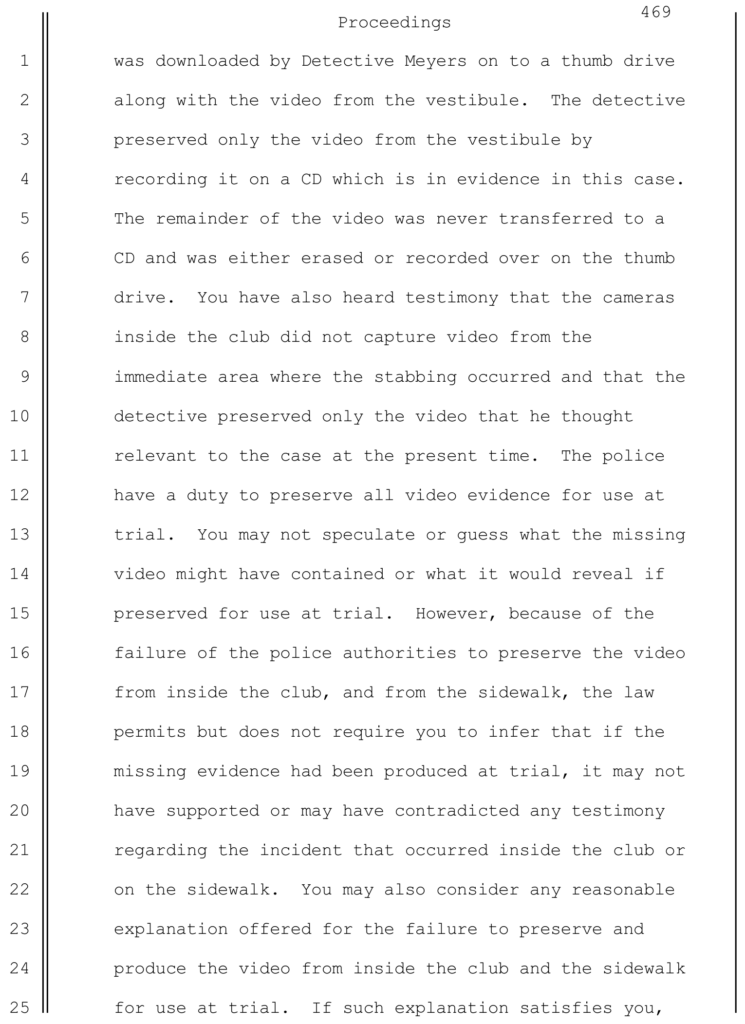
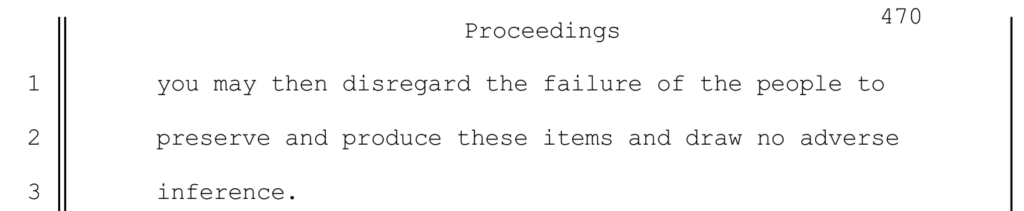
Did the erased footage show another stabber? We can’t say. But we can say the police deprived the defense of the opportunity to examine it, including material concerning events outside.
Lieutenant Caviness testified at page 169 that he reported Meyers to his commanding officer after Gerdes informed him of the video problem. Meyers said at pages 339–340 that he learned of the complaint from the DA that day and that nobody had approached him about it. That is a specific trail toward a complaint, referrals, and communications, exactly the kind of material my FOIL request identified.
The delivered video archive makes a precise accounting more important. Beyond the two CAMERA04 vestibule clips, its DAT file contains a distinct CAMERA23 view of an exterior passage; a playable review copy preserves 5,137 decoded frames and visible overlays. Sampled review shows an apparently empty passage whose exact location remains unconfirmed.

The CAMERA04 files raise timing questions too: one filename suggests 1:56:11 a.m., although its visible clock begins around 2:05, while the other plays for roughly seventy seconds as its clock advances about 136 seconds. These details require camera maps, export documentation, and preservation records, rather than accusations of tampering based on filenames.
Brooklyn must account accurately for what survived as well as what was lost.
A thousand pages cannot answer seven requests by themselves
My March 23 request targeted seven categories of non-grand-jury records concerning complaint-room sources and revisions, identifications, specified police communications, defense-witness proffers, missing video, and the personnel who drafted or approved the complaint narrative. It named the bureaus and archived storage to search. The Kings County DA’s October 30 determination instead describes an “any and all records” request, declares fulfillment subject to what could be located and disclosed, and lists broad exemptions without adequately connecting them to the seven subjects.
Repeated conviction certifications, historical custody papers, and proposed sentencing submissions do not answer whether the requested source communications were found. Some proposed orders even carry blank judicial signature and date lines; their assertions cannot simply be promoted into adopted judicial findings.
The production provides tools for testing completeness, including discovery receipts at Part 2, pages 202–212, identifying materials disclosed during the criminal case. It also complicates the historical portrait prosecutors assembled. Their summary of an earlier Kim Gallagher case, Part 4, page 243, records an April 16, 2003 recantation and an April 22 account alleging pressure from an officer and the DA’s office.
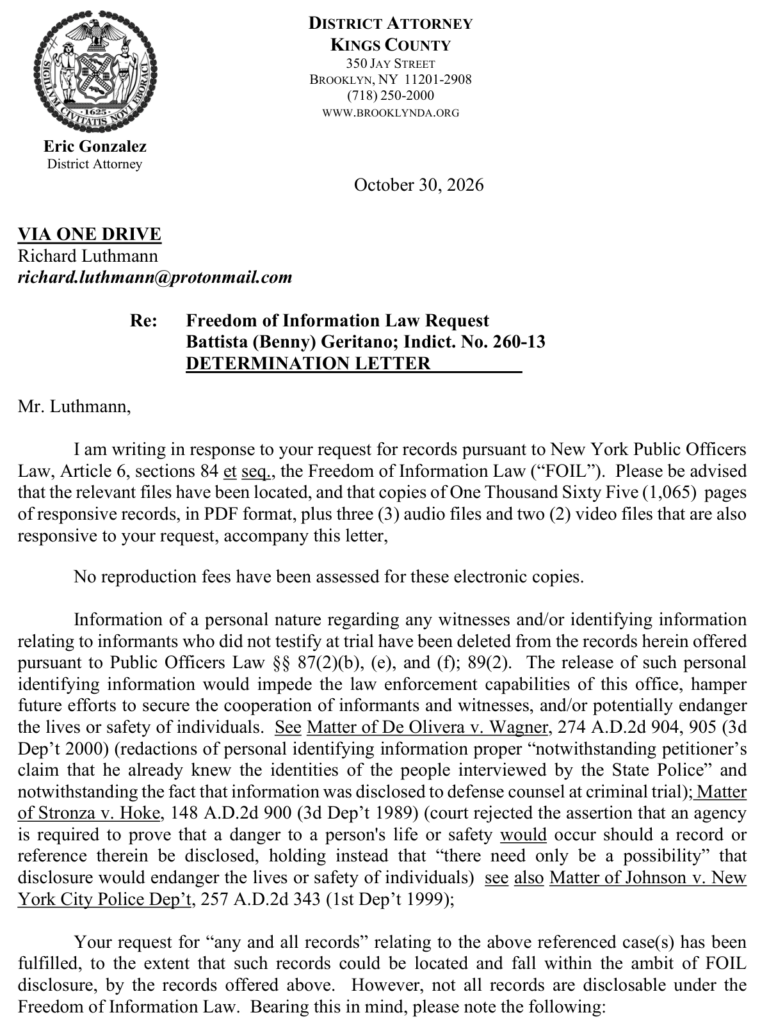
Meanwhile, the FOIL correspondence shows the Office promising an August 31 determination, announcing on August 28 that the files had been found, then promising another thirty days. I followed up on October 27. Locating the file was one step; explaining the disposition of the records I requested is the unfinished work.
Brooklyn has already earned this skepticism
Geritano’s prosecution came during the final years of Charles “Joe” Hynes’s administration, an institution with an accountability record considerably less spotless than its courtroom authority suggested. In a 2018 signed Conflicts of Interest Board disposition, Hynes admitted to routinely and extensively using his DA computer and email for his 2012–2013 reelection campaign, including more than 5,000 campaign emails; the disposition imposed a $40,000 fine. That finding concerns campaign misuse.

Gonzalez’s own 426 Years report documents the deeper reason prosecutorial assurances require testing: twenty cases involving twenty-five wrongfully convicted people, with prosecutor conduct beyond or alongside nondisclosure identified as a contributing factor in seventeen cases, 85 percent. The cases span different eras. The lesson for the office that inherited Geritano’s conviction is nevertheless unmistakable: finality has never guaranteed reliability.
Gerdes’s record supplies another reason to insist on source documents. In People v. Rowley, the Appellate Division reversed a conviction because cumulative prosecutorial misconduct deprived the defendant of a fair trial. The opinion does not name Gerdes; the grievance materials identifying her as the prosecutor cite the trial record. Rowley concerns a different prosecution.
In Geritano’s case, my judgment rests on the specific evidence already described: limited identifications, a knife-pickup account, a disputed alternate identification, erased recordings, and an unresolved records accounting.
Brooklyn’s broader history makes deference a poor response to those facts. An office that has documented its own catastrophic failures should understand why a reporter insists on examining the machinery behind another conviction.
A verdict does not put the prosecution beyond an audit
The courts ruled against Geritano. Justice Miller rejected his grand-jury challenge, and the Appellate Division affirmed in 2018, finding no showing of knowing video withholding or knowing misrepresentation of the proffers and finding the preservation argument unpreserved and alternatively meritless.
Judge Rachel Kovner denied the 2023 challenge to his federal supervised-release revocation sentence as untimely, also finding the innocence material insufficient to overcome that bar. Those decisions cannot tell us whether Eric Gonzalez’s office has now searched for and disclosed every nonexempt source record responsive to this FOIL request. The eleven-ground appeal I have filed presses that separate obligation: produce the responsive records, support the actual withholding, or certify non-possession or an unsuccessful diligent search.
I want to know whether this prosecution survives a full examination of how its evidence was gathered, selected, and presented. The Kings County DA controls the records needed to conduct that examination, and it has every institutional incentive to treat an old conviction as settled business while an outsider keeps asking how the result was obtained. Eric Gonzalez inherited that conviction; he also inherited responsibility for the evidence and records his office holds.
Benny Geritano’s reputation made him an easy defendant to condemn. It does not relieve Brooklyn of explaining the witness accounts it disputed, the footage Detective Meyers erased, or the records it still has not adequately accounted for. Brooklyn already had its verdict. It does not get to make that verdict the reason nobody can audit how it was obtained.




About The Author

Leave a Reply